Becoming A CISO – Then Vs. Now
For years, the career path to becoming a Chief Information Security Officer (CISO) looked fairly predictable. Gain experience in IT network security, rise through engineering or SOC leadership, and eventually move into executive management. But this model is rapidly becoming outdated.
Today’s board members, CEOs, regulators, and investors expect CISOs to do far more than manage cybersecurity teams, oversee incident response, or lead vulnerability remediation. Modern CISOs are expected to explain cyber risk in business terms, communicate confidently with executives, navigate evolving regulations, and help shape enterprise strategy. The most competitive cybersecurity leaders recognized this shift years ago. They understood that technical expertise alone would no longer guarantee a seat at the boardroom table.
In 2026, organizations are increasingly searching for “business-fluent” cybersecurity leaders. These are executives who can bridge the gap between security operations and business decision-making.
The Evolving CISO Job Description
The CISO of 2016
A decade ago, most CISOs operated primarily as senior technical leaders, and their role focused heavily on leading cybersecurity teams that performed:
- Network defense
- Security operations (SOC)
- Compliance management
- Infrastructure protection
- Vulnerability management
Back then, technical depth mattered the most.
The CISO of 2026
Today’s CISO role looks dramatically different. On top of their existing cybersecurity responsibilities, modern-day CISOs are also expected to serve as:
- Board-level communicators
- Enterprise risk translators
- Regulatory navigators
- M&A and third-party risk advisors
- Cyber culture and resilience leaders
According to the 2026 IANS State of the CISO Report, executive-level CISO titles are now more common than VP or director-level security titles, highlighting how cybersecurity leadership has evolved into a true executive function. The shift accelerated significantly after the U.S. Securities and Exchange Commission (SEC) introduced new cybersecurity disclosure rules in 2023. These regulations require public companies to disclose material cybersecurity incidents and provide detailed reporting on cybersecurity governance and risk oversight. As a result, boards now expect CISOs to:
- Brief business leaders clearly during incidents
- Explain material cyber risks in financial terms
- Demonstrate governance maturity
- Coordinate with legal, compliance, finance, and investor relations teams
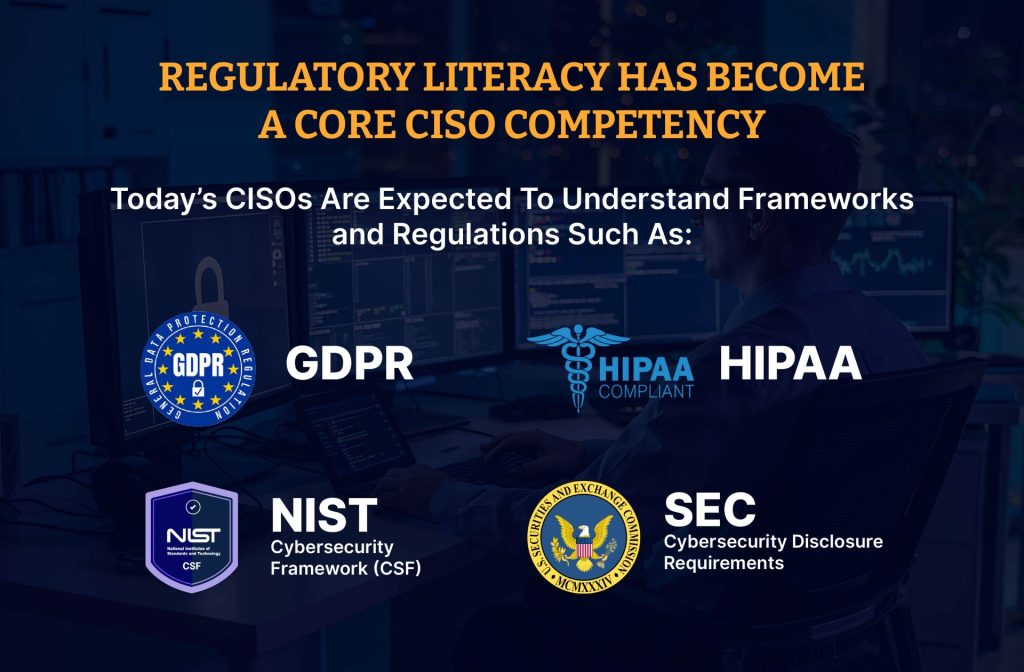
“Put simply, the CISO role has evolved from cybersecurity orchestrator to leadership-level business risk executive.”
Why CISOs with Executive Leadership Skills Are More Successful
The cybersecurity industry is seeing a noticeable increase in CISOs who combine technical experience with formal business or management education. Organizations recognize the value of leaders who can operate effectively across multiple domains, such as technology, finance, governance, compliance, and executive communication. The reason behind this is simple. Technical expertise does not automatically translate into executive leadership ability. Many technically brilliant professionals struggle when they transition into executive roles because they were never trained to:
- Communicate with company leadership
- Build business cases
- Manage enterprise budgets
- Influence cross-functional stakeholders
- Align security priorities with organizational strategy
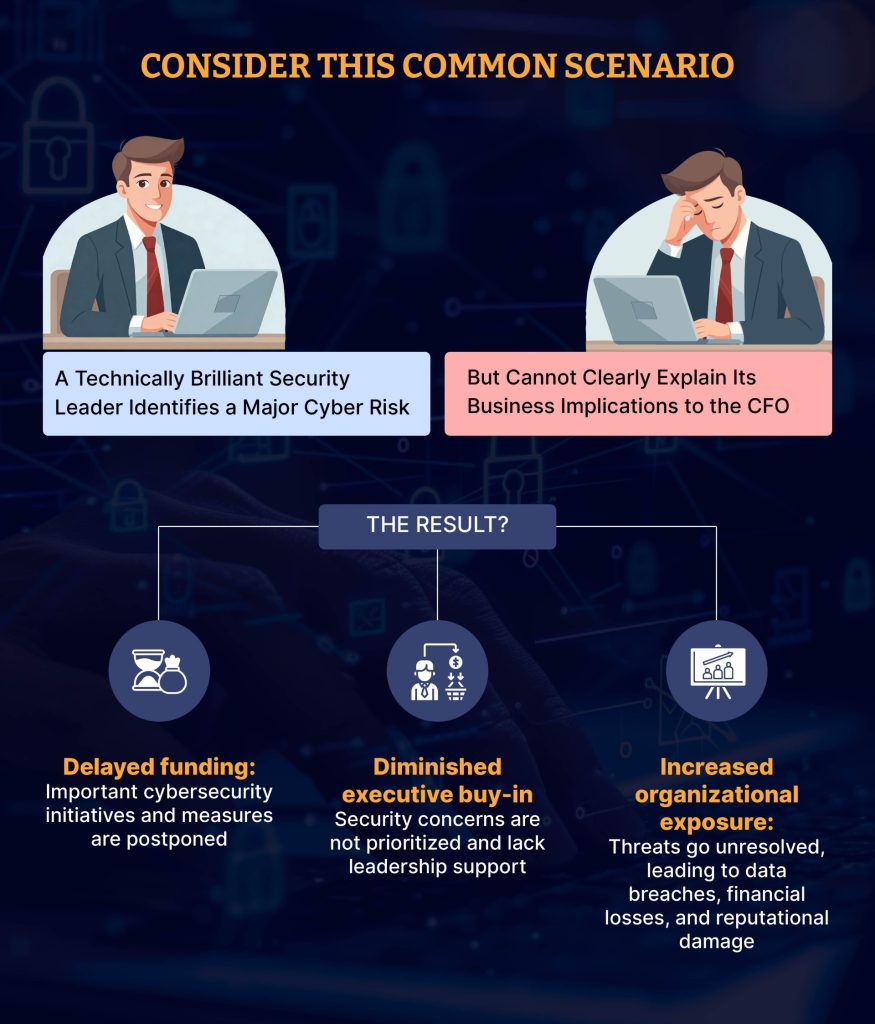
This is often referred to as the “technical-to-executive translation problem.” In many organizations, traditional CISOs struggle to explain cyber risk in plain business terms.
CISOs with stronger business acumen tend to maintain longer executive tenures because they build stronger relationships with board members and executive leadership teams. Increasingly, CISOs report directly to CEOs or CROs (Chief Risk Officers). This reporting structure fundamentally changes the skill set required for success.
The 5 Skills That Now Define CISO Candidates
1. Risk Quantification in Financial Language
Modern CISOs must explain cyber risk in dollars and in terms of business impact, not just technical severity scores. Frameworks like FAIR (Factor Analysis of Information Risk) help cybersecurity leaders quantify cyber risk in financial terms, enabling leadership teams to make informed investment decisions.
Board members want CISOs capable of answering questions like:
- What’s the financial exposure?
- What’s the operational impact?
- What’s the regulatory risk?
- What’s the likely business disruption?
2. Executive Communication and Governance Fluency
Executive communication has become one of the most valuable CISO competencies. A successful CISO must:
- Present confidently to board members and decision makers
- Translate technical risk into business outcomes
- Understand governance structures
- Communicate clearly during crises
This requires a communication style completely different from that of technical leadership.
3. Vendor and Third-Party Risk Management
Today’s enterprises depend heavily on cloud vendors, SaaS providers, and external third-party suppliers. As SEC disclosure expectations increase, organizations now scrutinize third-party cyber risk far more aggressively. Modern CISOs must understand:
- Supply chain risk
- Contractual obligations
- Vendor management
- Enterprise risk ecosystems
4. Strategic Planning and Security Program Management
Security leaders are now expected to manage cybersecurity as a business function, which includes:
- Budget planning
- Program prioritization
- Resource allocation
- Long-term security strategy
- ROI justification
In large-scale corporations, CISOs oversee multimillion-dollar budgets and enterprise-wide transformation initiatives.
5. Crisis Leadership
Cyber incidents and disasters have become publicly known events that can ruin an organization if not handled appropriately. During a breach, CISOs may need to communicate simultaneously with:
- Executives
- Board members
- Regulators
- Legal counsel
- Customers
- Investors
The ability to remain calm, communicate clearly, and lead decisively under pressure has become a defining executive trait.
Why Business Education Is a CISO Accelerator
The skills listed above illustrate why many cybersecurity professionals are pursuing advanced business education. A well-designed MBA degree includes learning aspects that purely technical programs typically don’t offer, such as financial literacy, an understanding of governance, leadership development, organizational strategy, and executive communication skills.
When combined with technical cybersecurity experience, this creates what many organizations are actively seeking – the “bilingual CISO.”
A bilingual CISO is someone who can communicate seamlessly with:
- Cybersecurity engineers and analysts
- Other C-level executives
- Legal teams
- Regulators
- Boards of directors
- Investors and company shareholders
How ECCU’s Cybersecurity-Focused MBA Builds Future-Ready CISOs
At EC-Council University (ECCU), we help cybersecurity professionals who acknowledge that reaching the CISO level requires more than technical mastery. Our cybersecurity-focused MBA program is specifically crafted to help them bridge the gap between technical leadership and executive leadership. The program comes in two specialization options:
Both specializations combine advanced cybersecurity concepts with business-critical disciplines, including security governance, enterprise risk management, strategic planning, financial management, enterprise AI implementation, resource allocation, policy development, and more.
Importantly, our MBA program is ideal for working professionals, allowing students to continue advancing their careers while completing coursework online.
We also offer the globally respected CCISO (Certified Chief Information Security Officer) certification as a standalone course, which empowers professional growth with executive-level credentials.
To know more about how ECCU can help you accomplish your goal of becoming a CISO:
Frequently Asked Questions
Yes. Technical proficiency remains important, but organizations increasingly expect CISOs to combine this expertise with business leadership, governance, and communication skills.
Modern CISOs interact regularly with board members, regulators, legal teams, and other leadership executives. They must explain cyber risk in financial and strategic terms rather than purely technical language.
Key skills include financial management, corporate governance, risk management, strategic planning, executive communication, and crisis leadership.
The SEC’s 2023 cybersecurity disclosure rules increased board-level accountability for cyber governance and incident reporting, placing greater communication and regulatory responsibilities on CISOs.
Yes. An MBA can help cybersecurity professionals develop leadership, governance, and financial skills that are increasingly required for executive-level cybersecurity positions.
A bilingual CISO is a leader who can communicate effectively with both technical teams and business executives.
ECCU offers a cybersecurity-focused MBA program designed to empower the next generation of CISOs with executive leadership, governance, and strategic communication skills required for modern CISO positions.