More Streaming = More Cybersecurity Risks
Streaming services have transformed how many of us consume entertainment. Whether you use video streaming platforms, music services, live-streaming applications, or cloud gaming platforms, these services offer unmatched convenience and accessibility.
However, convenience often comes with cybersecurity challenges. Streaming services rely on data centers to process and store vast amounts of personal information, payment details, viewing habits, and device data. Cybercriminals recognize this and are increasingly targeting both users and streaming providers through sophisticated attacks.
If you regularly stream movies, television shows, sports, music, or live content, understanding the cybersecurity risks associated with these platforms is essential.
According to Nielsen, streaming viewership increased by 71% between May 2021 and May 2025. During the same period:
– Broadcast television viewing declined by 21%.
– Cable television viewing declined by 39%.
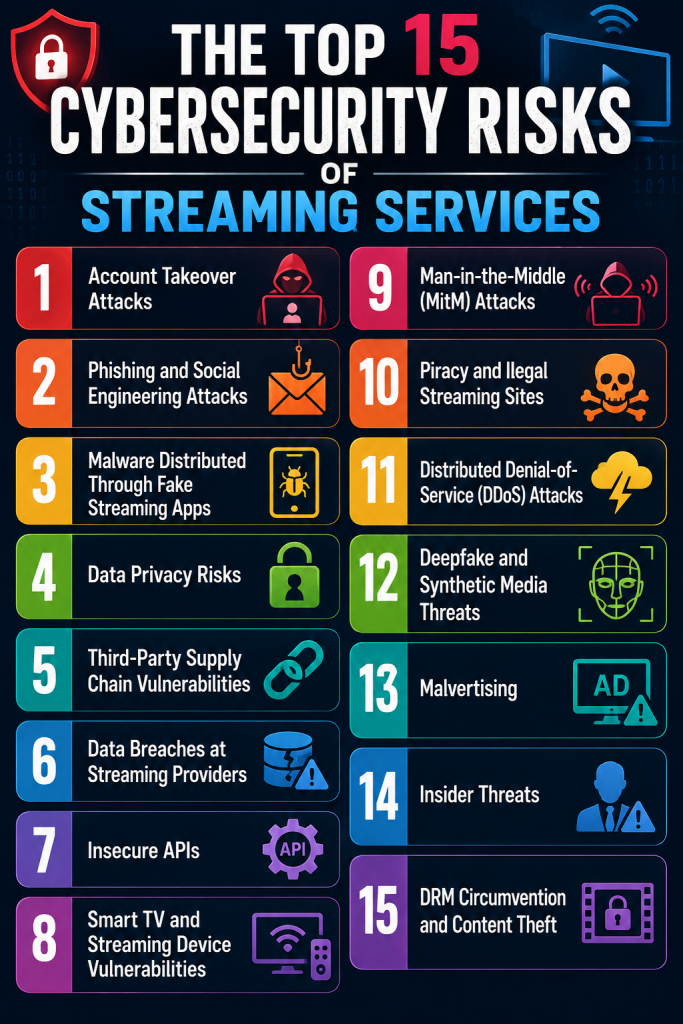
With that in mind, here’s a closer look at the 15 most significant cybersecurity risks of streaming services and what you can do to stay protected:
1. Account Takeover Attacks
Account takeover attacks occur when cybercriminals gain unauthorized access to a user’s streaming account. Attackers often obtain login credentials through previous data breaches, phishing campaigns, or credential-stuffing attacks. In many cases, users reuse the same password across multiple online accounts. If one website suffers a breach, attackers can test those credentials against other popular streaming services.
How It Works
- Attackers acquire stolen username-password combinations
- Automated tools attempt to log into streaming platforms
- Successful logins provide access to multiple user accounts
Potential Damage
- Unauthorized account use
- Fraudulent purchases
- Exposure of personal information
- Access to linked payment methods
- Resale of stolen accounts on criminal marketplaces
2. Phishing and Social Engineering Attacks
Phishing remains one of the most effective methods cybercriminals use to target streaming users. Attackers often send fake emails, text messages, or pop-up notifications claiming that a subscription has expired, payment information needs updating, or an account has been suspended. AI has only supercharged this type of cybercrime.
How It Works
- Users receive messages that appear legitimate
- Victims click on malicious links
- Fake websites capture login credentials and payment data
Potential Damage
- Stolen credentials
- Financial fraud
- Identity theft
- Malware infections
Find out more about AI-powered phishing and social engineering in this article
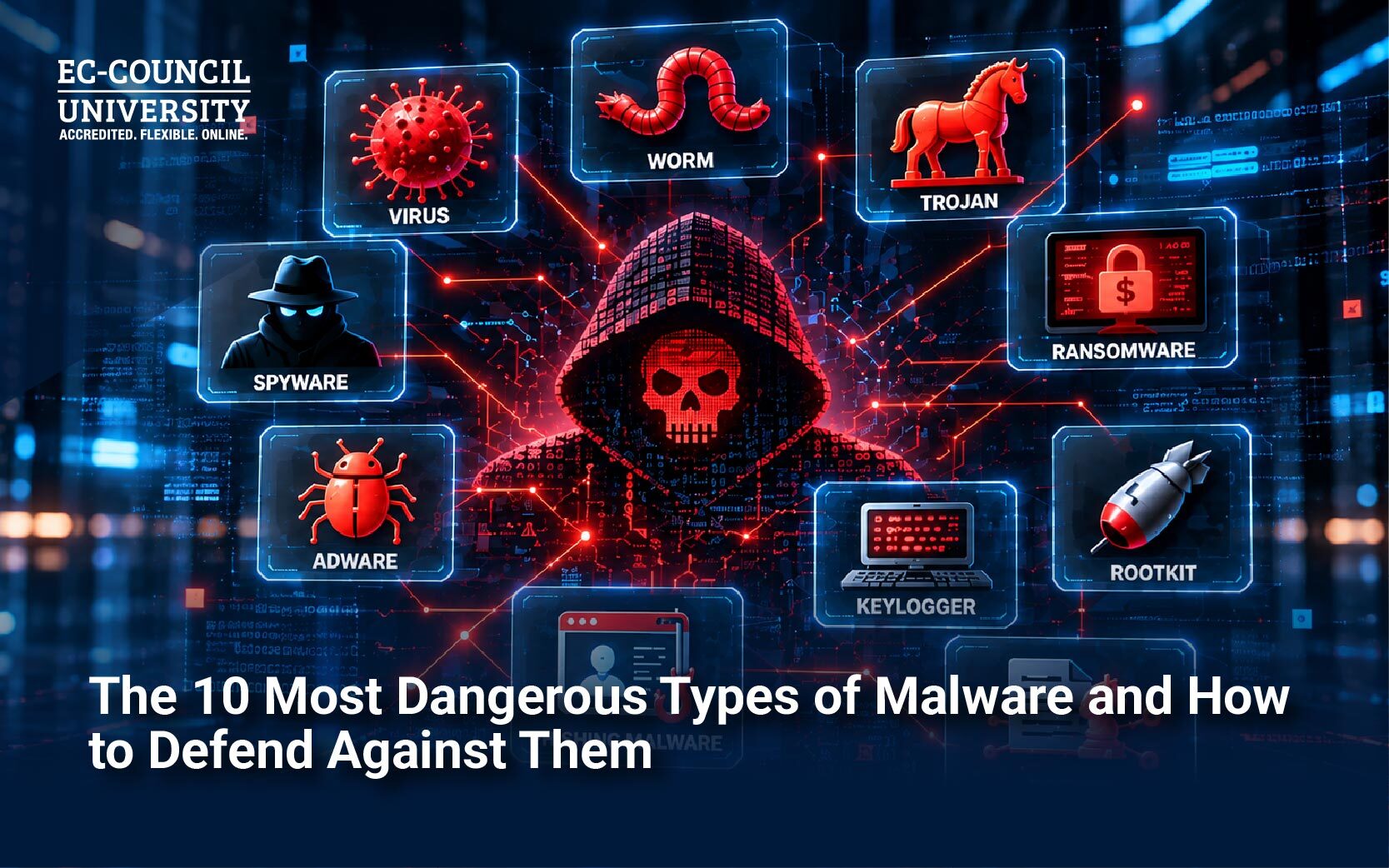
3. Malware Distributed Through Fake Streaming Apps
Many users seek free access to premium content. Cybercriminals exploit this demand by distributing fake streaming applications and unauthorized software.
How It Works
- Users download unofficial streaming apps
- Malicious code installs alongside the application
- Malware operates silently in the background
Potential Damage
- Ransomware infections
- Spyware surveillance
- Credential theft
- Banking fraud
- Device compromise
4. Data Privacy Risks
Streaming platforms collect substantial amounts of personal information to improve recommendations and user experiences. While data collection can enhance service quality, it also creates privacy concerns.
How It Works
Streaming providers may collect:
- Viewing habits
- Search history
- Device information
- Geographic location
- Payment details
Potential Damage
- Privacy violations
- Extensive user profiling
- Unauthorized data sharing
- Exposure during data breaches
5. Third-Party Supply Chain Vulnerabilities
Streaming ecosystems rely on numerous third-party providers, including cloud services, content delivery networks (CDNs), payment processors, and analytics platforms. A security failure within any third-party vendor can affect the entire streaming service.
How It Works
- Attackers compromise a trusted supplier
- Malicious code or unauthorized access spreads through connected systems
- Streaming services unknowingly inherit the compromise
Potential Damage
- Data breaches
- Service disruptions
- Credential theft
- Large-scale attacks affecting millions of users
Find out more about third-party vendor cyberattacks in this article
6. Data Breaches at Streaming Providers
Like any online business, streaming companies store valuable customer information that attracts cybercriminals. Even a relatively small breach can affect millions of subscribers.
How It Works
Attackers exploit vulnerabilities, misconfigurations, or stolen credentials to access sensitive databases.
Potential Damage
- Exposure of user accounts
- Financial information theft
- Identity theft risks
- Reputational damage for providers
- Regulatory penalties
7. Insecure APIs
Modern streaming services depend heavily on Application Programming Interfaces (APIs) to connect mobile apps, smart TVs, websites, and backend systems. If APIs are not properly secured, attackers can exploit them to access sensitive information.
How It Works
- Attackers identify API vulnerabilities
- Weak authentication or authorization controls are exploited
- Data and functionality become accessible without permission
Potential Damage
- Account compromise
- Unauthorized data access
- Service abuse
- Information disclosure
8. Smart TV and Device Vulnerabilities
Smart TVs and other streaming devices are effectively internet-connected computers. Unfortunately, many consumers fail to update them regularly. A compromised smart TV can become a gateway into your broader home network.
How It Works
- Devices contain outdated firmware
- Security patches remain uninstalled
- Attackers exploit known vulnerabilities
Potential Damage
- Network intrusion
- Device hijacking
- Surveillance activities
- Participation in botnet attacks
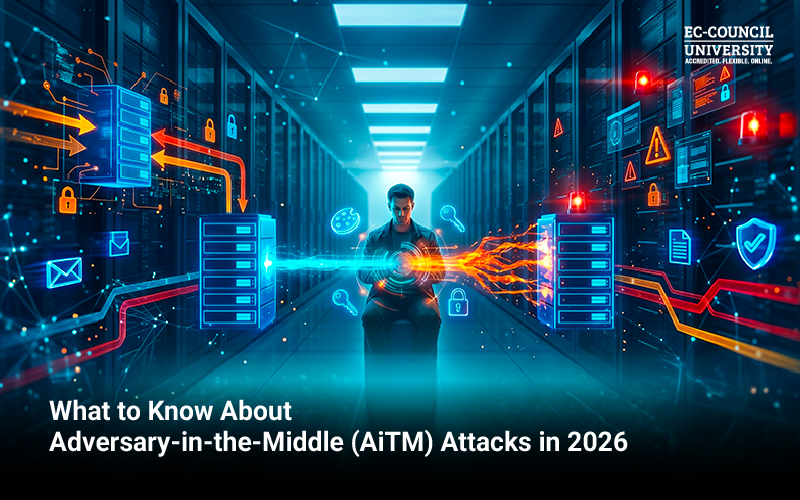
9. Man-in-the-Middle (MitM) Attacks
Streaming on public Wi-Fi networks introduces additional risks. A man-in-the-middle attack occurs when attackers intercept communications between users and streaming services.
How It Works
- Users connect to compromised or rogue Wi-Fi networks
- Attackers monitor or alter network traffic
- Sensitive information may be intercepted
Potential Damage
- Credential theft
- Session hijacking
- Privacy violations
- Unauthorized account access
Find out more about Man-in-the-Middle cyberattacks in this article
10. Piracy and Illegal Streaming Sites
Illegal streaming websites often expose visitors to significant cybersecurity threats. While these sites may appear to offer free content, many generate revenue through malicious advertising and scams.
How It Works
- Users visit unauthorized streaming sites
- Malicious advertisements execute automatically
- Fake download buttons trigger malware installation
Potential Damage
- Malware infections
- Identity theft
- Financial fraud
- Device compromise
11. Distributed Denial-of-Service (DDoS) Attacks
Streaming providers depend on uninterrupted availability. This makes them attractive targets for DDoS attacks. Once again, AI has drastically increased the potency of DDoS attacks. High-profile sporting events and live broadcasts are particularly attractive targets.
How It Works
- Attackers use botnets to generate overwhelming traffic
- Servers become overloaded
- Legitimate users cannot access services
Potential Damage
- Service outages
- Lost revenue
- Customer dissatisfaction
- Brand damage
Find out more about AI-driven DDoS attacks in this article
12. Deepfake and Synthetic Media Threats
AI has also introduced completely new risks to streaming platforms. Deepfakes are a prime example. Deepfakes can create convincing but entirely fabricated video and audio content.
How It Works
- AI models generate realistic media
- Fraudsters distribute manipulated content through streaming channels
- Audiences may struggle to distinguish real from fake
Potential Damage
- Misinformation
- Reputation damage
- Fraud schemes
- Social engineering attacks
13. Malvertising
Many free streaming services rely on advertising revenue. Unfortunately, advertising networks can occasionally be used as vehicles for cyberattacks.
How It Works
- Attackers place malicious advertisements
- Users click infected ads or are redirected automatically
- Malware downloads occur without user awareness
Potential Damage
- Malware infections
- Data theft
- Browser compromise
- Financial fraud
14. Insider Threats
Not all cybersecurity threats originate outside an organization. Employees, contractors, and business partners often have access to sensitive systems and information. What’s concerning about this is that insider threats are particularly difficult to detect because the individuals involved often have legitimate access.
How It Works
- Insiders misuse authorized access
- Negligent actions expose sensitive data
- Malicious employees intentionally steal information
Potential Damage
- Data leaks
- Intellectual property theft
- Operational disruptions
- Compliance violations
Find out more about insider threats in this article
15. DRM Circumvention and Content Theft
Digital Rights Management (DRM) technologies protect copyrighted content from unauthorized distribution. Cybercriminals continuously attempt to bypass these protections. While primarily a business concern, DRM circumvention tools may also expose users to malware and scams.
How It Works
- Attackers exploit DRM weaknesses
- Protected content is copied and redistributed
- Piracy networks distribute stolen media
Potential Damage
- Revenue loss
- Intellectual property theft
- Brand damage
- Security vulnerabilities introduced by DRM bypass tools
How You Can Avoid Cybersecurity Risks of Streaming Services
As a streaming user, you can significantly reduce your cybersecurity risk by adopting these few simple habits:
- Use Strong, Unique Passwords: Create unique passwords for every streaming account. Consider using a password manager to generate and store them securely.
- Enable Multi-Factor Authentication (MFA): Whenever available, activate MFA to add an extra layer of account protection.
- Avoid Pirated Streaming Sites: Stick to legitimate streaming providers and official app stores.
- Keep Devices Updated: Install firmware and software updates regularly on smart TVs, mobile devices, and computers.
- Verify Emails and Messages: Never click links in unsolicited messages without verifying their legitimacy.
- Secure Your Home Network: Use WPA3 or WPA2 encryption and strong Wi-Fi passwords to protect connected devices.
- Monitor Account Activity: Review login histories and account settings periodically for suspicious activity.
Best Practices for Streaming Service Providers to Mitigate Cybersecurity Risks
Streaming service providers play a critical role in protecting user data and maintaining platform integrity. The following steps can strengthen their efforts:
- Implement Strong Authentication: Require MFA options and detect suspicious login activity.
- Secure APIs: Conduct regular API security assessments and implement robust authentication controls.
- Encrypt Sensitive Data: Use encryption for both data in transit and data at rest.
- Monitor for Credential-Stuffing Attacks: Deploy bot detection and behavioral analytics tools.
- Conduct Regular Security Testing: Perform penetration testing, vulnerability scanning, and red-team exercises.
- Strengthen Supply Chain Security: Evaluate third-party vendors and continuously monitor their security posture.
- Apply Zero Trust Principles: Verify every access request and enforce least-privilege access controls.
- Improve Employee Security Awareness: Train staff to recognize phishing attacks, insider threats, and social engineering techniques.
Why Cybersecurity Awareness Matters
Cybersecurity awareness is one of the most effective defenses against streaming-related threats. Technology alone cannot stop every attack. Users must understand how cybercriminals operate and recognize common warning signs. When consumers know how to identify phishing emails, avoid suspicious downloads, and secure their accounts, they become much harder targets. Likewise, streaming providers that invest in employee education and user awareness programs create stronger security cultures.
As streaming services continue to grow in popularity, cybercriminals will continue seeking new opportunities to exploit users and platforms. Staying informed is an essential part of safely enjoying digital entertainment.
Frequently Asked Questions About Cybersecurity Risks of Streaming Services
Most reputable streaming services are generally safe. However, users should still practice good cybersecurity hygiene, including using strong passwords, enabling MFA, and avoiding suspicious links.
Yes. Like any online platform, streaming services can experience data breaches, account takeovers, API attacks, and other cybersecurity incidents.
Streaming accounts contain valuable information, including personal details, payment methods, and subscription access, which can be sold or misused.
Yes. Smart TVs can contain security vulnerabilities, especially if firmware updates are not installed regularly.
Yes. Illegal streaming sites frequently expose users to malware, phishing scams, malicious advertisements, and identity theft risks.
Account takeover attacks remain one of the most common and damaging threats because many users reuse passwords across multiple online services.
Use unique passwords, enable multi-factor authentication, update devices regularly, monitor account activity, and avoid downloading unofficial streaming applications.