Edge Computing is Changing the Dynamics of Cybersecurity
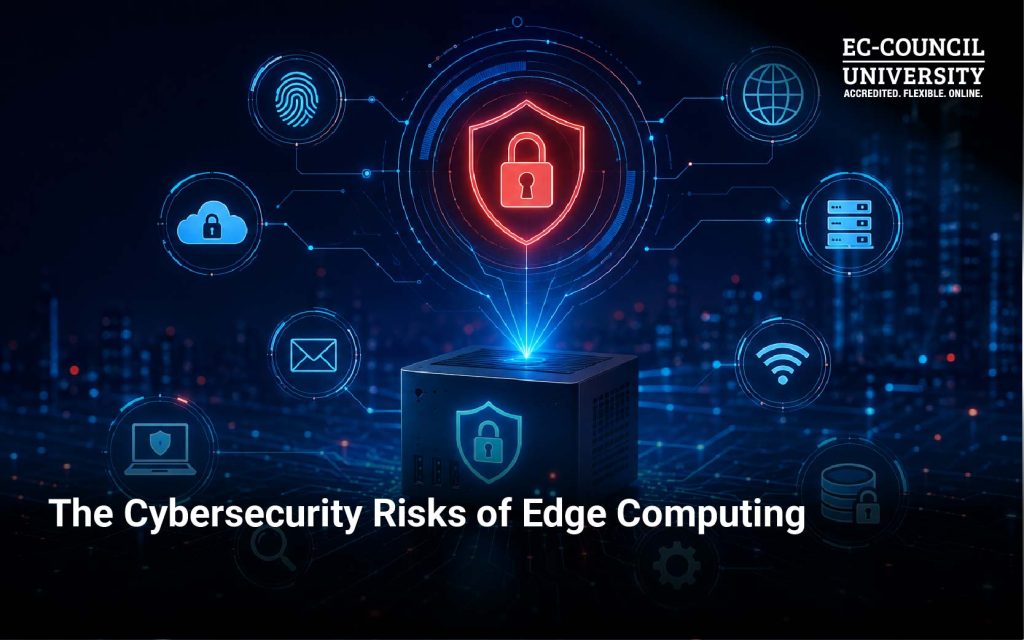
Instead of sending every byte of information to a centralized cloud or data center, edge computing processes data in close proximity to where it’s generated, such as on devices, gateways, local servers, and other distributed infrastructure. For businesses, this can deliver faster response times, lower latency, improved operational efficiency, and greater resilience. But there is a trade-off. The more infrastructure you distribute, the more infrastructure you must secure.
That’s why edge computing represents a fundamental shift in the security perimeter. Your organization may no longer have a clearly defined network boundary. Instead, you could be defending thousands of devices and workloads spread across offices, factories, retail locations, vehicles, healthcare facilities, and other remote environments.
Why Is Edge Computing a Cybersecurity Concern?
It begins with scale. Edge environments commonly combine IoT devices, sensors, gateways, routers, applications, cloud services, APIs, and local computing resources. Each component can introduce new vulnerabilities or become a target. NIST has warned that organizations may not even be fully aware of how many IoT devices operate within their environments, and that IoT devices can pose risks that differ from those of traditional IT systems.
With this in mind, let’s examine the top cybersecurity risks associated with edge computing:
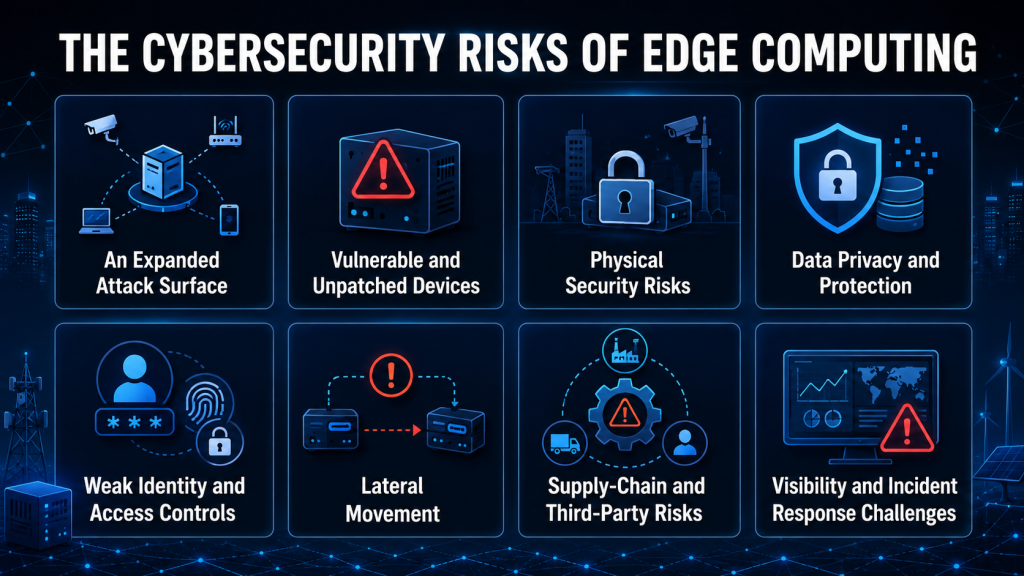
1. An Expanded Attack Surface
Traditional enterprise environments often concentrate critical infrastructure within controlled data centers and cloud platforms. Edge computing distributes infrastructure across many locations, creating more potential entry points. An attacker might target a smart sensor, gateway, local server, router, industrial control device, or exposed management interface. Once one device is compromised, the attacker may attempt to use it as a launching point for attacks against other systems.
The security principle is simple: every connected edge device needs to be treated as part of the organization’s attack surface.
2. Vulnerable and Unpatched Devices
Edge devices frequently have limited computing resources and may run specialized operating systems or firmware. Some may not support sophisticated endpoint security tools. Patching can also become difficult when an organization manages thousands of geographically distributed devices. This is particularly concerning because exploiting vulnerabilities is already a major pathway for breaches.
For security teams, this means vulnerability management cannot stop at laptops and servers. It must extend to every edge device.
3. Physical Security Risks
Unlike centralized data centers, edge devices may operate in locations that security teams cannot physically control. Think about a device deployed inside a retail store, manufacturing facility, traffic system, remote office, or vehicle. An attacker who gains physical access might attempt to tamper with hardware, extract credentials or cryptographic material, replace components, or introduce malicious software.
Physical security, therefore, becomes an important part of cybersecurity. Organizations need to consider not only whether a device is digitally secure, but also where it is located and who can physically access it.
4. Data Privacy and Protection
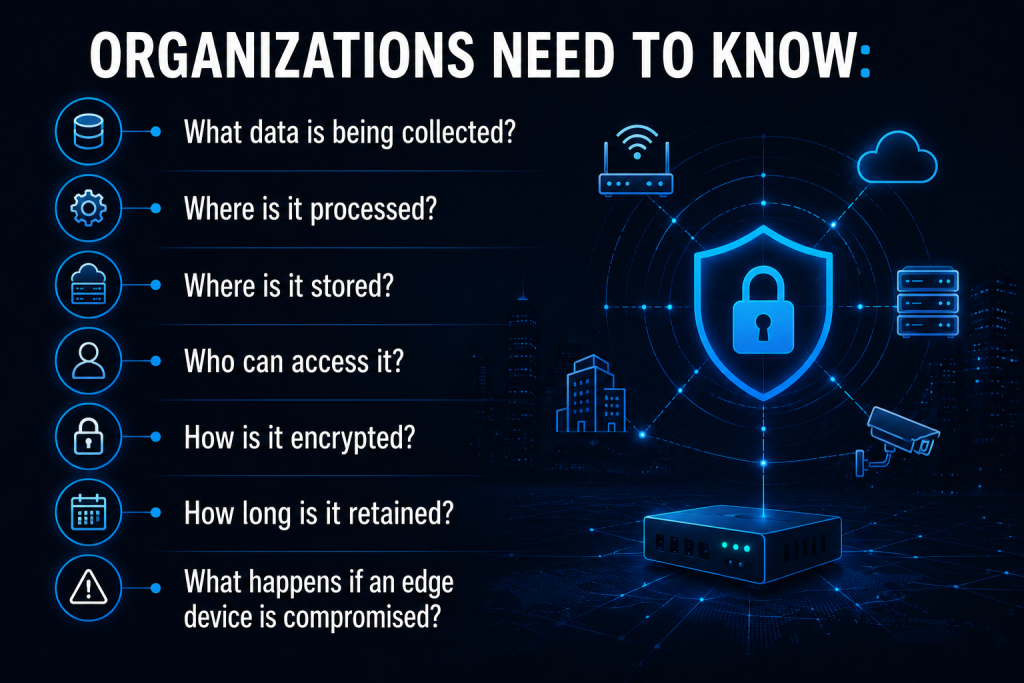
One of edge computing’s major advantages is its ability to process sensitive information locally. However, distributing processing also means sensitive information may exist across numerous devices and locations. This can complicate data governance.
5. Weak Identity and Access Controls
Edge environments create a complex identity problem. It’s not just employees who require authentication. Devices, applications, APIs, services, workloads, and automated processes may all need identities. If organizations rely on default passwords, shared credentials, excessive privileges, or weak authentication, attackers may gain unauthorized access to edge systems.
A compromised credential can be particularly dangerous when an edge environment is connected to corporate applications or cloud resources. Strong authentication, least-privilege access, device identity, and continuous authorization are therefore essential components of an effective edge security strategy.
6. Lateral Movement
One compromised device can become a pathway into a much larger environment. Imagine an attacker compromising an edge gateway and then using that gateway to reach internal applications, databases, operational technology, or cloud services. This is why network segmentation is so important.
Security teams should limit unnecessary communication between edge devices and other organizational resources. Zero Trust principles can also help organizations continuously verify users, devices, applications, and access requests rather than automatically trusting entities simply because they are connected to an internal network.
7. Supply-Chain and Third-Party Risks
Edge infrastructure rarely comes from a single vendor. Organizations may depend on hardware manufacturers, software developers, cloud providers, telecommunications companies, managed service providers, and other third parties. A vulnerability in one component can therefore affect many connected systems.
For organizations deploying edge technologies, third-party vendor security assessments and software supply chain controls should be part of the cybersecurity strategy from the beginning, not after deployment.
8. Visibility and Incident Response Challenges
Another significant challenge is knowing what is happening across the entire edge environment. Security teams may have to collect and analyze telemetry from thousands of devices running different operating systems, firmware versions, applications, and security controls. When a cyberattack occurs, they must determine which device was compromised, how the attacker gained access, which systems were breached, and what data was exposed.
Remote locations can make containment and forensic investigation even more difficult. Organizations, therefore, require centralized visibility, effective logging, continuous monitoring, automated alerting, and well-tested incident response procedures.
How Can Organizations Protect Edge Computing Networks?
There is no single technology that solves edge security. Organizations need a layered approach that includes:
- Asset discovery: Know every edge device connected to the environment.
- Strong identity and authentication: Secure both human and machine identities.
- Zero Trust architecture: Zero Trust principles mandate continuously validating access rather than automatically trusting connected devices.
- Encryption: Protect data both in transit and at rest.
- Network segmentation: Prevent compromised devices from freely reaching other systems.
- Vulnerability management: Identify, prioritize, patch, and monitor vulnerabilities.
- Secure configuration: Eliminate default credentials and unnecessary services.
- Continuous monitoring: Detect anomalous behavior across distributed infrastructures.
- Supply-chain security: Evaluate vendors, software, firmware, and third-party dependencies.
- Incident response planning: Prepare for remote isolation, investigation, recovery, and device replacement.
As Edge Computing Expands, Cybersecurity Professionals Must Step Up
Be in no doubt, edge computing is here to stay. As organizations increasingly deploy connected devices and bring computing closer to users, machines, and physical processes, cybersecurity professionals will need to strengthen their expertise in network, cloud, and IoT security; identity and access management; vulnerability assessment; incident response; data protection; and cyber risk management. EC-Council University (ECCU) offers a range of flexible online cybersecurity degrees and certification courses that hone these capabilities by combining academic rigor, hands-on lab practice, and instructions from highly experienced cybersecurity practitioners.
To know more about how ECCU’s advanced cybersecurity education can help you become a skilled defender of edge computing networks:
Frequently Asked Questions
Edge computing processes data closer to where it is generated, rather than relying exclusively on centralized cloud or data center infrastructure. From a cybersecurity perspective, this creates additional devices, connections, applications, and locations that must be protected.
The expanded attack surface is one of the biggest risks. Organizations may have thousands of distributed devices, gateways, applications, and connections that attackers can potentially exploit.
Edge devices can provide access to valuable data and connected systems. Some also have limited security capabilities, may be difficult to patch, or may be physically located outside controlled facilities.
While edge computing diminishes the need to transfer sensitive data to centralized systems, it can also distribute data across many devices. Organizations must therefore carefully manage encryption, access, storage, retention, and data governance.
Zero Trust reduces implicit trust by requiring users, devices, and applications to continually demonstrate authorization to access specific resources. This can help limit unauthorized access and lateral movement.
Organizations should maintain accurate asset inventories, enforce strong authentication, eliminate default credentials, securely configure devices, apply patches, encrypt communications, segment networks, monitor activity, and establish lifecycle management processes. NIST provides specific guidance for managing IoT cybersecurity risks.