
An Overview of Shadow AI Usage in the Workplace
AI has quickly become one of the most transformative workplace technologies of the decade. Employees now use generative AI to draft emails, summarize reports, analyze data, write code, and automate repetitive tasks. These capabilities can significantly improve productivity, but they also introduce growing AI-based cybersecurity challenges that many organizations have yet to address. One of these challenges is known as Shadow AI.
The concern is no longer theoretical. Employees frequently paste proprietary source code, financial data, customer records, contracts, healthcare information, and intellectual property into publicly available AI platforms. Once sensitive information leaves an organization’s managed environment, security teams lose visibility into where the data resides, how it is processed, and whether it could be retained or exposed. Employees are motivated by convenience and productivity at a time when many organizations are still developing AI policies and security controls. The result is a new category of cyber risk that combines data privacy, regulatory compliance, third-party risk, and governance challenges.
Much like shadow IT emerged when employees adopted unauthorized cloud applications without IT approval, Shadow AI refers to the use of artificial intelligence tools that operate outside an organization’s governance, security controls, and visibility.
Fortunately, the solution is not to ban AI. Organizations that implement thoughtful governance, approved AI platforms, employee education, and continuous oversight can safely unlock AI’s productivity benefits while minimizing cyber risk.
What Is Shadow AI?
Shadow AI refers to the unauthorized or unsanctioned use of AI tools, applications, models, or services within an organization without the knowledge, approval, or oversight of IT, cybersecurity, legal, or compliance teams.
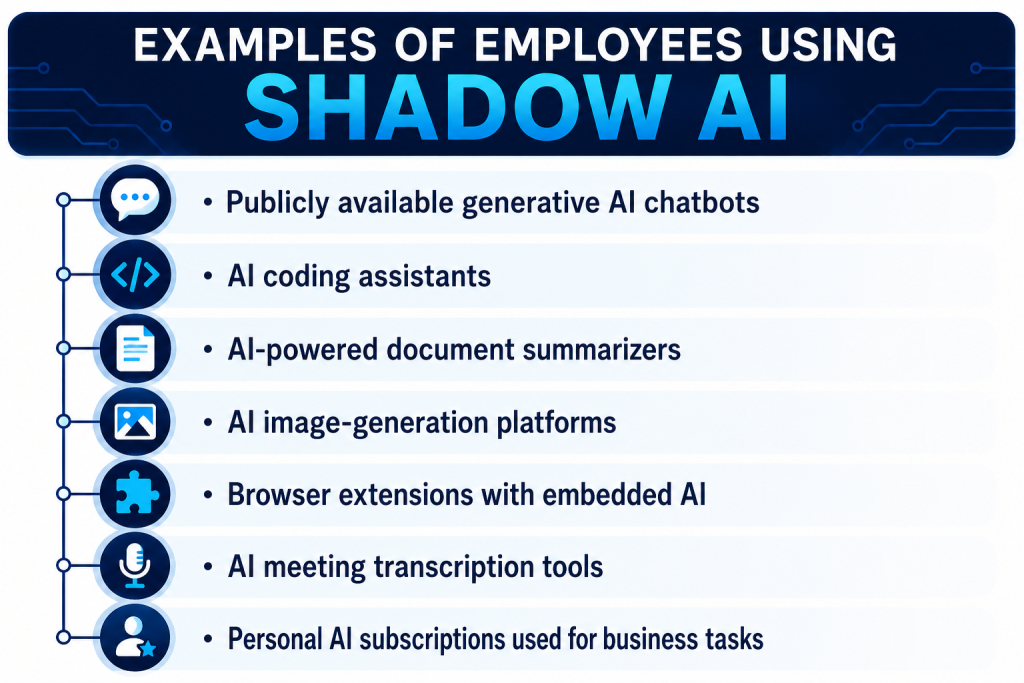
Shadow AI represents the natural evolution of shadow IT. For years, employees bypassed IT by using personal cloud storage, messaging apps, and SaaS platforms to work more efficiently. Today, AI tools pose the same challenge, but with considerably greater consequences, as they often process sensitive organizational information. Unlike traditional software, generative AI actively consumes user prompts and organizational data to generate outputs. This interaction dramatically increases the risk of exposure to confidential information.
Why Shadow AI Usage Is Spreading So Quickly
The following factors explain why Shadow AI has spread across nearly every industry:
- AI Is Extremely Easy to Use: Most modern AI platforms require only a web browser and an email address. Employees can begin using sophisticated AI tools in minutes without requesting software installation or administrative approval.
- Productivity Pressures Continue to Rise: Organizations expect employees to accomplish more with fewer resources. AI tools help automate repetitive work, summarize lengthy documents, generate reports, and accelerate software development.
- Low Friction Encourages Adoption: Unlike traditional enterprise software implementations that may require procurement reviews, security assessments, and deployment planning, many AI tools are free or inexpensive and immediately accessible.
The Risks Introduced by Shadow AI
Shadow AI creates risks that extend far beyond unauthorized software usage. It affects cybersecurity, compliance, legal exposure, intellectual property protection, and business decision-making. Consider these risks of Shadow AI:
1 - Data and Privacy Exposure
The greatest concern is sensitive information leaving controlled enterprise environments. Employees may unknowingly submit customer information, financial records, source code, legal documents, product designs, healthcare information, or trade secrets. Once data is entered into an external AI service, organizations may have limited visibility into where the data is stored, whether prompts are retained, how information is processed, whether contractual protections exist, and which jurisdictions govern the data. For organizations operating under regulations such as GDPR, HIPAA, PCI DSS, CCPA, or industry-specific contractual obligations, unauthorized AI usage can introduce significant compliance challenges.
2 - Security and Integrity Risks
Not all AI tools are equally secure. Employees may unknowingly use AI services that lack enterprise-grade security controls, store prompts indefinitely, have weak authentication, operate from unknown jurisdictions, integrate insecure third-party plugins, or introduce software supply chain risks.
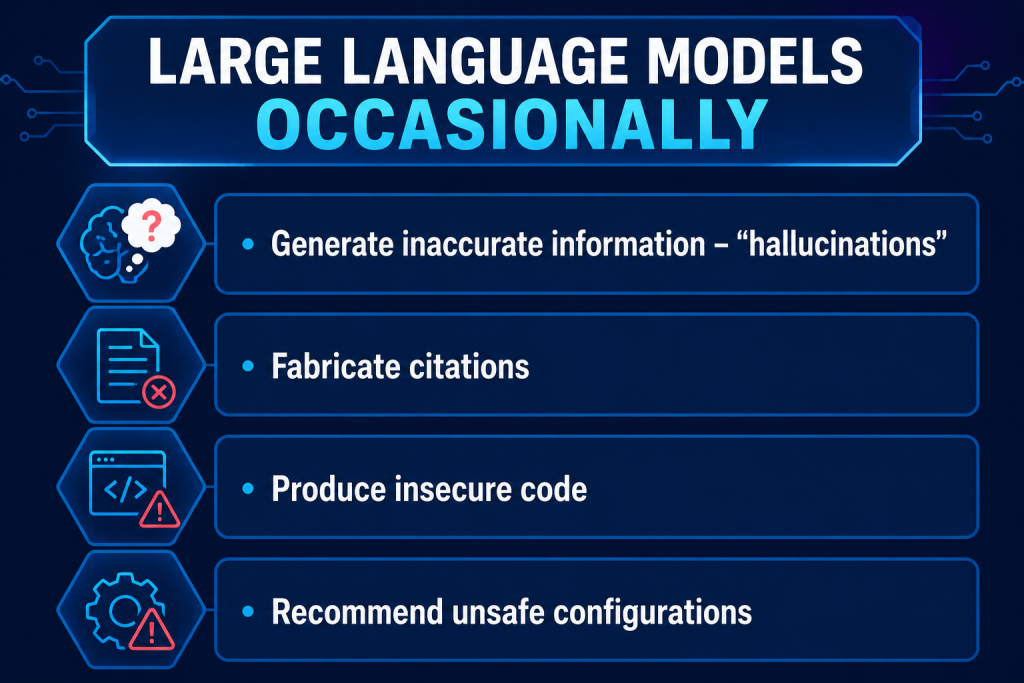
When employees trust AI outputs without validation, organizations risk making operational, financial, or security decisions based on unreliable information.
3 - Loss of Auditability and Accountability
Security teams cannot protect what they cannot see. Shadow AI limits organizational visibility into which AI tools employees use, what data enters those systems, who accessed sensitive information, whether outputs influenced business decisions, and how AI interactions should be investigated during audits or incident response. This lack of auditability complicates compliance reporting and forensic investigations.
4 - Intellectual Property Risks
Organizations invest heavily in proprietary research, software, product designs, customer insights, and strategic planning. Submitting this information to unauthorized AI services may unintentionally expose intellectual property or violate contractual confidentiality agreements. For technology companies, research organizations, and defense contractors, these risks can be particularly significant.
Why Banning AI Doesn't Work
Many organizations initially respond to Shadow AI usage by blocking public AI services. Unfortunately, history demonstrates that prohibition rarely succeeds. Employees who believe AI helps them work faster often continue using personal devices, home computers, or mobile applications outside organizational visibility. This pushes Shadow AI further underground. Instead of reducing risk, blanket bans often eliminate transparency.
The better approach is enablement with governance. Organizations should provide secure, enterprise-approved AI platforms while clearly communicating acceptable use, prohibited activities, and data handling requirements. When employees have access to trusted AI solutions, they are far less likely to seek unauthorized alternatives.
Governing AI Responsibly
Managing Shadow AI requires organizational governance. Effective AI governance combines cybersecurity, legal oversight, privacy, ethics, compliance, and business leadership. A mature AI governance program typically includes:
- AI Usage Policies: Organizations should define approved AI platforms, acceptable business use cases, restricted data categories, prompt-handling requirements, human-review expectations, and record-retention guidelines. Clear policies reduce ambiguity and establish accountability.
- Approved Enterprise AI Tools: Employees should have access to vetted AI platforms that satisfy organizational security, privacy, and compliance requirements. Enterprise AI solutions typically provide administrative control, identity integration, encryption, logging, and data residency options. Providing secure alternatives significantly reduces the adoption of Shadow AI.
- Continuous Monitoring: Security teams should monitor AI application usage, SaaS discovery, browser activity (where appropriate and lawful), data loss prevention (DLP) events, API integrations, and third-party AI services. Visibility remains essential for managing emerging AI risks.
- Cross-Functional Governance: AI governance cannot reside solely within cybersecurity. Successful programs involve collaboration between executive leadership, information security teams, legal and data privacy stakeholders, compliance auditors, human resources professionals, and business units. This multidisciplinary approach ensures balanced decision-making.
Training Employees is the First Line of Defense Against Shadow AI
Technology alone cannot eliminate Shadow AI. Employees must understand:
- Which AI tools are approved
- What information should never be entered into AI systems
- How prompt engineering affects privacy
- How to validate AI-generated outputs
- Regulatory obligations surrounding AI use
- Emerging AI threats
Regular awareness training transforms employees from potential risk creators into informed AI users.
AI Governance Frameworks Organizations Should Follow
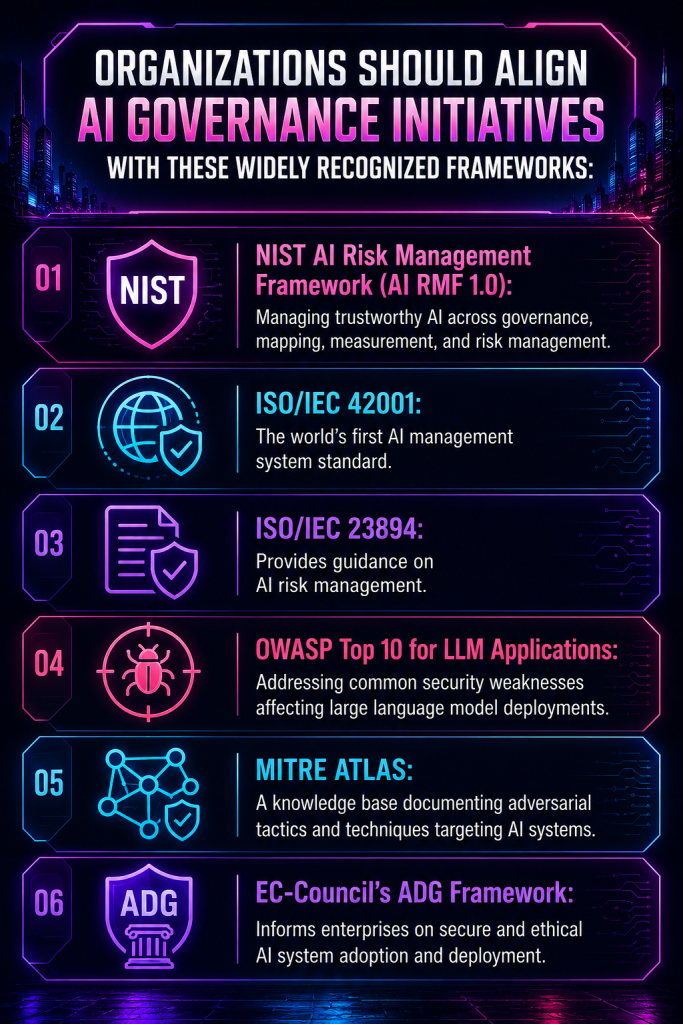
These frameworks help organizations establish consistent governance, security controls, accountability, and continuous improvement.
Develop the Skills to Lead in AI Governance
As AI becomes deeply embedded across business operations, organizations increasingly need professionals who understand both cybersecurity and AI governance. EC-Council University (ECCU) prepares cybersecurity leaders to address these emerging challenges through specialized education designed for today’s AI-driven threat landscape.
ECCU’s AI Governance, Compliance, and Ethical Risk Management certification course equips professionals with practical knowledge of AI governance frameworks, regulatory compliance, ethical decision-making, responsible AI implementation, and organizational risk management.
Professionals seeking to broaden their leadership capabilities can further strengthen their expertise through ECCU’s online Master of Science in Cyber Security (MSCS) and Master of Business Administration (MBA) programs. These graduate programs develop strategic competencies in cybersecurity leadership, enterprise security governance, risk management, cloud security, regulatory compliance, executive decision-making, and organizational resilience.
To know more about AI governance education at ECCU:
Frequently Asked Questions About Shadow AI
Shadow AI refers to the unauthorized use of artificial intelligence tools, applications, or services without approval or oversight from an organization’s IT, cybersecurity, or compliance teams.
Shadow IT involves unauthorized software or cloud services, while Shadow AI specifically involves AI platforms that process organizational data and generate automated outputs, introducing unique governance and privacy risks.
Employees often use AI tools because they improve productivity, are easy to access, require little technical knowledge, and may not have approved enterprise alternatives available.
Major risks include sensitive data leakage, compliance violations, exposure of intellectual property, unreliable AI outputs, software supply chain risks, and reduced visibility for security teams.
No. Most experts recommend governing AI responsibly rather than banning it, as prohibition often drives AI usage outside organizational visibility.
Healthcare, financial services, government, legal services, defense, education, manufacturing, and technology organizations often face elevated risks due to the sensitive or regulated information they handle.
Professionals can build expertise through specialized education in AI governance, compliance, cybersecurity leadership, enterprise risk management, and responsible AI implementation, such as relevant ECCU’s certification programs and graduate degrees.