Physical Cybersecurity Threats Can Be Just as Damaging as Digital Ones
Cybersecurity is often associated with sophisticated malware, ransomware, phishing campaigns, and network intrusions. However, one critical dimension of organizational security often receives less attention: physical cybersecurity.
Consider a scenario in which an attacker enters an office by following an employee through a secured door, connects a malicious USB device to an unattended workstation, and obtains access to sensitive corporate information. No sophisticated network exploit is necessary. A weakness in physical security can provide the initial entry point for a potentially serious cyber incident, underscoring the need for organizations to look beyond firewalls, endpoint security, and network monitoring when developing their cybersecurity strategies.
Physical cybersecurity focuses on protecting the facilities, hardware, devices, infrastructure, and physical access points that support an organization’s digital operations. It addresses threats that could compromise the confidentiality, integrity, and availability of information systems through physical access, manipulation, theft, or environmental disruption. For businesses, government agencies, healthcare institutions, financial organizations, and critical infrastructure operators, physical security must form an integral part of enterprise cybersecurity risk management.
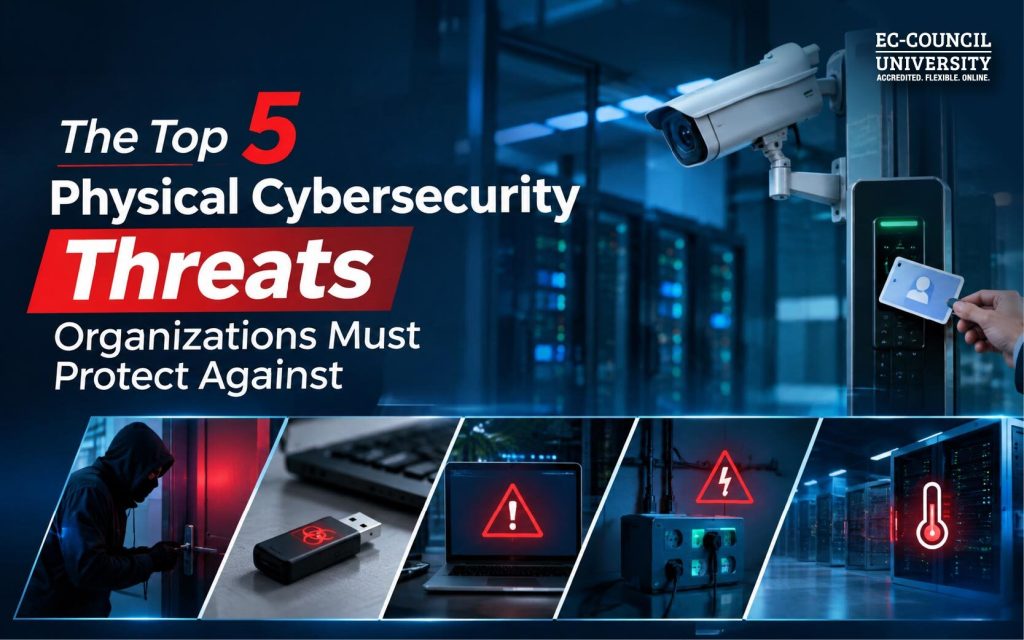
Let’s examine 5 major physical cybersecurity threats that organizations should recognize and proactively prevent:
1 - Unauthorized Physical Access and Tailgating
Unauthorized physical access occurs when an individual enters a restricted organizational facility, office, server room, data center, or network operations center without appropriate authorization.
One common technique of gaining such access is tailgating. An attacker follows an authorized employee through a secured entrance without using their own access credentials. Other techniques include impersonating maintenance personnel, contractors, delivery workers, or IT support staff. Once inside, an attacker may access unattended computers, connect unauthorized devices, examine confidential documents, or tamper with networking equipment.
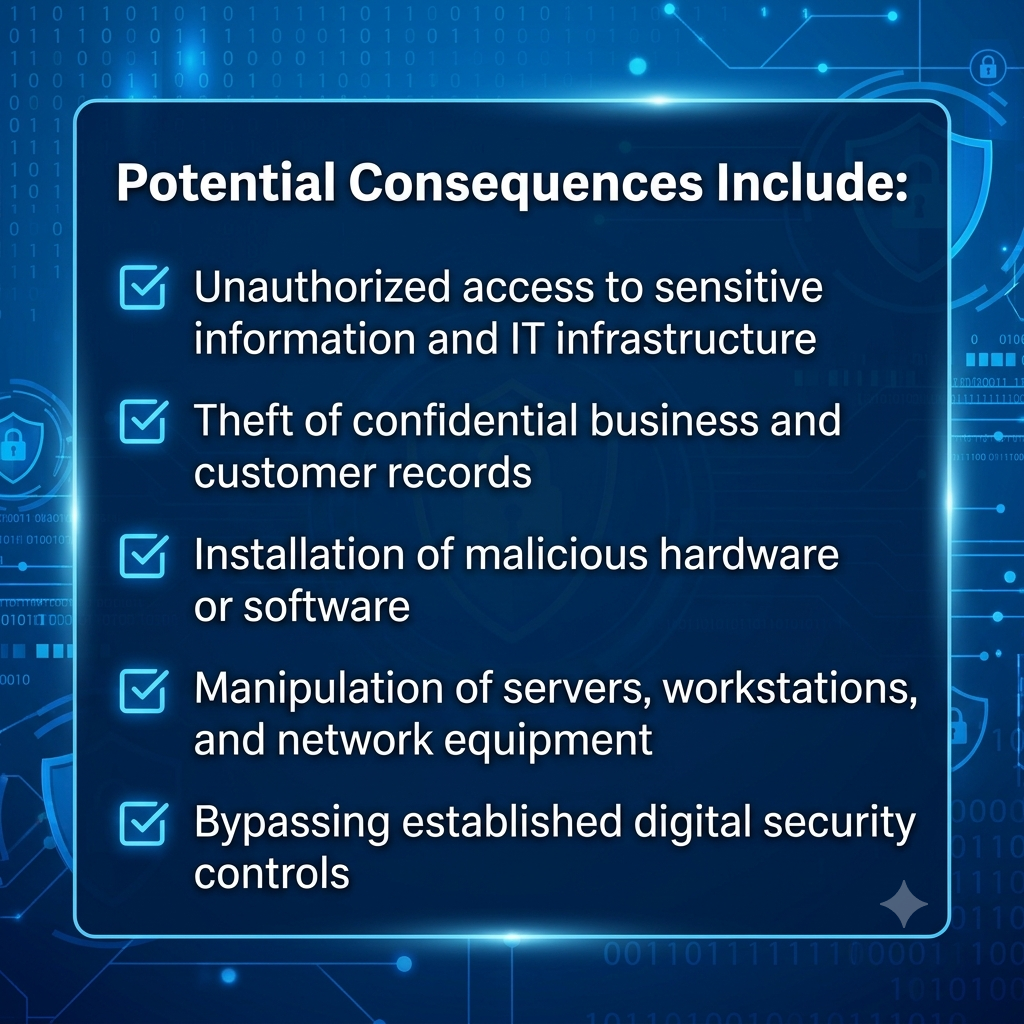
How organizations can mitigate this threat:
Organizations should implement electronic access control systems, multifactor authentication for sensitive facilities, biometric verification where appropriate, CCTV surveillance, and visitor management procedures. Employees should challenge unfamiliar individuals attempting to enter restricted areas and report suspicious activity. Access privileges should also reflect employees’ responsibilities and be revoked promptly when their employment or authorization ends.
2 - Hardware Theft and Physical Device Tampering
Organizational hardware is a valuable target because physical access to devices can expose information and create opportunities to compromise systems. Cybercriminals may steal laptops, smartphones, servers, storage devices, and networking equipment to extract confidential information, obtain credentials, or compromise organizational infrastructure.
Physical tampering presents another serious concern. Attackers may manipulate firmware, modify hardware components, connect unauthorized peripherals, or introduce malicious devices that provide persistent access to systems. For example, an attacker who gains access to an unattended workstation could install a hardware keylogger to capture keystrokes, including login credentials.
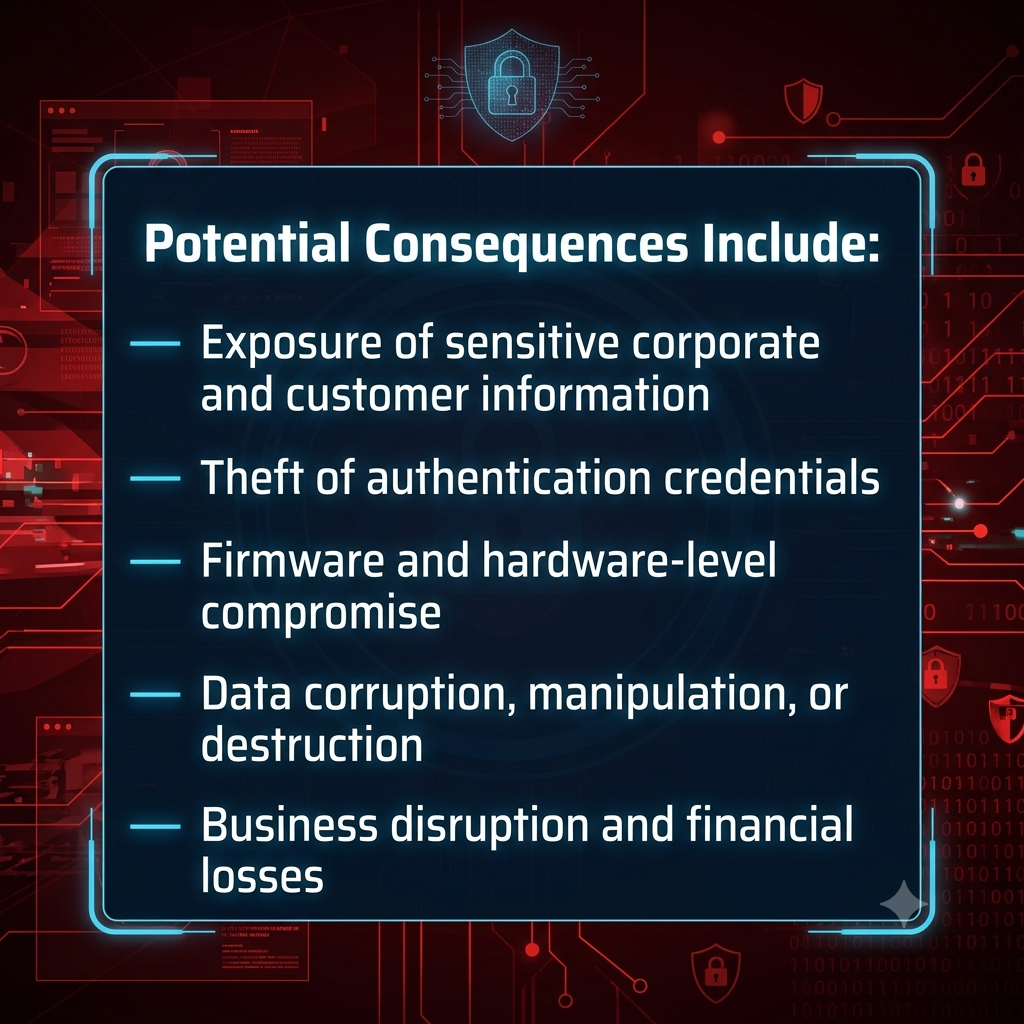
How organizations can mitigate this threat:
Secure servers and networking equipment in locked enclosures and restricted-access rooms. Encrypt organizational devices and storage media, maintain accurate hardware inventories, and implement asset tracking. Organizations should also use secure boot, firmware integrity verification, endpoint protection, and device management solutions. Establish clear procedures for equipment transportation, maintenance, decommissioning, and disposal. These controls help organizations protect hardware throughout its lifecycle rather than focusing exclusively on preventing device theft.
3 - Malicious USB Devices and Unauthorized Hardware Connections
Removable media and unauthorized peripheral connections provide attackers with another potential route into organizational systems. A common attack technique involves leaving infected USB drives in workplace environments, parking areas, or public spaces, hoping that an employee will connect one to a corporate computer. Other attacks involve malicious USB peripherals disguised as ordinary keyboards, charging cables, or storage devices. These may execute unauthorized commands, install malware, capture information, or establish connections with external systems.
This threat becomes particularly significant in operational technology (OT) environments, including manufacturing facilities, industrial plants, and critical infrastructure. Employees may use removable storage devices to transfer files between isolated networks and industrial control systems.
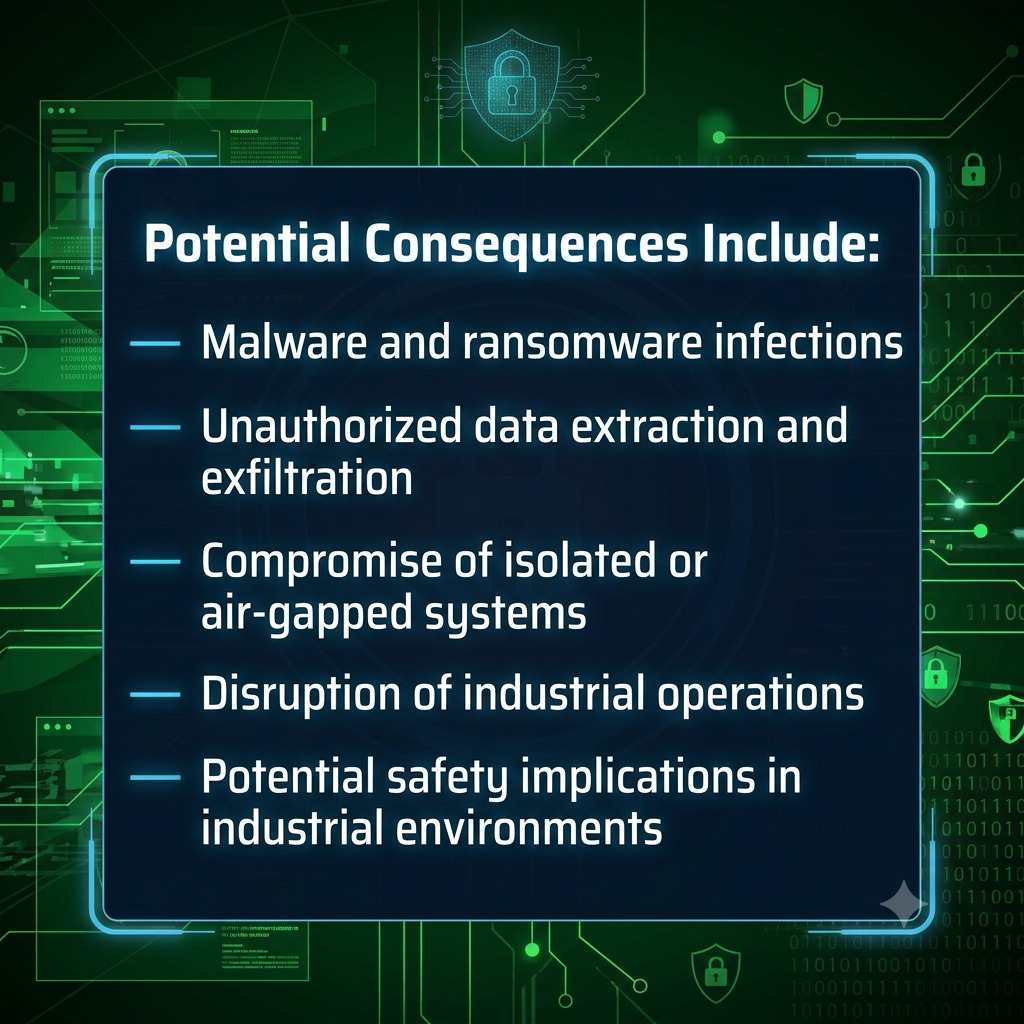
How organizations can mitigate this threat:
Restrict unnecessary USB ports, prohibit unauthorized removable media, and establish an approved-device policy. Scan external storage devices before use, maintain an inventory of authorized devices, and monitor peripheral connections. Organizations should also educate employees never to connect unidentified USB devices to company equipment. For OT environments, implement dedicated procedures governing the authorization, labeling, storage, scanning, and use of removable media.
4 - Insider Threats and Physical Social Engineering
Not every physical cybersecurity threat originates outside an organization. Employees, contractors, temporary workers, and third-party vendors may also introduce security risks through their legitimate access to organizational facilities and resources.
An insider threat occurs when someone with authorized access or knowledge of an organization’s resources uses that access to cause harm. Such actions may be deliberate, such as stealing proprietary information, or accidental, such as exposing confidential documents through negligence. Attackers can also exploit employees through physical social engineering. For example, an individual may impersonate an IT technician or maintenance worker to gain access to restricted areas or persuade employees to disclose sensitive information.
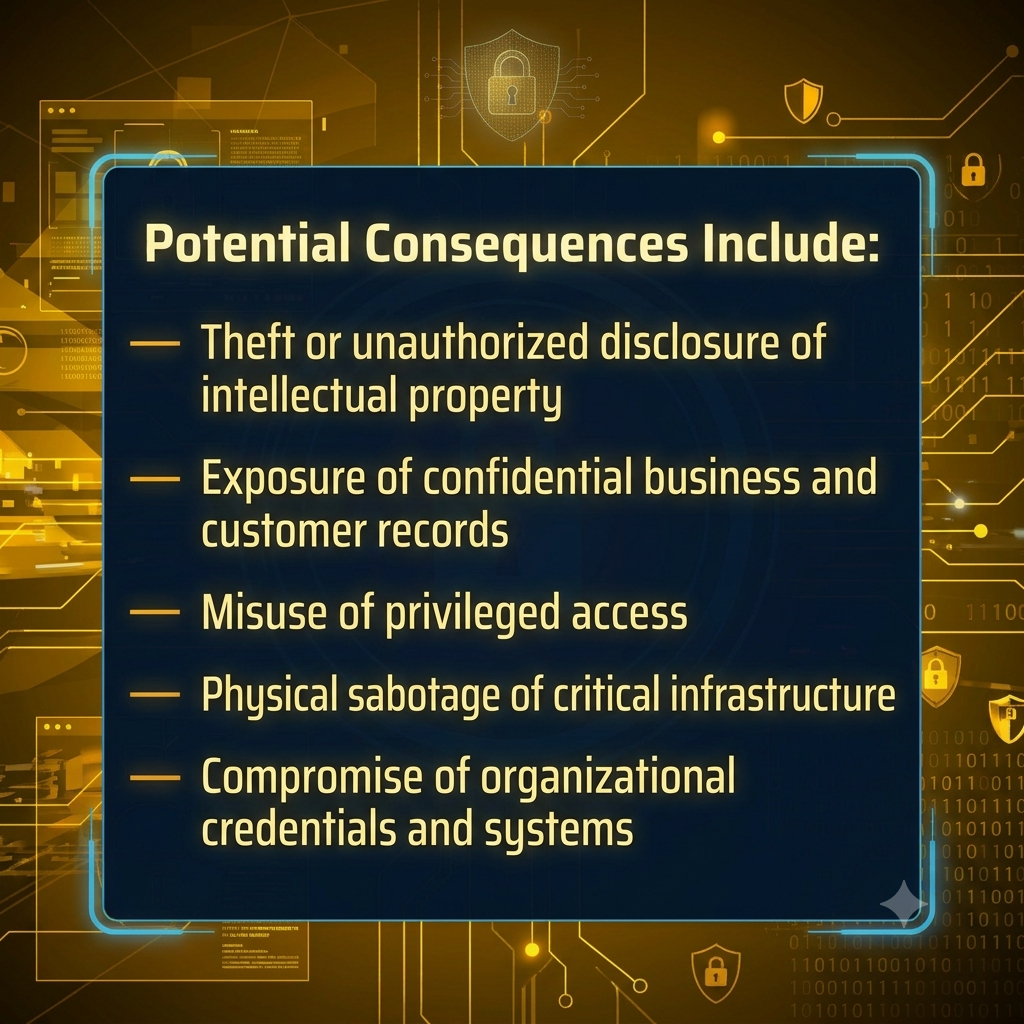
How organizations can mitigate this threat:
Implement role-based access controls, least-privilege policies, personnel screening where appropriate, and regular access reviews. Establish clear employee onboarding and offboarding procedures to ensure that physical access privileges remain current. Organizations should also conduct security awareness training covering impersonation, suspicious behavior, social engineering, and reporting procedures. Importantly, insider threat programs should combine physical security, personnel awareness, and information-centric security practices.
5 - Environmental Threats and Physical Infrastructure Disruption
Physical cybersecurity is not limited to malicious actors. Environmental incidents and infrastructure failures can also compromise the availability, integrity, and security of organizational IT systems.
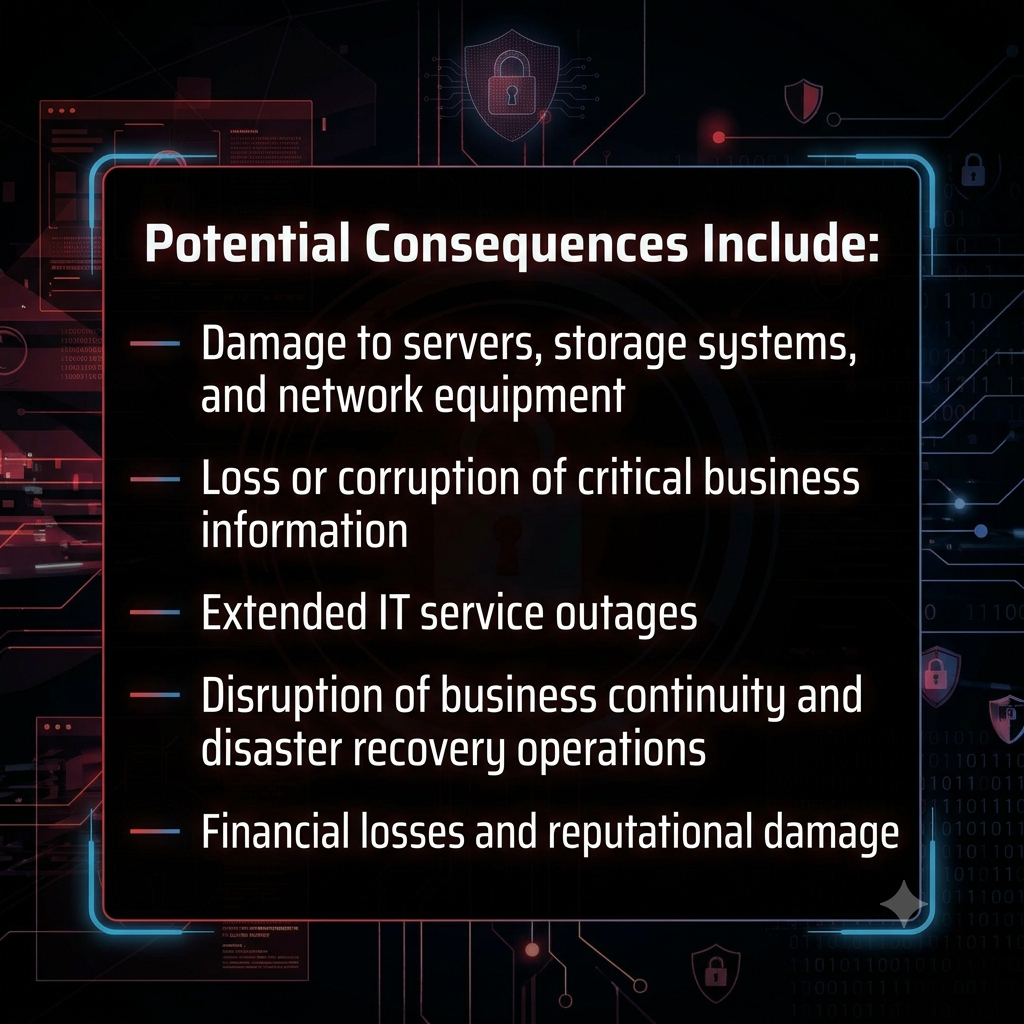
Fires, floods, water leaks, extreme temperatures, power outages, earthquakes, and structural damage can destroy hardware, interrupt network connectivity, and disrupt critical business operations. These risks are particularly significant for organizations operating data centers, healthcare infrastructure, financial systems, and industrial facilities. A prolonged power outage, for instance, can affect critical servers and networking equipment if adequate backup power and recovery mechanisms are unavailable.
How organizations can mitigate this threat:
Deploy fire detection and suppression systems, environmental monitoring, temperature controls, and water-leak detection mechanisms. Maintain redundant power supplies, uninterruptible power supply (UPS) systems, and backup generators. Organizations should also maintain secure, geographically separated data backups and regularly test their disaster recovery and business continuity plans.
Strengthening Physical Cybersecurity: A Holistic Approach
- Integrate physical and digital security: Coordinate facility security, IT teams, cybersecurity operations, and risk management functions to identify vulnerabilities across the organization.
- Conduct regular physical security assessments: Evaluate access controls, equipment storage, surveillance systems, environmental safeguards, and potential attack entry points.
- Develop incident response procedures: Establish clear protocols for responding to unauthorized access, hardware theft, device tampering, and infrastructure disruptions.
- Strengthen employee security awareness: Train employees to recognize tailgating, suspicious devices, impersonation attempts, and other physical social engineering techniques.
- Continuously evaluate security controls: Review access permissions, inspect critical infrastructure, test backup systems, and update security policies as organizational risks evolve.
Learn to Mitigate and Tackle a Wide Array of Cybersecurity Threats
Physical cybersecurity is an essential component of modern organizational security. As businesses become increasingly dependent on interconnected digital infrastructure, protecting physical assets, facilities, devices, and access points becomes just as important as securing networks and applications. Organizations must adopt a proactive, risk-based approach that addresses physical vulnerabilities alongside emerging digital threats. This requires professionals who understand how physical security, network defense, information assurance, incident response, and cybersecurity governance work together.
In this regard, EC-Council University (ECCU) provides state-of-the-art online education for aspiring and experienced cybersecurity professionals to develop advanced technical knowledge, practical competencies, and leadership capabilities. Whether you aspire to protect enterprise infrastructure, lead cybersecurity operations, investigate security incidents, or develop comprehensive organizational security strategies, ECCU can help you prepare for the challenges ahead.
Take the next step toward developing the expertise to protect organizations against today’s evolving cybersecurity threats:
Frequently Asked Questions About Physical Cybersecurity Threats
What is physical cybersecurity?
Physical cybersecurity involves protecting an organization’s facilities, hardware, devices, networks, and IT infrastructure against physical threats, unauthorized access, theft, tampering, and environmental disruptions.
What are the five major physical cybersecurity threats?
The five major threats include unauthorized physical access and tailgating, hardware theft and tampering, malicious USB devices, insider threats and physical social engineering, and environmental or infrastructure disruptions.
How does physical security affect cybersecurity?
Weak physical security can allow attackers to bypass digital security controls by accessing devices, stealing hardware, extracting credentials, installing malicious equipment, or manipulating critical infrastructure.
What is tailgating in physical cybersecurity?
Tailgating occurs when an unauthorized individual follows an authorized employee through a secured entrance without presenting valid credentials. It can expose restricted facilities and sensitive IT infrastructure to unauthorized access.
How can organizations prevent malicious USB attacks?
Organizations can restrict USB ports, prohibit the use of unauthorized removable media, scan approved devices before use, monitor peripheral connections, and educate employees about the dangers of connecting unidentified devices.
What is the difference between physical security and cybersecurity?
Physical security protects tangible assets, facilities, equipment, and people against physical threats. Cybersecurity protects digital systems, networks, applications, and information against digital threats. Both disciplines overlap and should operate as part of an integrated security strategy.
What role do employees play in preventing physical cybersecurity threats?
Employees help prevent physical security incidents by adhering to access control policies, protecting organizational devices, identifying suspicious individuals, avoiding unknown USB devices, and reporting any unusual activity.