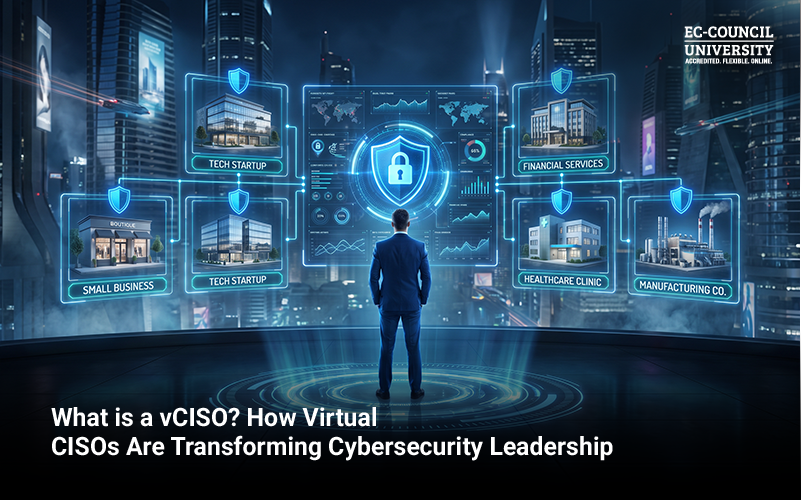
The Emergence of the vCISO Role
Even though businesses of all sizes feel the strain of cyber threats, many cannot afford to hire a full-time Chief Information Security Officer (CISO). This dilemma has fueled the rise of the virtual Chief Information Security Officer (vCISO), also known as a fractional CISO. Rather than hiring a permanent executive, organizations recruit experienced cybersecurity leaders on a part-time, contractual, or retainer basis to develop cybersecurity strategies, manage cyber risk, strengthen governance, and guide executive decision-making.
For seasoned cybersecurity professionals, the vCISO role represents an exciting leadership opportunity with unique responsibilities, benefits, and challenges.
What is a vCISO?
A virtual Chief Information Security Officer (vCISO) is an experienced cybersecurity executive who provides strategic security leadership without serving as a full-time employee. A vCISO typically works with multiple organizations simultaneously, delivering executive-level guidance that aligns cybersecurity initiatives with business objectives.
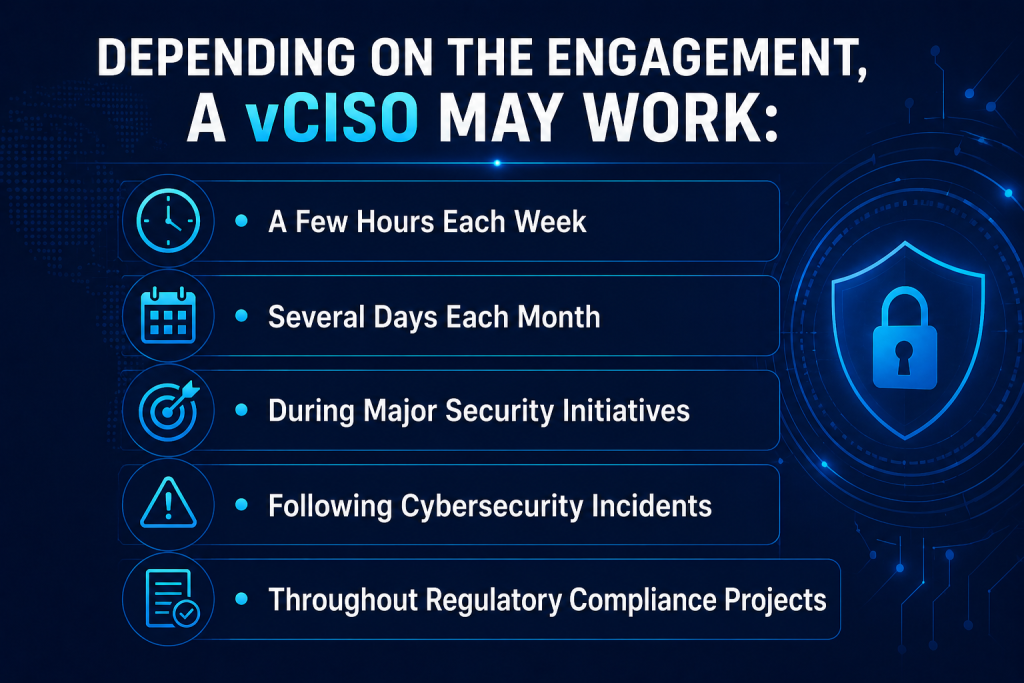
Instead of managing day-to-day IT operations, vCISOs focus on long-term cybersecurity strategy, governance, risk management, and executive reporting.
Differences Between a vCISO and a Traditional CISO
While both roles perform similar strategic functions, the engagement model makes vCISOs especially attractive for organizations that need executive expertise without enterprise-level staffing costs.
| Virtual CISO | Traditional CISO |
|---|---|
| Contract or fractional engagement | Full-time executive employee |
| Lower overall cost | Higher salary and benefits |
| Serves multiple organizations | Dedicated to one organization |
| Flexible engagement model | Permanent leadership role |
| Ideal for SMBs and mid-sized businesses | Typically found in large enterprises |
| Strategic leadership without full-time overhead | Full executive ownership of security programs |
Why Demand for vCISOs is Surging
The following market forces have accelerated demand for virtual cybersecurity leadership:
- Small and Mid-Sized Businesses Are Facing Enterprise-Level Threats
Cybercriminals nowadays are targeting smaller organizations because they often have fewer security resources than large enterprises. As a result, these businesses must stave off ransomware, phishing, third-party risks, AI-related threats, and lapses in regulatory compliance. But many cannot afford a full-time CISO whose annual compensation can exceed $200,000, so a vCISO can provide executive leadership at a fraction of that cost.
- The Cybersecurity Talent Shortage Continues
The cybersecurity workforce gap continues to widen. Experienced executive leaders are particularly difficult to find and recruit, making fractional security leadership an increasingly practical solution.
- Compliance, Regulatory, and Insurance Requirements
Modern regulatory frameworks are complex, yet they expect all businesses to demonstrate mature security governance. Likewise, many insurance providers now evaluate cybersecurity governance practices before issuing or renewing coverage. Executive oversight, documented risk management, and board-level reporting are critical in meeting these stipulations.
What Does a vCISO Do?
Although every engagement differs, most vCISOs focus on helping businesses elevate their cybersecurity practices rather than simply enforcing technical controls. The common responsibilities of a vCISO include:
- Developing cybersecurity strategy
- Conducting enterprise risk assessments
- Building governance frameworks
- Establishing security policies and standards
- Advising executive leadership and boards
- Managing compliance initiatives
- Supporting cyber insurance readiness
- Leading incident response from an executive perspective
- Creating cybersecurity roadmaps
- Measuring cybersecurity maturity
Rather than replacing technical teams, vCISOs provide executive direction to ensure that security investments support organizational goals. One of their greatest strengths is helping implement sustainable security operations without the need to hire a permanent executive.
Core Competencies of the vCISO Role
Successful vCISOs combine cybersecurity know-how with executive leadership capabilities:
| Cybersecurity Domain Expertise | Leadership Skills |
|---|---|
| Governance, Risk, Compliance, and Audit | Executive Communication |
| Information Security Controls | Board Presentations |
| Cybersecurity Ops Management | Business Strategy Development |
| Cybersecurity Policy Development | Stakeholder Management |
| Data Security Protocols | Budget Management and Financial Planning |
| Cloud Security Practices | Negotiation |
| Secure AI / Emerging Tech Adoption | Change Management |
Many of these competencies closely align with the five domains of EC-Council University’s Certified Chief Information Security Officer (CCISO) certification framework.
How to Become a vCISO
- Prior Experience and Reputation
Most vCISOs have already established themselves as senior cybersecurity leaders before launching independent consulting practices. They accumulated years of experience as Cybersecurity Managers, GRC Directors, Cybersecurity Consultants, or Traditional CISOs, among other high-level cybersecurity roles.
However, technical expertise alone rarely leads to success. Prospective vCISOs must develop business fluency by learning how executives evaluate organizational risk, make financial decisions, manage regulatory obligations, and set strategic priorities.
It’s also important to build credibility and a positive reputation by developing a strong professional network, publishing thought leadership studies, speaking at conferences, nurturing client references, and understanding contract and consulting business models. Ultimately, trust is one of a vCISO’s most valuable professional assets.
- The Educational Path
Professionals seeking to become vCISOs will greatly benefit from graduate-level education that strengthens their expertise in governance, leadership, organizational strategy, finance, risk management, and executive decision-making.
EC-Council University (ECCU)’s MBA with the specialization in Cybersecurity Executive Leadership and Governance prepares aspiring security executives to lead enterprise-wide cybersecurity initiatives from a business perspective. The curriculum emphasizes strategic leadership, governance, risk management, AI security and program management, cybersecurity policy, executive communication, and organizational resilience, all competencies that closely align with the knowledge expected of modern cybersecurity executives.
To know more about the program:
Is Becoming a vCISO the Right Choice for Your Career?
For many experienced cybersecurity professionals, becoming a vCISO offers an attractive career track.
| Advantages | Challenges |
|---|---|
| Greater professional independence | Continuous business development |
| Diverse client engagements | Client acquisition responsibilities |
| Exposure to multiple industries | Balancing the requirements of multiple businesses simultaneously |
| Flexible work arrangements | Income variability |
| High earning potential | Increased administrative responsibilities |
| Significant strategic influence |
Ask yourself:
- Do you enjoy executive decision-making?
- Can you communicate effectively with board members?
- Are you comfortable discussing budgets and business strategy?
- Do you prefer advising organizations rather than operating security technologies?
- Are you prepared to build your own consulting practice?
If your answer is “yes” to most of these questions, the vCISO role may represent a natural next step in your cybersecurity career.
Frequently Asked Questions About the vCISO Role
A vCISO (virtual CISO) provides executive-level cybersecurity leadership on a part-time or contractual basis. Their responsibilities typically include cybersecurity strategy, governance, enterprise risk management, compliance oversight, board reporting, security program development, and executive leadership of incident response.
A traditional CISO is a full-time executive employed by a single organization. A vCISO performs many of the same strategic responsibilities but serves organizations on a flexible contractual basis, making executive cybersecurity leadership more affordable for smaller businesses.
Most vCISOs have extensive cybersecurity leadership experience combined with expertise in governance, risk management, compliance, business strategy, executive communication, and financial decision-making. Graduate-level education and executive leadership certifications, like the C|CISO certification, can further strengthen these competencies.
Yes. Growing cyber threats, regulatory requirements, cyber insurance expectations, budget constraints, and the ongoing cybersecurity talent shortage continue to drive demand for experienced vCISOs across industries.
ECCU’s MBA degree with the specialization in Cybersecurity Executive Leadership and Governance is ideal for professionals seeking executive cybersecurity leadership roles. The program develops expertise in governance, strategic management, organizational leadership, enterprise risk management, and business decision-making, all essential competencies for aspiring CISOs and vCISOs.