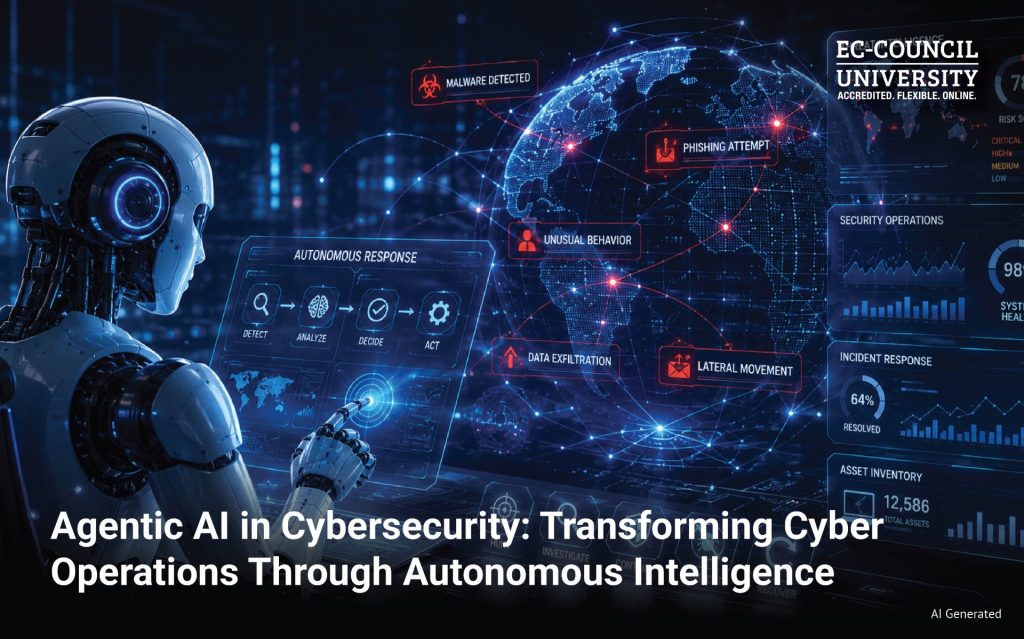
The Agentic AI Revolution in Cybersecurity Has Arrived
It’s no secret that cybersecurity teams now use AI to analyze logs, detect anomalies, identify malware, accelerate breach investigations, and more. But there’s a new evolution on the horizon, one that moves beyond current levels of AI automation and assistance. We’re entering the era of Agentic AI.
Unlike traditional AI systems that respond to prompts or perform narrowly defined tasks, Agentic AI systems can pursue goals, make decisions, use tools, coordinate actions, and adapt their behavior with limited human intervention. In cybersecurity, this capability has the potential to fundamentally transform how organizations detect, diagnose, and respond to cyber threats. As cyberattacks grow in complexity, organizations increasingly need security capabilities that can operate at machine speed. Agentic AI is the path forward.
What Is Agentic AI?
Agentic AI is an AI system that can autonomously plan, reason, take actions, and pursue objectives across multiple steps. Rather than waiting for continuous human instructions, these systems can evaluate a situation, determine the next best action, execute tasks, and adjust their approach based on new information.
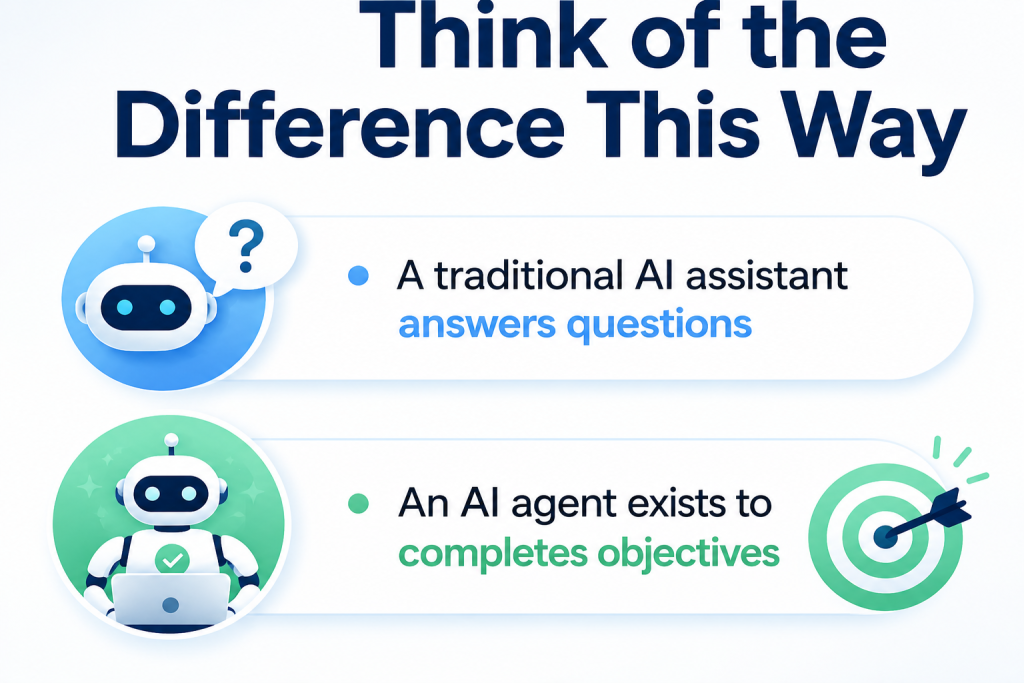
For example, a traditional cybersecurity AI might identify a suspicious login attempt. An Agentic AI system could investigate the activity, correlate it with threat intelligence, determine whether compromise occurred, isolate affected systems, document findings, and recommend remediation steps, all while keeping human analysts informed.
This ability to combine reasoning, planning, memory, and tool usage makes Agentic AI particularly valuable in cybersecurity environments where speed and accuracy are critical.
Why Cybersecurity Is a Natural Fit for Agentic AI
Cybersecurity operations generate enormous amounts of data. Security teams must process alerts from endpoints, networks, cloud environments, identity systems, applications, and threat intelligence feeds. Unfortunately, cybersecurity talent shortages (1) continue to plague organizations worldwide. At the same time, cybercriminals are automating their attacks, allowing them to launch campaigns at unprecedented scale. Agentic AI offers a solution to this conundrum by serving as a force multiplier for cybersecurity teams. Rather than replacing human analysts, agents augment their capabilities by performing repetitive and time-sensitive tasks.
The result is a security operation team that can respond faster, investigate more thoroughly, and scale more effectively.
How Agentic AI Enhances Cybersecurity Operations
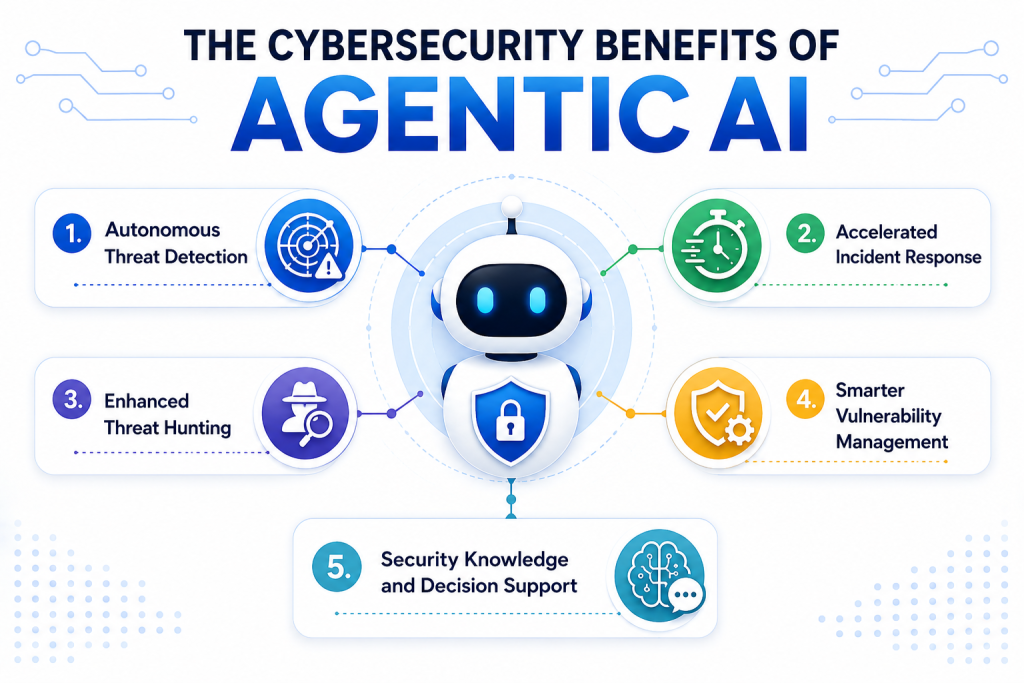
1. Autonomous Threat Detection
Traditional security tools often generate thousands of alerts daily. Security analysts must manually review many of these alerts to determine which ones represent genuine threats. Agentic AI can continuously analyze activity across multiple systems, correlate events, and identify suspicious patterns in real time. Instead of presenting analysts with isolated alerts, agents can provide contextualized investigations.
For example, an agent may detect unusual authentication activity, correlate it with endpoint telemetry and network traffic, and determine that an attacker is attempting lateral movement within the environment. This reduces alert fatigue and helps analysts focus on the highest-priority threats.
2. Accelerated Incident Response
A standout benefit of Agentic AI is its ability to shorten response times. When a potential incident occurs, these agents can gather evidence from multiple sources, analyze attack paths, identify affected assets, assess business impact, recommend containment actions, and execute approved response procedures.
Industry leaders are already moving in this direction. In 2025, Microsoft introduced multiple Security Copilot agents (2) designed to autonomously assist with phishing investigations, identity management, and data security workflows. Microsoft noted that these agents help organizations handle high-volume security tasks while keeping security teams in control.
3. Enhanced Threat Hunting
Threat hunting traditionally requires highly skilled analysts who proactively search for hidden adversaries. Agentic AI can automate much of this work by continuously searching for indicators of compromise, attacker behaviors, and anomalous activity patterns. These agents can investigate suspicious activity across multiple systems simultaneously, helping organizations identify threats that might otherwise remain undetected.
As a result, security teams can shift from a reactive posture to a more proactive, resilient defense strategy.
4. Smarter Vulnerability Management
Organizations often struggle to prioritize vulnerabilities because thousands may be identified during routine scanning. Agentic AI can evaluate vulnerabilities in context by considering factors such as the availability of exploits, threat actor activity, asset criticality, business impact, and existing compensating controls.
This enables security teams to focus on vulnerabilities that present the greatest actual risk rather than simply addressing issues based on severity scores alone.
5. Security Knowledge and Decision Support
AI agents can also act as cybersecurity advisors by summarizing threat intelligence, explaining attack techniques, generating detection rules, drafting incident reports, recommending mitigation strategies, and analyzing security trends.
These capabilities help reduce investigation times and improve decision-making across security operations centers (SOCs).
The Downsides of Agentic AI in Cybersecurity
While Agentic AI offers tremendous opportunities, it also introduces significant risks, such as:
- AI-Powered Cyberattacks
The same AI capabilities that benefit defenders can also empower attackers. Cybercriminals can leverage Agentic AI to automate reconnaissance, discover vulnerabilities, develop malware, and adapt attack strategies.
- Advanced Social Engineering
Generative AI has already increased the effectiveness of phishing attacks. Agentic AI could further enhance these capabilities by creating highly personalized and adaptive social engineering campaigns. Attackers may use agents to continuously gather information about targets and dynamically adjust their messaging to increase the likelihood of success.
- New Attack Surfaces
Organizations deploying AI agents must also secure the agents themselves. Emerging threats to agentic AI include prompt injection attacks, data poisoning, model manipulation, unauthorized access, and agent hijacking.
Recent research (3) has highlighted how vulnerabilities in AI agent environments can create opportunities for attackers to manipulate agent behavior and execute malicious actions. As organizations adopt Agentic AI, securing AI systems will become as important as securing traditional infrastructure.
- Over-Reliance on Autonomous Systems
Despite rapid advances, Agentic AI remains imperfect. Cybersecurity leaders increasingly emphasize the importance of maintaining human oversight, particularly for high-impact decisions. Experts caution that fully autonomous cybersecurity systems may introduce operational and governance risks if organizations fail to implement proper controls and transparency mechanisms. The most effective approach combines AI-driven automation with human expertise.
The Business Impact of Agentic AI in Cybersecurity
Beyond technical benefits, Agentic AI can deliver measurable business value.
According to IBM’s Cost of a Data Breach Report 2025 (4), organizations that extensively used AI and automation in cybersecurity realized approximately $1.9 million in breach-related cost savings compared with organizations that did not. The report also found that AI governance frequently lags behind AI adoption, creating new security risks. These findings highlight the important reality that organizations must balance innovation with governance.
Deploying Agentic AI without appropriate security controls can create new vulnerabilities. Deploying it responsibly can significantly strengthen cyber resilience.
Best Practices for Adopting Agentic AI
Organizations considering Agentic AI should focus on several key principles:
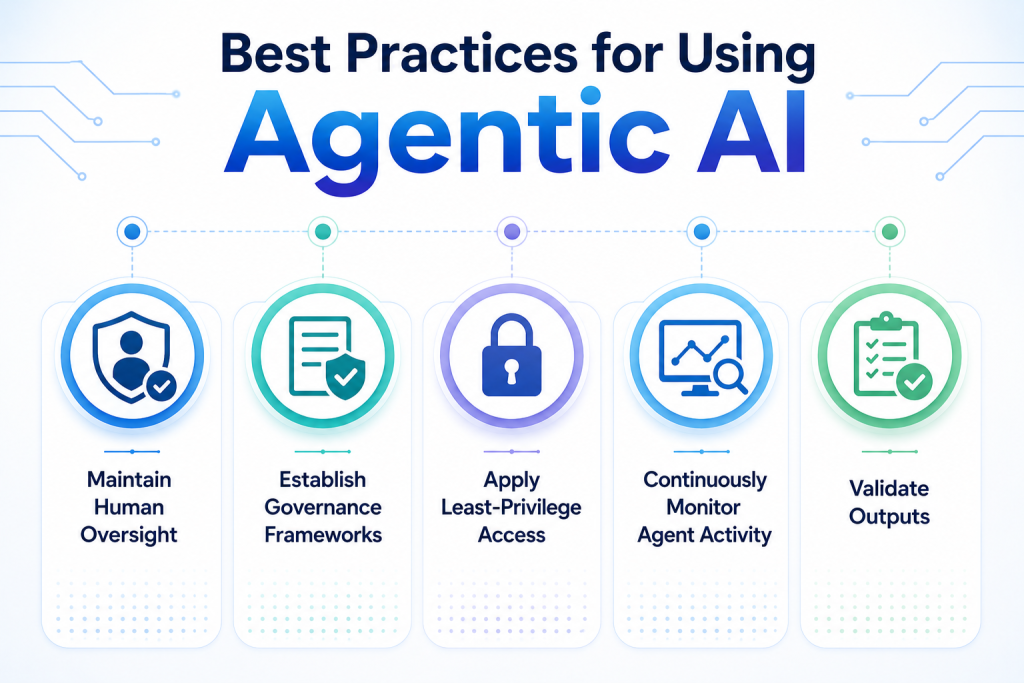
- Maintain Human Oversight: Keep humans involved in high-risk decisions such as system isolation, account suspension, and major remediation actions.
- Establish Governance Frameworks: Define clear policies governing agent behavior, permissions, accountability, and auditing.
- Apply Least-Privilege Access: Agents should receive only the permissions necessary to perform their assigned tasks.
- Continuously Monitor Agent Activity: Organizations should monitor and log agent actions just as they would monitor privileged human users.
- Validate Outputs: Security teams should regularly verify agent recommendations and decisions to ensure reliability and accuracy.
The Future of Agentic AI in Cybersecurity
Agentic AI represents one of the most significant shifts in cybersecurity since the emergence of cloud computing and machine learning. Over the coming years, AI agents are likely to become standard members of cybersecurity teams. We can expect them to investigate incidents, hunt threats, manage vulnerabilities, enforce security policies, and support compliance initiatives.
However, the future is unlikely to be fully autonomous. Instead, the most successful organizations will adopt a collaborative model where humans and AI agents work together. AI will handle speed, scale, and automation. Humans will provide judgment, strategy, ethics, and oversight.
In many ways, Agentic AI is creating a new cybersecurity paradigm. Organizations that embrace it thoughtfully will be better positioned to defend against increasingly sophisticated threats while improving operational efficiency and resilience.
ECCU: Providing Cybersecurity Education for an AI-Driven World
In the wake of Agentic AI rising in prominence, organizations increasingly need professionals who understand both AI technologies and cybersecurity principles. Securing AI systems, defending against AI-powered threats, and governing AI responsibly have become essential skills for today’s cybersecurity workforce.
EC-Council University (ECCU) is helping meet this demand through specialized degree programs and certification courses that prepare professionals for emerging AI-focused cybersecurity roles. Among our latest certifications are the Certified Offensive AI Security Professional (COASP) and the Certified Responsible AI Governance & Ethics (CRAGE).
The COASP certification course focuses on the offensive security aspects of AI, equipping learners with practical knowledge of AI-specific threats, adversarial attacks, prompt injection, model exploitation, and techniques for assessing and securing AI systems. It is ideal for cybersecurity practitioners interested in penetration testing, threat research, and AI security assessments.
The CRAGE certification course addresses the growing need for responsible AI oversight. It covers AI governance, ethics, risk management, compliance, transparency, and accountability, helping professionals develop the skills needed to guide the secure and trustworthy adoption of AI.
Together, COASP and CRAGE provide powerful skillsets for professionals seeking to build expertise at the intersection of artificial intelligence and cybersecurity. As AI continues to reshape the threat landscape, ECCU remains committed to preparing the next generation of cybersecurity leaders for success in an increasingly autonomous world.
To know more about our AI-focused cybersecurity programs and courses:
Frequently Asked Questions About Agentic AI in Cybersecurity
Agentic AI refers to autonomous AI systems that can plan, reason, make decisions, and execute actions to achieve cybersecurity objectives with limited human intervention.
Traditional AI typically performs predefined tasks or responds to prompts. Agentic AI can independently pursue goals, coordinate multiple actions, adapt to changing conditions, and use external tools to complete complex workflows.
Key benefits of Agentic AI in cybersecurity include faster threat detection, automated incident response, proactive threat hunting, improved vulnerability management, reduced analyst workload, and enhanced operational efficiency.
No. Agentic AI is best viewed as an augmentation technology. Human expertise remains essential for strategic decision-making, governance, ethical oversight, and handling complex situations.
Potential risks posed by agentic AI include AI-powered cyberattacks, prompt injection attacks, agent manipulation, over-reliance on automation, governance failures, and new attack surfaces associated with AI systems.
Organizations should implement strong governance frameworks, maintain human oversight, enforce least-privilege access controls, continuously monitor agent activity, and regularly validate agent outputs.
References & Sources:
- – https://www.fortinet.com/content/dam/fortinet/assets/reports/2026-cybersecurity-skills-gap-report.pdf
- – https://www.microsoft.com/en-us/security/blog/2025/03/24/microsoft-unveils-microsoft-security-copilot-agents-and-new-protections-for-ai/
- – https://www.livingsecurity.com/blog/human-ai-agent-security-risks
- – https://www.ibm.com/reports/data-breach