Why Privacy Threats Are No Longer Just About Breaches
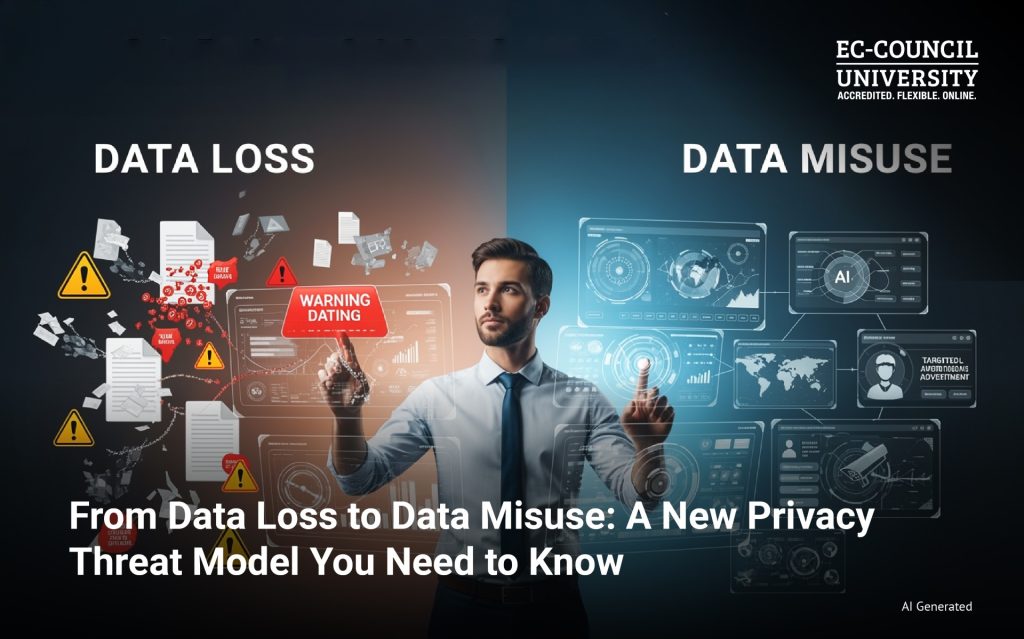
For decades, conversations about data privacy and security risk have centered on data loss from incidents of data breaches—stolen credentials, hacked databases, ransomware attacks, and leaked records.
But in 2026, privacy risks are no longer limited to just data loss. Today, a quieter and more complex threat is emerging—data misuse. The danger lies in how data is used, and not just whether it was accessed. The shift from data loss to data misuse demands a broader, more nuanced understanding of privacy threats that goes beyond traditional breach of defense models. A new privacy threat model, one that global organizations, especially those operating in or with the United States, can no longer afford to ignore.
In an era of AI, advanced analytics, and cross-border data sharing, data doesn’t need to be stolen to cause harm. It needs to be used in ways that were never intended, authorized, or understood.
You Can Also Read About
Understanding the Traditional Data Loss Model: The Focus on Data Breaches
Historically, privacy and security strategies focused on preventing:
- External cyberattacks
- Unauthorized access
- Accidental disclosures
- Physical theft of devices
- Insider data exfiltration
While these risks remain real and serious, they no longer capture the full spectrum of modern privacy threats.
Why Privacy Risks Now Extend Beyond Stolen Data
Today, data can remain within systems and still be used in harmful or unauthorized ways. With AI, analytics, cloud computing, and exponential data flows, organizations can unintentionally turn legitimate access into privacy harm without any breach at all.
This new reality has elevated data misuse, the unauthorized, unethical, or unintended use of data, to the forefront of modern privacy risk.
Introducing Data Misuse as the New Threat Model
What Is Data Misuse?
Data misuse occurs when data is used in ways that violate consent laws and extend beyond its original purpose, without any data breaches or data loss incidents.
This includes scenarios such as:
- Data used for secondary purposes without proper consent
- Personal data fed into AI models without transparency
- Legitimate access used for unethical or discriminatory outcomes
- Data combined with other data sets to infer sensitive attributes
- Vendors or partners using shared data beyond contractual limits
In many cases, the organization still “controls” the data, yet individuals are still harmed. Understanding and defending against data misuse is now a core requirement of modern privacy and cybersecurity programs.
Understanding the Shift: Data Loss vs Data Misuse
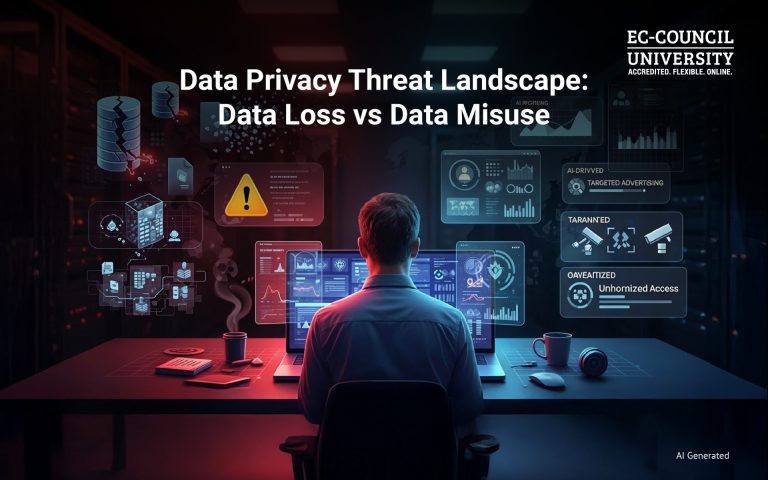
The shift from a loss-centric model to a misuse-centric model is profound:
| Traditional Model | Modern Model |
|---|---|
| Focuses on access | Focus on purpose and outcome |
| Alerts triggered by breaches | Harms may go undetected for long periods |
| Protect data storage and transmission | Protects usage context, analytics, and inference |
| Compliance as a minimum | Trust and ethical use as strategic goals |
Why Data Misuse Is Harder to Detect and Prevent
Data Misuse can happen in ways unimagined and may include scenarios such as:
- Legitimate access used unfairly
- Data repurposed without consent
- AI models are making sensitive inferences
- Analytics producing discriminatory outcomes
Because there is no unauthorized access, and traditional security tools often don’t flag misuse as an incident.
Incidents of Data Misuse On the Rise in 2026
According to industry research:
- Analysts estimate over 60% of organizations now experience privacy harm from inappropriate data use, not breaches.
- Data flowing across cloud platforms has increased by more than 300% since 2021, creating new risks for uncontrolled reuse.
- AI-driven systems are implicated in up to 45% of unintended privacy violations in enterprise environments.
These figures show that misuse is no longer a fringe concern; it’s becoming the dominant privacy threat.
Why Data Misuse Is the New Privacy Frontier
1. The Role of AI and Automation in Privacy Risks

AI systems process large volumes of data. The real threat here is when personal or behavioral data is used to:
- Profile individuals
- Predict sensitive traits
- Influence on decisions about credit, employment, healthcare, or insurance
The risk is no longer about loss; it’s about impact. Even accurate models can cause harm if they are opaque, biased, or trained on data collected without informed consent.
2. Consent Violation and Purpose Expansion
Many organizations collect data for one stated purpose and later expand its use. This “purpose creep” often happens gradually and quietly:
- Marketing data reused for analytics
- Customer data repurposed for AI training
- Employee data analyzed for productivity scoring
Legally, this raises red flags under frameworks such as GDPR, CPRA, and other global privacy regulations. Ethically, it erodes trust.
3. Insider Misuse Is Harder to Detect
Unlike data breaches which are mostly external, data misuse is often internal and involves authorized users using the data unethically:
- Employees accessing data they are authorized to access and use but eventually use for a different purpose.
- Analysts running queries that expose sensitive patterns
- Developers are training models with datasets they did not collect or have consent to use.
Traditional security tools may never flag these actions as incidents.
4. Data Aggregation Amplifies Harm
Modern privacy risks rarely come from a single data set. They emerge when multiple datasets are combined:
- Location data + purchase history
- Health indicators + demographic data
- Online behavior + offline records
The misuse happens at the insight level, not the raw data level.
The New Privacy Threat Model: Key Shifts
To address data misuse, organizations must rethink how they define risk.
From Access Control → Purpose Control
It is no longer enough to ask who can access data. Organizations must ask:
- Why is the data being used?
- Is that use aligned with consent, policy, and expectations?
From Breach Detection → Data Usage Monitoring
Privacy programs must evolve from data breach response to:
- Monitoring how data is used internally
- Auditing AI training pipelines
- Tracking secondary and downstream data use
From Compliance-Only → Trust-Centered Privacy
Regulatory compliance is the baseline, and not just tick-off checklist. Organizations that fail to address data misuse risk:
- Regulatory penalties
- Litigation
- Brand damage
- Loss of customer and employee trust
What Are the Regulatory and Compliance Implications
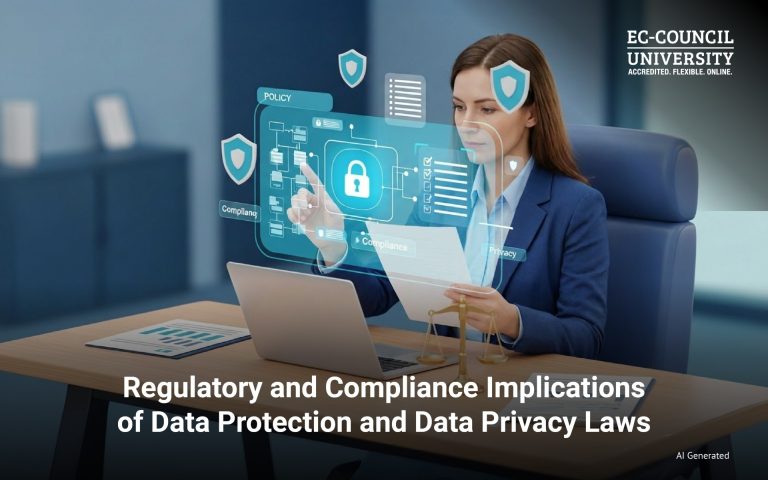
Evolving Global Data Protection Regulations
Regulators are already responding to concerns about data misuse. Privacy laws have evolved to address misuse:
- The General Data Protection Regulation’s (GDPR) principle of purpose limitation explicitly restricts incompatible secondary use of data.
- The California Privacy Rights Act (CPRA) emphasizes purpose limitation and the use of sensitive data, while expanding user rights and imposing restrictions on secondary use.
- Emerging AI regulations with a worldwide focus on transparency and accountability
- FTC enforcement actions increasingly target unfair or deceptive data practices
The trend is clear: how data is used matters as much as how it’s protected. These laws reflect the shift from just protecting data to protecting how data is used.
Accountability, Consent, and Purpose Limitation Challenges
Organizations must demonstrate:
- Reasons for data collection
- How it is being used
- Whether this aligns with users’ expectations
Failure to demonstrate clarity can lead to regulatory and compliance implications such as:
- Regulatory fines
- Litigation
- Reputation damage
Business Impact of Privacy Violations Beyond Fines
The consequences of misuse extend beyond penalties:
- Loss of customer trust
- Brand erosion
- Competitive disadvantage
Data Privacy Shift: From Protection to Governance
Data privacy risk management now requires strong governance and not just reactive protection.
Shift from Reactive Controls to Proactive Data Governance
Proactive frameworks emphasize:
- Transparency in Data usage
- Purpose and consent mapping
- Continuous monitoring of usage contexts
Privacy-by-Design and Privacy-by-Default Approaches
Incorporating privacy from the start:
- Builds ethical trust
- Reduces risk exposure
- Aligns with regulatory demands
Integrating Security, Risk, and Compliance
Successful programs bridge silos:
- Security teams protect access
- Privacy teams manage use
- Legal teams ensure compliance
- Risk teams evaluate impact
How Organizations Can Prepare

To adapt to the new privacy threat model, organizations should:
1. Map Data Use, Not Just Data Flows
Document why data is used, not only where it goes.
2. Strengthen Data Governance for AI
Ensure AI training and analytics comply with the principles of consent, minimization, and fairness.
3. Implement Privacy by Design:
Embed privacy checks into product development, analytics, and model deployment.
4. Enhance Internal Controls and Audits:
Regularly review internal data access and usage patterns.
5. Educate Teams Beyond Security:
Privacy is no longer just a legal or IT issue—it’s a business-wide responsibility.
Cybersecurity and Privacy Professionals Now Need Skills
To address modern privacy threats, professionals must build capabilities in:
Understanding Data Lifecycle and Usage Contexts
From collection to deletion, professionals must know why the data was collected, who has access to it, how it is used, and how the data flows through systems to implement necessary security measures.
Monitoring Misuse, Not Just Access
New monitoring must focus on usage patterns, AI outcomes, and possible policy violations.
Collaboration Between Security, Legal, and Business Teams
Cross-functional cooperation and collaboration are essential to ensure the policies are actionable and secure against new privacy threat models
How EC-Council University Prepares Professionals for Modern Privacy Threats
EC-Council University (ECCU) cybersecurity programs are designed for working professionals seeking future-ready expertise that:
- Teach the latest in privacy risk frameworks
- Provide hands-on labs with real-world scenarios
- Prepare learners to detect, respond, and lead in complex environments
By focusing on both theoretical and practical skills, ECCU equips professionals to manage:
- Data misuse
- AI governance challenges
- Cross-disciplinary privacy risks
Data Privacy and Data Misuse: The New Age of Data Security Threat
Privacy conversation is evolving. While data loss remains a critical risk, data misuse poses a subtler, potentially more damaging threat.
Organizations that continue to focus solely on breaches will miss the bigger picture. Those that embrace this new privacy threat model, one centered on responsible data use, will be better positioned to comply with regulations, earn trust, and responsibly innovate in a data-driven world.
For this, organizations must evolve from breach of defense to governance, transparency, and ethical use.
In the age of AI and advanced analytics, the real question is no longer-
“Was data stolen?”
It’s “Was data used in a way it never should have been?”
Build future-ready privacy and cybersecurity expertise with industry-aligned programs from EC-Council University. Whether you’re advancing your career or strengthening your organization’s defenses, ECCU equips you to lead in the age of data misuse.