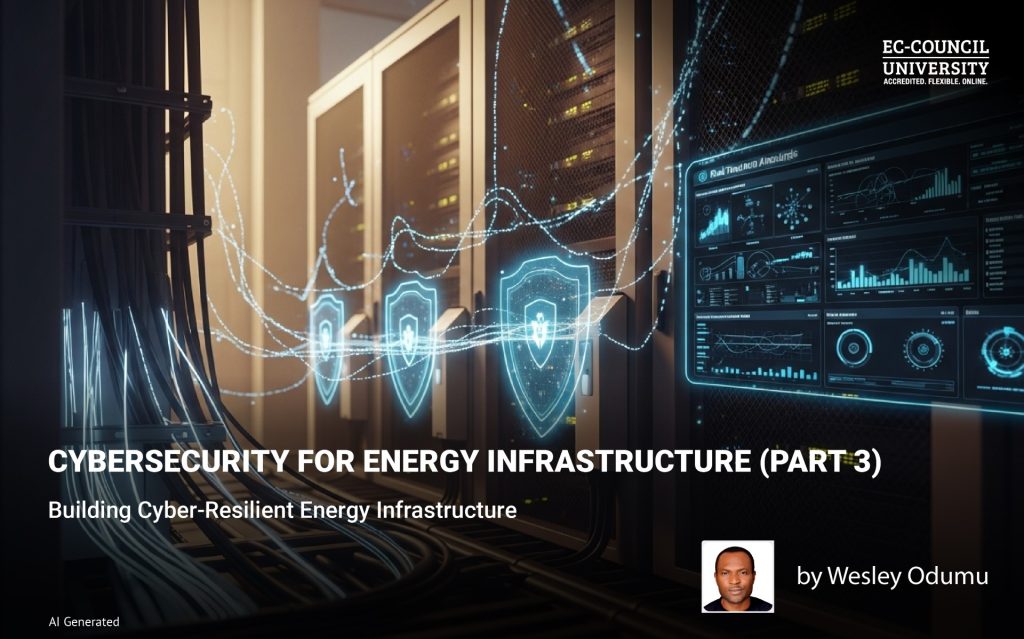
Protecting Energy Infrastructure Requires a Multi-Pronged Approach
As the energy sector undergoes a rapid digital transformation, cybersecurity resilience has become a crucial factor in ensuring operational continuity, public safety, and national security. Power grids, oil and gas facilities, renewable energy systems, and energy distribution networks increasingly rely on interconnected digital technologies to improve efficiency and reliability. However, this dependence also exposes critical infrastructure to cyber risks that are far more complex and consequential than those faced by traditional IT environments.
Building cyber-resilient energy infrastructure requires more than deploying security tools. It demands a comprehensive strategy that integrates risk management, technical best practices, globally recognized frameworks, cross-sector collaboration, and continuous workforce development. Only through this multi-layered approach can energy organizations effectively withstand, adapt to, and recover from cyber threats.
Unique Security Challenges in the Energy Sector
Energy organizations face a distinct set of cybersecurity challenges that differentiate them from other industries. Many operational environments still rely on legacy systems that were designed decades ago with reliability in mind, rather than cybersecurity. These systems often lack modern security controls and cannot be easily patched or upgraded without disrupting operations.
Another major challenge is the convergence of IT and OT. As operational technology systems become connected to enterprise IT networks and the cloud, previously isolated environments are now exposed to broader cyber threats. Attackers who gain access to corporate IT systems may pivot into OT environments, where the consequences of compromise can include damage to equipment, environmental harm, and safety risks.
Energy organizations also operate under limited maintenance windows, making it difficult to deploy security updates without affecting production or service availability. Combined with a global shortage of skilled cybersecurity professionals, these constraints create gaps that adversaries can exploit.
Finally, geopolitical risk adds another layer of complexity. Energy infrastructure is often a target during periods of international tension, making cybersecurity a concern for both operational and strategic reasons, as well as for geopolitical implications.
Best Practices for Cyber Resilience
Risk Assessment and Asset Prioritization
A foundational element of cyber resilience is conducting regular and comprehensive risk assessments. These assessments enable energy organizations to identify their most critical assets, assess the likelihood of threats, and understand the potential operational, safety, and financial impacts of cyber incidents.
Risk assessments should not be static exercises. As new technologies are introduced, threat actors evolve, and regulatory requirements change, assessments must be continuously updated. The NIST Cybersecurity Framework (CSF) offers a widely adopted, risk-based approach that enables organizations to align their cybersecurity efforts with business and operational priorities.
By prioritizing assets based on criticality and risk exposure, energy organizations can allocate resources more effectively and focus protection efforts where they matter most.
Network Segmentation and Zero Trust
Network segmentation is a critical control for limiting the spread of cyber incidents. By separating IT systems from OT environments and grouping assets based on risk levels, organizations can prevent attackers from moving laterally across networks.
When combined with Zero Trust principles, segmentation becomes even more effective. Zero Trust operates on the assumption that no user, device, or system should be trusted by default, regardless of location. Every access request must be continuously authenticated, authorized, and monitored.
This approach is particularly valuable in energy environments, where remote access, third-party vendors, and distributed operations are common. Implementing Zero Trust significantly reduces the potential blast radius of breaches and limits the impact of compromised credentials.
Intrusion Detection and Continuous Monitoring
Given the critical nature of energy operations, early detection of malicious activity is essential. Intrusion Detection Systems (IDS) provide visibility into network and system behavior by identifying suspicious patterns that may indicate compromise.
- Signature-based IDS detects known attack patterns
- Anomaly-based IDS identifies deviations from normal system behavior
Hybrid deployments that combine host-based and network-based IDS improve detection accuracy and response speed. Continuous monitoring enables security teams to identify threats in real time and take action before incidents escalate into major disruptions.
Access Control and Supply Chain Security
Strong identity and access management (IAM) is essential for reducing both insider and external threats. Implementing multi-factor authentication (MFA), enforcing least-privilege access, and continuously reviewing permissions help ensure that users only access what they need.
Supply chain security is equally critical. Energy organizations rely on numerous third-party vendors, contractors, and service providers, each of which represents a potential entry point for attackers. Assessing vendor security posture, enforcing contractual cybersecurity requirements, and monitoring third-party access in real time are essential steps in reducing cascading supply chain risk.
Cybersecurity Frameworks and Enabling Technologies
Globally recognized cybersecurity frameworks provide structured guidance for managing risk in complex energy environments.
- NIST Cybersecurity Framework (CSF 2.0): Introduces enhanced governance and risk oversight capabilities.
- ISO/IEC 27001: Provides a systematic Information Security Management System (ISMS) approach applicable across industries.
- NERC CIP Standards: Establish mandatory cybersecurity requirements for electric utilities in North America.
In parallel, emerging technologies are strengthening energy sector resilience. AI-driven threat detection enhances anomaly detection and response automation. Blockchain supports data integrity and secure transactions within smart grids. Cloud and edge security models enable faster detection and localized response, supporting real-time energy operations.
Collaboration, Policy, and Workforce Development
• Government–Industry Collaboration
No single organization can independently defend critical energy infrastructure. Public–private partnerships enable governments and energy companies to share threat intelligence, align policies, and coordinate responses to large-scale incidents. Government agencies provide regulatory guidance, funding, and intelligence, while private organizations contribute operational expertise and innovation.
• Information Sharing and Threat Intelligence
Participation in Information Sharing and Analysis Centers (ISACs) allows energy organizations to exchange indicators of compromise, threat intelligence, and best practices. These collaborative networks enhance situational awareness, enabling faster and more coordinated responses to emerging threats.
• Regulatory Policy and Compliance
Regulatory frameworks establish baseline cybersecurity expectations for critical energy assets. As threats evolve, regulations must be updated, and organizations should remain agile in meeting changing compliance requirements across regions and jurisdictions. Proactive compliance not only reduces regulatory risk but also strengthens overall security posture.
• Workforce Development and Cybersecurity Training
A skilled workforce remains one of the most powerful defenses against cyber threats. Continuous training, security awareness programs, and role-based education enable employees to recognize social engineering attacks, adhere to secure practices, and respond effectively to incidents. Advanced cybersecurity certifications, such as EC-Council’s C|EH, C|PENT, E|CIH, C|TIA, and C|SA, equip professionals with hands-on skills aligned to real-world attack scenarios. Upskilling initiatives enable organizations to close talent gaps and build internal capability rather than relying solely on external resources.
Final Thoughts
Cybersecurity is central to the resilience of modern energy infrastructure. As energy systems become more digital, interconnected, and globally interdependent, the consequences of cyber incidents continue to grow. By adopting best-practice security controls, leveraging globally recognized frameworks, fostering collaboration, and investing in continuous workforce development, energy organizations can mitigate risk and enhance their resilience to evolving cyber threats.
In an increasingly digital world, cyber resilience is no longer optional. It is essential to ensure reliable energy delivery, protect public safety, and secure the future of the global energy ecosystem.
About the Contributing Author

For over 10 years, Wesley Odeh Odumu has served as a Lecturer and Engineer in the Department of Computer Engineering at the School of Science and Engineering Technology, Plateau State Polytechnic (Nigeria). He has contributed to several research projects in the fields of computer science and IT security.