
Think Cybersecurity is only for tech geniuses? You may be surprised to know that you are wrong.
Cybersecurity isn’t just for hardcore techies. You might already have the skills needed for cybersecurity without realizing it. Some of the most in-demand cybersecurity skills today are strategic, behavioral, and communication-driven.
Let’s explore the unexpected strengths that can make you surprisingly powerful in the world of cybersecurity.
The New Cybersecurity Reality: Your Diverse Skills Might Just Be Your Advantage
Cyber threats are no longer just technical. Attackers target and exploit human behavior, and for this, organizations need cybersecurity professionals who can:
- Analyze situations creatively
- Understand human psychology
- Communicate clearly
- Make decisions under pressure
So, if you wonder “What skills do you need for cybersecurity?”, the answer goes far beyond the traditional list of coding, networking, and tools.
Why Your Non-Tech Talents Matter More Than You Think.
Modern cybersecurity has evolved into a team effort. It is not enough to know how firewalls or SIEM tools work. You are expected to work across departments, communicate and lead teams, take strategic decisions, interpret risks, explain solutions, manage compliance, and even understand human psychology.
These unexpected skills are the secret powers that help cybersecurity professionals stay ahead of sophisticated attacks.
So suddenly, the question isn’t just: “Can you fight malware?” or “Can you code?”
It’s also about: “Can you take strategic decisions under pressure?” or “Can you communicate and lead a team?” Or “Do you understand how people behave?”
That’s where non-traditional cybersecurity skills come in, and they are turning out to be cybersecurity skills in demand across the industry.
Unexpected Cybersecurity Skills That Make a Big Impact
Some of your most valuable cybersecurity skills may turn out to be the ones you are probably not aware of and may actually give you an edge in the industry. Let’s look at some of the non-technical skills that make the biggest impact.
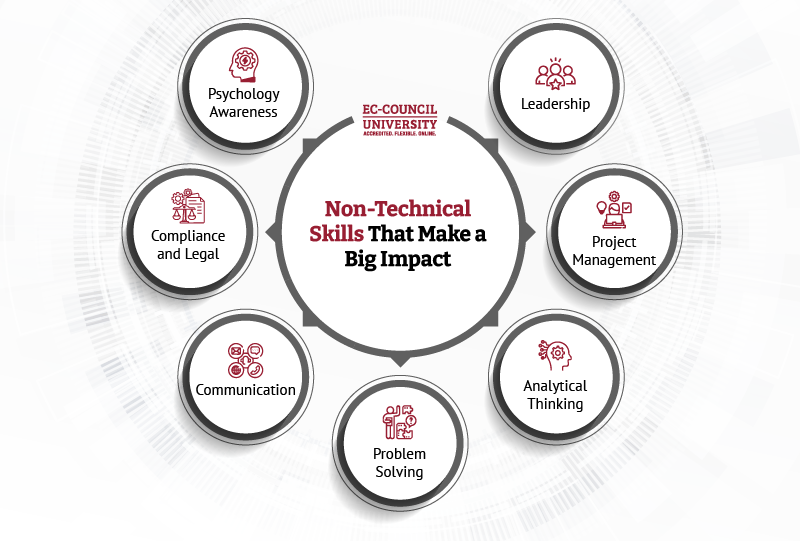
1. Analytical Thinking & Problem-Solving
Cybersecurity is essentially about solving problems, finding the right solutions in log files, alert, or anomaly detected.
If you are someone who naturally:
- Enjoys breaking down problems
- Looks for patterns
- Likes figuring out the “why” behind issues
You already possess one of the most important cybersecurity skills.
Analytical skills help you:
- Investigate incidents
- Detect anomalies
- Identify root causes
- Anticipate threats before they happen
This is a core skill required for cybersecurity roles like threat analysis, SOC operations, and digital forensics. These analytical and problem-solving skills are among the top cybersecurity skills in-demand today.
If you enjoy tackling complex problems and analyzing data, these roles could be an excellent fit for you:
- Threat Analyst / Cyber Threat Intelligence Analyst
- SOC (Security Operations Center) Analyst
- Digital Forensics Investigator
- Incident Response Analyst
- Malware Analyst / Reverse Engineer
- Cybersecurity Researcher
- Vulnerability Analyst / Penetration Tester
- Cyber Risk Analyst
- Security Analyst
These roles rely heavily on your ability to dissect complex problems, anticipate threats, and uncover hidden patterns that others might miss.
2. Communication Skills
Surprised? Most people are.
But think about it when someone must:
- Translate complex technical issues into simple explanations
- Brief leadership about risks
- Write clear incident reports
- Collaborate with different departments
Strong communication isn’t optional, but a cybersecurity-required skill, especially in roles involving governance, compliance, awareness training, and risk management. Cyber professionals who can translate tech into plain English instantly rise above the rest.
If you are good with communication, explaining complex ideas clearly, these roles are a great fit:
- Cybersecurity Awareness Specialist / Trainer
- Risk Communication Officer
- Security Consultant
- Governance, Risk & Compliance (GRC) Analyst
- Incident Response Coordinator / Analyst
- Policy and Compliance Specialist
- Security Account Manager / Client-Facing Cybersecurity Roles
- Information Security Analyst (roles with cross-team collaboration)
- Cybersecurity Project Coordinator
- Technical Writer (Cybersecurity-focused)
These positions value your ability to bridge the gap between technical teams, leadership, and non-technical stakeholders, turning insights into action.
3. Project Management
Cybersecurity projects and new security initiatives such as infra expansion, security upgrades, awareness campaigns, audits, risk assessments, tool implementations, compliance updates, and incident response plan runs, are like large projects.
If you can:
- Coordinate with multiple teams
- Track timelines
- Manage budgets
- Ensure compliance requirements are met
Then you bring powerful skills to the table for employers in cybersecurity looking to hire for roles that focuses on
Project management skills are crucial for roles like:
- Cybersecurity Project Manager
- Security Program Manager
- GRC Project Coordinator
- Information Security Manager
- Cybersecurity Operations Manager
- Security Implementation Specialist
- Risk & Compliance Project Manager
- IT Project Manager (Security-Focused)
- Incident Response Project Coordinator
- Third-Party Risk Program Manager
4. Legal & Compliance Knowledge
Cybersecurity isn’t just about protection, but also about understanding and following laws and regulations.
Understanding data privacy laws, compliance frameworks and industry regulations can make you incredibly valuable.
If you understand concepts like:
- GDPR
- HIPAA
- ISO 27001
- NIST frameworks
You are a perfect fit for GRC (Governance, Risk, and Compliance) roles. Many organizations actively seek professionals who can manage governance, risk, and compliance without necessarily being deep technical experts.
Roles where these skills shine may include:
- Governance, Risk & Compliance (GRC) Analyst
- Compliance Officer / Compliance Analyst
- Security Auditor
- Risk Management Specialist
- Cybersecurity Policy Analyst
- Data Privacy Officer (DPO)
- Cybersecurity Governance Specialist
- ISO / NIST Compliance Consultant
- Third-Party Risk Analyst
- Cybersecurity Program Manager
5. Psychology and Social Engineering Awareness
Most attacks begin by manipulating humans rather than just targeting machines.
If you are good at understanding human behavior, identifying suspicious behavior, or persuasion, this knowledge is gold in cybersecurity.
Possessing such behavior helps in:
- Identifying and analyzing social engineering attacks
- Creating awareness training
- Building strategies to reduce insider threats
- Developing stronger human-centric defenses
This is especially powerful for roles in:
- Cybersecurity Awareness Specialist
- Human Risk Analyst
- Insider Threat Analyst
- Social Engineering Analyst
- Security Training & Education Officer
- GRC (Governance, Risk & Compliance) Specialist
- Incident Response Analyst
- Security Consultant
These roles value your ability to decode human behavior just as much as your ability to understand technical risks.
6. Leadership & Decision-Making
Cybersecurity incidents can escalate fast. That’s when teams need calm, confident leaders who can take charge, stay focused, and make smart, timely decisions under pressure.
If you can:
- Evaluate risks quickly
- Take quick strategic decisions
- Coordinate incident response during attacks
- Guide security teams
- Make informed security strategies
then you bring one of the most sought-after skills in senior cybersecurity roles.
Strong leadership doesn’t just keep systems safe. They are expected to keep teams aligned, motivated, and prepared to tackle every threat or situation that comes next under pressure.
Such skills are sought-after competencies for managerial and senior cybersecurity roles.
If you have natural leadership instincts or experience leading teams, these cybersecurity roles could be a perfect fit:
- Cybersecurity Manager / Information Security Manager
- Incident Response Manager
- SOC (Security Operations Center) Manager
- Cybersecurity Team Lead
- Chief Information Security Officer (CISO)
- Security Program Manager
- Cyber Defense Lead
- Risk Management Lead
- Cybersecurity Operations Lead
- Cybersecurity Consultant (Senior / Lead-Level)
These positions rely heavily on your ability to guide teams, make clear decisions, and ensure the organization is prepared to respond to evolving threats.
You can also read about the top 10 in-demand leadership skills for cybersecurity professionals here
How ECCU Helps You Build These Skills
EC-Council University (ECCU) programs are intentionally designed to help you grow both technical and non-technical cybersecurity skills. The programs combine academic knowledge, hands-on cybersecurity training, and embedded industry-recognized certifications.
Here’s how ECCU helps you build both technical and non-technical skills:
- Degree programs focused on real-world cybersecurity scenarios
- Hands-on labs to boost analytical & problem-solving skills
- Embedded industry certifications like CEH, CHFI, CCISO, and more into degree pathways to align with employer demands.
- Team-based projects that strengthen communication and project management
- Courses that build leadership, compliance, and strategic abilities
- Exposure to real-world incident simulations that prepares you for global cybersecurity roles
You are not just learning concepts here; you are learning how to think, communicate, and lead like a cybersecurity professional.
Roles Where These Skills Shine (with Typical Salary Ranges)
(General U.S. industry salary ranges; may vary by location and experience.)
- SOC Analyst: $65,000–$95,000
- Cybersecurity Analyst: $75,000–$110,000
- GRC Specialist: $80,000–$130,000
- Penetration Tester: $90,000–$140,000
- Cybersecurity Project Manager: $95,000–$150,000
- Cybersecurity Manager / Lead: $120,000–$180,000+
The best part? Many of these roles heavily value the non-traditional skills you just explored.
So, Here’s the Real Takeaway: Your Unique Skills Might Be Your Cybersecurity Superpower
Cybersecurity is a dynamic field where your non-technical skills can turn out to be your strength and can shape you into a successful cybersecurity specialist.
If you are curious, have an analytical mind, great with people, and have a passion for cybersecurity, then you already have the foundation for a future in cybersecurity.
Take the first step today by exploring ECCU programs that can prepare you for cybersecurity advancement and success.
And for deeper insights, check out this related ECCU blog: Essential Skills for Cybersecurity Graduates to Succeed in Today’s Job Market
Unsure where to start? Talk to an ECCU’s enrollment advisor—they’ll guide you toward the best path. Learn from them how your skills can open doors to a high-growth cyber career