
Is a Master’s in Cybersecurity Still Worth It in 2026?
Organizations are investing heavily in digital security, and the demand for top-tier cybersecurity professionals have never been higher. If you are considering advancing your cybersecurity or tech career, pursuing a Master’s in Cybersecurity from a top-ranked institution could be the game-changer you need.
Today, the question isn’t about whether to pursue a master’s degree but whether the degree is worth the investment and whether the program delivers the best return on my investment.
Why ROI Matters in Cybersecurity Education
The rising cost of higher education has made ROI a critical consideration for prospective graduate students. Tuition costs, living and travel expenses, and the opportunity cost of leaving the workforce can all add up quickly. Yet the demand for cybersecurity leaders are surging:
- The Global cybersecurity spending is projected to exceed $300 billion by 2026.
- Cybersecurity roles are growing at approximately 30% faster than the average growth in the tech sector.
- Organizations increasingly need leaders with strategic and technical expertise to protect critical data.
The environment has shifted how professionals evaluate graduate programs. It’s no longer enough for a program to be convenient or affordable; candidates are prioritizing measurable ROI, career mobility, and leadership pathways. Rankings, reputation, and program rigor have become key indicators of long-term value.
Read About
The Evolution of Cybersecurity Education: Is a Master’s Degree the New Standard?
What ROI Really Means for a Cybersecurity Master’s Degree
When we talk about ROI for a cybersecurity master’s, it isn’t just the tuition dollars but gaining the long-term value of your degree:
- Industry Credibility: Being associated with a Fortune® Top 10 program signals top-tier skills and knowledge.
- Salary Growth: Graduates from top-tier programs often see 20–40% higher starting salaries than peers without a master’s degree.
- Career Mobility: Advanced degrees open doors to senior and leadership roles, from Security Architect to Chief Information Security Officer (CISO).
- Leadership Access: Employers trust candidates from recognized programs to manage teams and guide strategic cybersecurity initiatives.
Short-Term vs Long-Term ROI Benefits of Fortune® Top 10 Master’s Program
- Short-term ROI: Immediate benefits like higher salary, certifications, and accelerated promotion opportunities.
- Long-term ROI: Career longevity, leadership positions, global recognition, and the ability to pivot into emerging tech roles.
Cybersecurity ROI differs from other tech fields because the industry’s critical need for security expertise amplifies the value of advanced credentials. Unlike generic tech roles, specialized programs can dramatically accelerate your career trajectory.
What Is the Salary Potential with an MSCS Degree

A master’s degree from a top-ranked program is not just a credential; it’s a pathway to significant financial gain:
- Median starting salaries for MSCS graduates: $120,000–$140,000 (source: research.com)
- Leadership roles (CISO, Security Director): $180,000+ (source: prodigital.com)
- High-demand specialties (Cloud Security, Threat Intelligence): $150,000+ (source: prodigital.com)
Career Growth Beyond Salary: The Hidden ROI
The ROI of a top-tier cybersecurity master’s degree extends beyond dollars:
- Access to executive-level decision-making roles
- Networking with top-tier industry professionals and faculty
- Opportunities to influence organizational strategy and cybersecurity policy
- Increased job security in a rapidly expanding field
You Can Also Read
What Does a Fortune® Top 10 Master’s Program Really Mean
Being ranked in Fortune®‘s Top 10 Master’s programs signals:
- Industry Recognition: Employers respect programs vetted for quality and relevance.
- Curriculum Credibility: Courses are designed to meet the latest market demands.
- Employer Trust: Hiring managers perceive graduates as reliable, knowledgeable, and leadership-ready.
Rankings influence more than perception; they actively impact hiring decisions, promotion pathways, and leadership visibility. Professionals from top-ranked programs are more likely to secure executive positions and negotiate higher compensation packages.
Why Top Ranking Cybersecurity Master’s Program Matters More Than Ever in 2026
In a crowded market of graduate programs, Fortune® Top 10 recognition provides:
- Employer Preference: Hiring managers prioritize graduates from recognized programs.
- Signal of Quality: Rankings reflect rigor, curriculum relevance, and measurable outcomes.
- Future-Proof Careers: Graduates are prepared for emerging threats, technologies, and leadership challenges.
- Global Marketability: International employers recognize and respect top-ranked programs.
Additional benefits include better mentorship opportunities, a higher likelihood of research collaboration, and accelerated promotions.
Who Should Invest in a Top 10 Master’s in Cybersecurity?
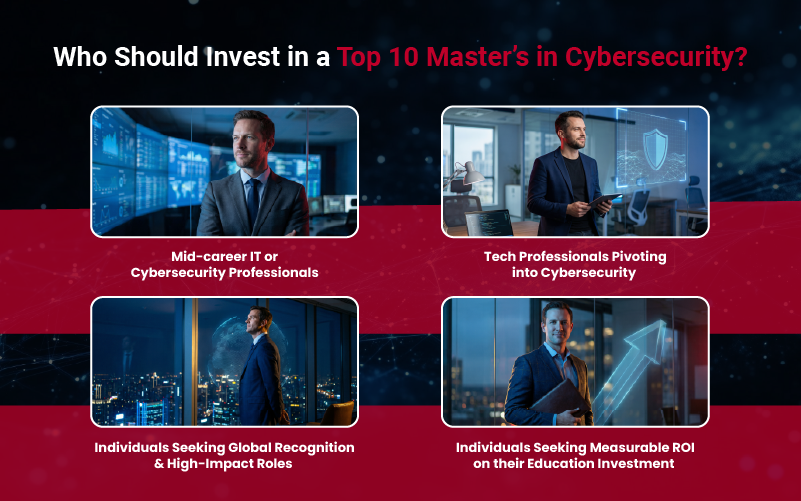
- Mid-career IT or cybersecurity professionals seeking leadership roles
- Tech professionals wanting to pivot into Cybersecurity
- Individuals aiming for global recognition and high-impact roles
- Anyone looking for a measurable ROI on their education investment
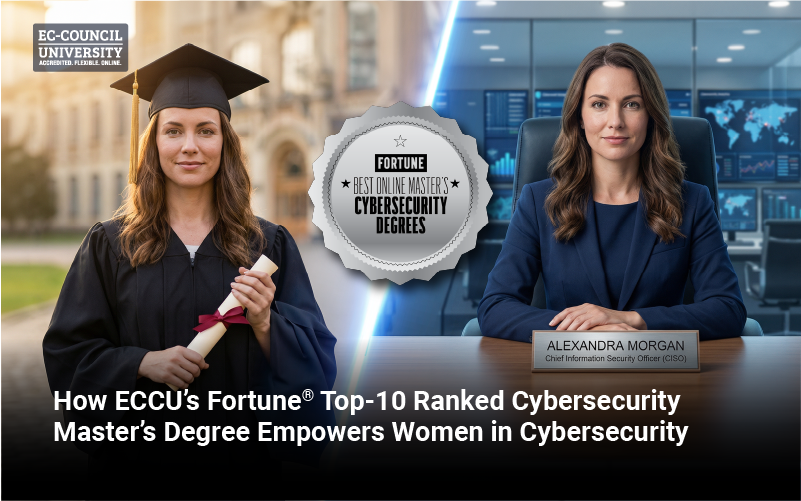
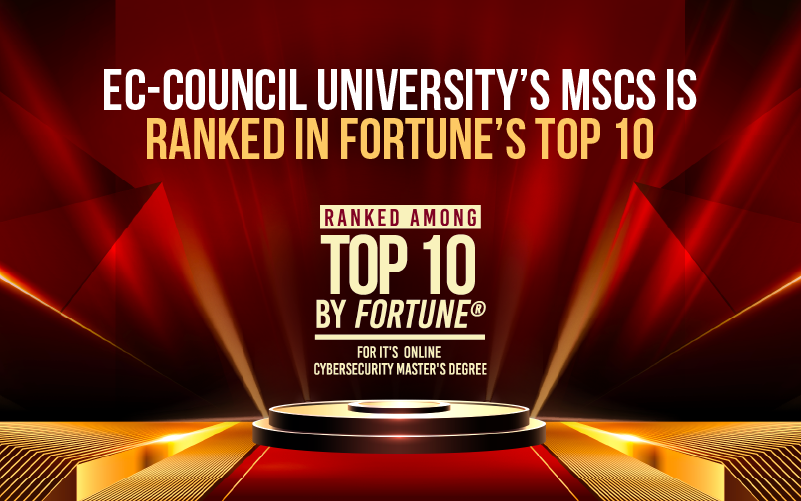
EC-Council University’s Master of Science in Cybersecurity (MSCS) has been recognized by Fortune® as one of the Top 10 Master’s programs, making it the best choice for professionals seeking strategic career advancement.
Why EC-Council University’s MSCS is Ranked in Fortune®’s Top 10
EC-Council University is globally recognized for its practical, hands-on approach to cybersecurity education. Its Master of Science in Cybersecurity program is designed to equip students with both the technical expertise and strategic insight needed to tackle complex cyber threats.
ECCU’s MSCS program stands out for its-
- Hands-On, Industry-Aligned Curriculum: Students gain practical, real-world skills employers demand.
- Flexible Learning: ECCU programs are 100% online and offer asynchronous learning, allowing working professionals to advance without pausing their careers.
- Certification Integration: Programs incorporate industry certifications such as AI CEH, AI CPENT, AI CISO, CND, CHFI, and more, increasing marketability.
- Global Recognition: EC-Council University’s strong reputation in Cybersecurity offers industry recognition worldwide.
A Strategic Investment That Pays Off And Future-Proofs Your Career
In 2026, a master’s degree is not just an academic milestone. It is a strategic career investment. A Fortune®-ranked master’s program at EC-Council University delivers measurable ROI through excellent career outcomes, such as earning industry recognition, higher salaries, promotions, and career advancement.
For professionals aiming to future-proof their careers and take on leadership roles in Cybersecurity, investing in EC-Council University is not just an option; it’s a decision that pays dividends for years to come.
If you are ready to join the ranks of elite cybersecurity professionals and maximize your ROI, EC-Council University’s Master of Science in Cybersecurity (MSCS) is the ideal choice.
Frequently Asked Questions About EC-Council University’s MSCS
EC-Council University’s Master of Science in Cybersecurity program is recognized and ranked by Fortune® among the Top 10 Master’s programs in 2026.
Yes. MSCS graduates typically see a 20–40%** increase in earning potential compared to those without an advanced degree. However, the salary range depends on the job role, location, and other factors.
Rankings reflect curriculum rigor, employer trust, and career outcomes—critical factors in maximizing ROI.
Yes. EC-Council University offers flexible online learning to accommodate working professionals.
Absolutely. Top-ranked programs provide both the technical expertise, strategic insights, and skills required for executive-level positions.