Mentorship is Invaluable in the Field of Cybersecurity
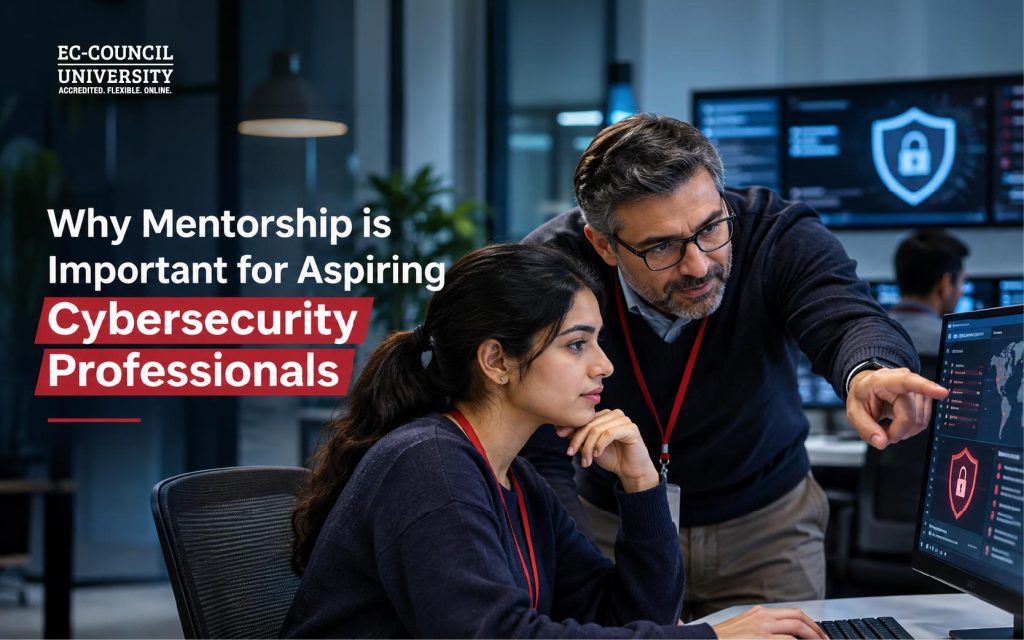
Building a successful career in cybersecurity takes more than technical knowledge, industry certifications, and hands-on experience. It also requires the ability to navigate a constantly evolving industry, make informed career decisions, solve complex security challenges, and continuously develop new skills. For aspiring cybersecurity professionals, having the right mentor can make this journey considerably more structured, informed, and rewarding.
Whether you’re a college student exploring cybersecurity, an IT professional considering a career transition, or an early-career cybersecurity practitioner looking to specialize in a specific domain, mentorship can provide something that textbooks and online courses cannot always offer, namely insights from someone who has already navigated the professional landscape. From understanding real-world security challenges to identifying career opportunities and developing leadership skills, an experienced mentor can help you turn your cybersecurity aspirations into actionable career goals.
But what exactly makes mentorship so valuable, and how can you find the right mentor to support your professional growth? Let’s explore.
Why Is Mentorship Important in Cybersecurity?
Cybersecurity is one of the most dynamic areas of the global tech industry. Organizations across industrial sectors rely on skilled professionals to protect sensitive information, secure digital infrastructure, manage cyber risks, and respond to increasingly sophisticated attacks.
However, entering this profession can be challenging. Aspiring professionals must understand which skills employers value, identify suitable specializations, gain practical experience, and keep pace with emerging technologies. This reinforces an important point: cybersecurity professionals must continually develop their capabilities. Mentorship can help aspiring practitioners understand where to focus their learning, how to apply their knowledge, and how to approach their professional development strategically.
Rather than navigating the industry alone, you can learn from someone who understands its expectations, challenges, and opportunities.
7 Benefits of Mentorship for Aspiring Cybersecurity Professionals
Mentorship offers several advantages that extend beyond learning technical concepts. Here are 7 important ways experienced mentors can contribute to your cybersecurity career development:
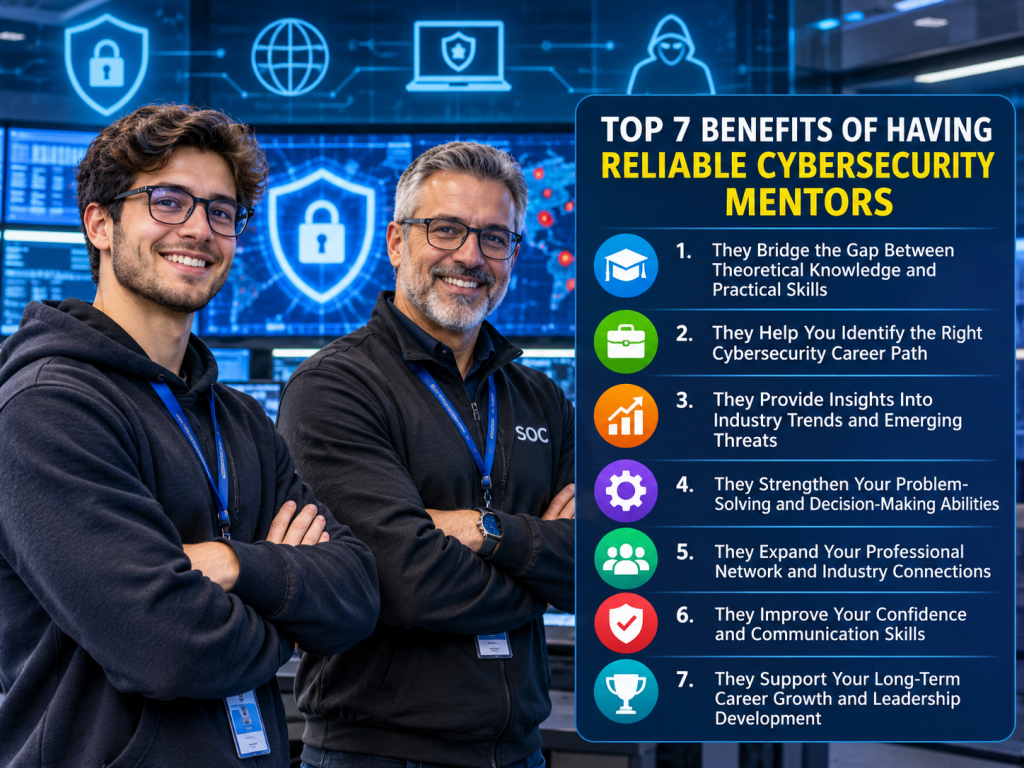
1. Bridging the Gap Between Theoretical Knowledge and Practical Skills
Understanding cybersecurity concepts in a classroom is different from applying them in an operational environment. For example, you might understand how penetration testing works, but conducting an authorized assessment requires practical knowledge of reconnaissance, vulnerability identification, exploitation techniques, documentation, and responsible reporting. Similarly, learning about cyber incident response is not the same as helping an organization investigate a security incident.
An experienced mentor can help you understand these differences by discussing real-world scenarios, explaining industry practices, reviewing your technical projects, and recommending relevant hands-on exercises. This guidance can help you become more confident in applying your knowledge to practical security challenges.
2. Helping You Identify the Right Cybersecurity Career Path
Cybersecurity is a broad profession with numerous specializations. Depending on your interests and strengths, you could pursue opportunities in:
- Ethical hacking and penetration testing
- Security operations and threat intelligence
- Digital forensics and incident response
- Cloud security and security architecture
- Application and network security
- AI security and adversarial testing
- Governance, risk, and compliance (GRC)
3. Providing Insights Into Industry Trends and Emerging Threats
Cybersecurity knowledge can quickly become outdated. Attackers continually refine their techniques, while organizations adopt new technologies and security approaches. Consider the growing adoption of AI, cloud computing, automation, and interconnected digital infrastructure. Each development introduces new security considerations and creates demand for specialized competencies.
An experienced mentor can help you understand these developments from an industry perspective. For example, a professional specializing in AI security could explain emerging threats such as prompt injection attacks, model manipulation, data poisoning, and attacks targeting AI-enabled applications. Similarly, a cloud security expert could help you understand identity management, cloud misconfigurations, workload protection, and shared responsibility models. These conversations can help you connect emerging cybersecurity developments with the skills you need to build.
4. Strengthening Problem-Solving and Decision-Making Abilities
Cybersecurity professionals regularly encounter situations that require analytical thinking, sound judgment, and the ability to make decisions under pressure. Identifying suspicious network activity, investigating a potential data breach, assessing vulnerabilities, and prioritizing remediation are examples of tasks that require more than theoretical knowledge.
Mentors can help you develop these abilities by discussing practical scenarios, asking thought-provoking questions, and encouraging you to evaluate different approaches to security problems. They can also explain why certain decisions are appropriate in specific organizational contexts. Over time, this exposure can strengthen your ability to think critically, assess risks, communicate findings, and make informed security recommendations.
5. Expanding Professional Networks and Industry Connections
6. Improving Professional Confidence and Communication Skills
Technical expertise is essential, but cybersecurity professionals must also communicate effectively with colleagues, management teams, clients, and other stakeholders. For example, a security analyst may need to explain technical vulnerabilities to a non-technical manager. A penetration tester must communicate findings clearly, while a cybersecurity leader must translate technical risks into business implications for company shareholders.
A mentor can help you improve these abilities through constructive feedback, mock interviews, project reviews, presentations, and professional discussions. They can also help you recognize your strengths, address skill gaps, and approach unfamiliar challenges with greater confidence.
7. Supporting Long-Term Career Growth and Leadership Development
Mentorship is not limited to individuals entering the cybersecurity profession. It can remain valuable throughout your career. As you gain experience, you may want to transition from technical roles into specialized positions, management, consulting, or executive leadership.
A senior cybersecurity professional can help you understand the competencies required for these transitions, including strategic thinking, risk management, stakeholder communication, team leadership, and organizational decision-making. Mentors can also help you evaluate career milestones and identify opportunities for continuous professional development. Ultimately, their guidance can help you think beyond your next job title and develop a sustainable long-term career strategy.
What Defines a Good Cybersecurity Mentor?
Not every experienced cybersecurity professional will necessarily be the right mentor for you. An effective mentor should combine relevant industry knowledge with a genuine interest in helping others develop. Look for someone who demonstrates the following qualities:
- Relevant professional experience: Has practical experience in your area of interest or desired specialization.
- Technical and industry expertise: Understands current cybersecurity technologies, methodologies, frameworks, and industry expectations.
- Strong communication skills: Can explain complex concepts clearly and provide constructive feedback.
- Professional integrity: Encourages ethical practices, responsible disclosure, and continuous learning.
- A commitment to your development: Takes an interest in your goals and provides realistic, actionable guidance.
Ideally, your mentor should also challenge you to think independently rather than provide answers to every problem. A good mentor helps you become a better professional, not dependent on their guidance.
How to Find a Cybersecurity Mentor
- Start with your academic network: Reach out to university faculty, instructors, alumni, and industry practitioners who can provide career guidance.
- Use LinkedIn strategically: Follow established cybersecurity professionals, engage with their content, and reach out with thoughtful, specific requests for guidance.
- Join professional communities: Participate in cybersecurity associations, technical forums, local security groups, and online communities.
- Attend industry events: Conferences, webinars, workshops, and cybersecurity meetups offer opportunities to interact with experienced professionals.
- Explore university mentorship opportunities: Look for academic institutions that connect students with industry experts, experienced faculty, alumni, or professional communities.
How to Make the Most of Your Mentor’s Time
- Define your career goals: Identify what you want to achieve, whether it’s entering cybersecurity, specializing in ethical hacking, or developing expertise in offensive AI security.
- Prepare meaningful questions: Come to mentoring sessions with specific questions about technical challenges, career decisions, or professional development.
- Be receptive to feedback: Treat constructive criticism as an opportunity to identify and address knowledge or skill gaps.
- Put recommendations into practice: Apply what you learn through hands-on labs, technical projects, certifications, and collaborative exercises.
- Stay consistent and accountable: Follow up on agreed-upon goals, share your progress, and respect your mentor’s time.
Mentorship and Cybersecurity Education: Why Both Matter
Formal cybersecurity education provides the structured knowledge needed to understand security principles, technologies, frameworks, and methodologies. Mentorship complements this foundation by helping you apply that knowledge in professional environments. Consider the following:
| Career development component | What it contributes |
|---|---|
| Formal education | Builds foundational and advanced cybersecurity knowledge |
| Professional certifications | Validates specialized knowledge and competencies |
| Hands-on training | Develops practical technical capabilities |
| Mentorship | Provides professional guidance and real-world perspectives |
| Networking | Encourages collaboration and professional connections |
ECCU: Empowering Aspiring Cybersecurity Professionals Through Expert Guidance
At EC-Council University (ECCU), we recognize that beyond world-class education, pursuing a successful cybersecurity career requires understanding the industry’s dynamic nuances, learning from experienced professionals, and receiving guidance from established cybersecurity experts. That’s why we emphasize connecting academic learning with applicable knowledge, practical skills, and strategic thinking capabilities.
Through personalized academic and career development support, students benefit from the unique perspectives and insights of renowned cybersecurity practitioners, instructors, and leaders with decades of senior-level experience. Whether you aspire to become an ethical hacker, cybersecurity analyst, digital forensics specialist, cloud security architect, AI security professional, or cybersecurity decision-maker, learning from our faculty of experts can provide valuable direction as you progress toward your career goals.
To find out more about the benefits of studying advanced cybersecurity at ECCU:
Frequently Asked Questions About Cybersecurity Mentorship
Why is mentorship important for aspiring cybersecurity professionals?
Mentorship provides aspiring cybersecurity professionals with practical industry insights, career guidance, technical advice, and constructive feedback. It helps them bridge the gap between theoretical knowledge and real-world applications while making informed decisions about their professional development.
Can mentorship help me start a career in cybersecurity without prior IT experience?
Yes. A mentor can help career changers understand cybersecurity fundamentals, identify transferable skills, select suitable learning pathways, and develop the competencies required for entry-level opportunities. However, mentorship should complement formal education, practical training, and relevant experience.
What should I look for in a cybersecurity mentor?
Look for someone with relevant industry experience, technical expertise, strong communication skills, professional integrity, and a genuine interest in supporting your development. Ideally, your mentor should have experience in the cybersecurity specialization you want to pursue.
Can a cybersecurity mentor help me choose a specialization?
Absolutely. An experienced mentor can explain the responsibilities, technical requirements, and career pathways associated with specializations such as ethical hacking, cloud security, digital forensics, incident response, AI security, and GRC. This can help you identify a specialization aligned with your interests and strengths.
Is mentorship beneficial for experienced cybersecurity professionals?
Yes. Mentorship remains valuable throughout a cybersecurity career. Experienced professionals can seek guidance when transitioning into specialized technical roles, management positions, or executive leadership. It can also help them stay current with emerging technologies and develop strategic decision-making capabilities.
How does ECCU support mentorship and professional development?
EC-Council University (ECCU) supports academic and professional development through personalized guidance and opportunities to learn from experienced cybersecurity faculty and industry experts with decades of senior-level experience. This exposure helps you connect your education with industry expectations and make informed career decisions.
References & Sources: