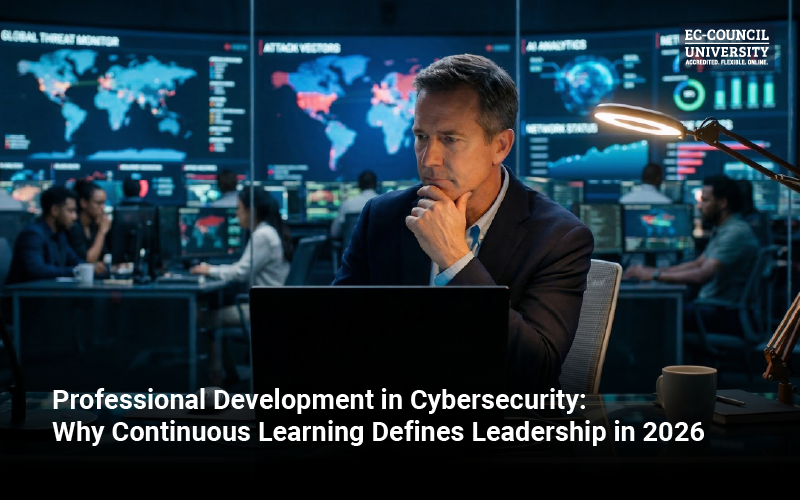
Professional Development is Essential in Cybersecurity
Cybersecurity is not a static industry. Threat landscapes evolve, new technologies emerge, regulations change, and artificial intelligence is reshaping attack and defense strategies. What worked three years ago may already be outdated. In this environment, professional development is not optional. It is survival.
More importantly, in 2026 and beyond, continuous learning is what separates technical professionals from cybersecurity leaders.
The Reality of Cybersecurity in 2026
Cybersecurity is no longer confined to IT departments. It now influences boardroom decisions, regulatory strategy, enterprise risk management, and global operations. Common cyber threats that organizations face in current times are:
- Ransomware attacks
- Cloud misconfigurations exposing sensitive data
- Third-party vendor vulnerabilities
- AI-powered phishing campaigns
- Stricter compliance mandates
Cybersecurity leaders are expected to respond with clarity, confidence, and strategic alignment. The professionals who rise to leadership roles like CISO and Director of Cybersecurity recognize the importance of continuous development and do not stop learning after earning a degree or certifications.
What Professional Development Really Means in Cybersecurity
Professional development goes beyond attending a workshop or earning a single certification. It involves structured growth across multiple dimensions:
- Technical depth
- Strategic thinking
- Risk communication
- Governance knowledge
- Leadership capability
- Decision-making under pressure
Cybersecurity analysts may begin their careers focused on threat detection. But for them to one day become executive-level cybersecurity leaders, they must also master concepts such as enterprise risk, regulatory exposure, budgeting, stakeholder communication, and board-level reporting.
This evolution requires a commitment to intentional professional development.
Why Continuous Learning Defines Leadership
Technical skills get you hired, but strategic capability gets you promoted. As cybersecurity professionals advance, expectations shift from operational execution to enterprise influence. Entry-level roles focus on:
- Monitoring
- Analysis
- Incident response
- Technical troubleshooting
Whereas leadership roles require:
- Explaining risk to executives
- Aligning security strategy with business objectives
- Justifying budget investments
- Leading crisis communication
- Building security culture across departments
Continuous learning bridges this gap.
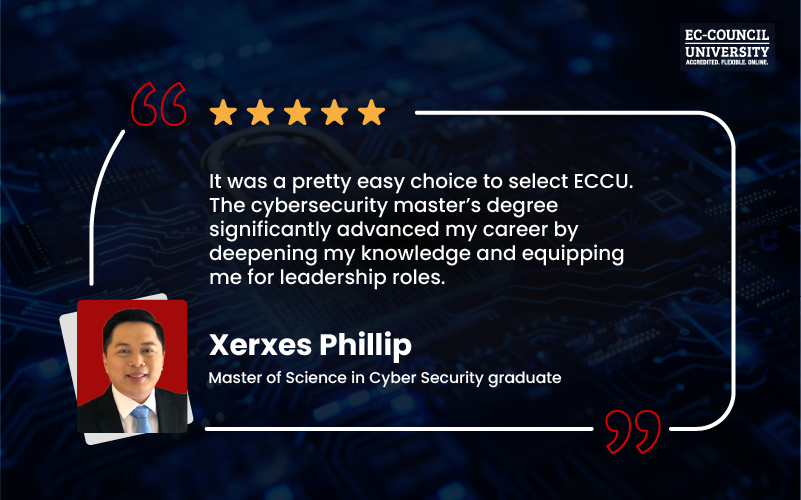
At EC-Council University (ECCU), our online cybersecurity degrees and certification courses are designed to support career progression through professional development. Students deepen their technical expertise while strengthening governance, compliance, and strategic analysis capabilities essential to leadership roles.
The Expanding Skill Set of Cybersecurity Leaders
In 2026, cybersecurity leadership requires a blend of technical mastery and executive fluency. Key areas of development include:
- Cloud security architecture
- Zero Trust frameworks
- AI and automation in threat detection
- Regulatory compliance and risk management
- Executive communication
- Strategic planning
The complexity of modern digital infrastructure demands multidisciplinary competence. For professionals seeking executive readiness, the MBA in Cybersecurity from ECCU integrates security strategy with business leadership principles, preparing graduates to translate technical insight into organizational direction.
Continuous development ensures professionals can move from IT network protection to enterprise leadership.
Cybersecurity Degrees or Certifications: What Drives Long-Term Growth?
Certifications remain valuable in cybersecurity. They validate technical knowledge and demonstrate subject matter expertise. However, certifications alone often focus on specific tools or methodologies. Long-term leadership development requires broader integration of:
- Strategic governance
- Risk management frameworks
- Cross-functional communication
- Business alignment
The best cybersecurity degrees integrate certification courses into the curriculum – ECCU’s Bachelor of Science in Cyber Security program establishes foundational technical skills. On the other hand, advanced pathways such as the Master of Science in Cyber Security program build specialization while reinforcing leadership and strategic analysis, making professional development layered rather than isolated.
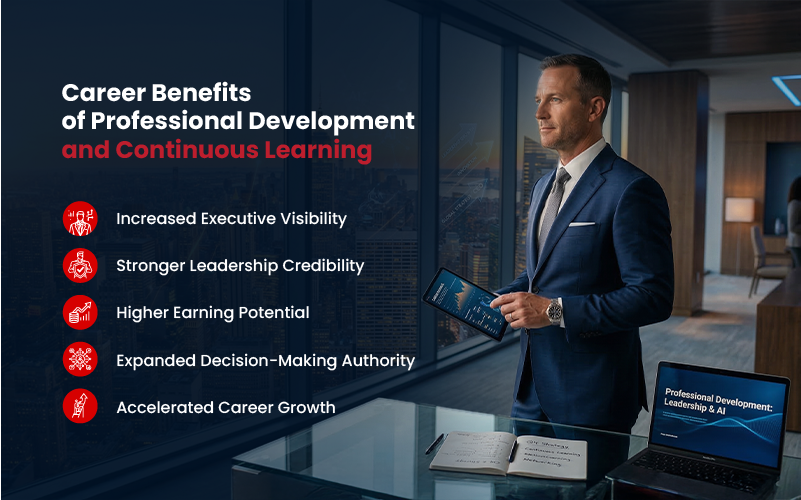
The Career Impact of Continuous Professional Development
Cybersecurity professionals who prioritize continuous learning often experience:
- Increased executive visibility
- Stronger leadership credibility
- Higher salary growth
- Expanded decision-making authority
- Greater career mobility
Organizations increasingly evaluate leaders not only on technical competence but also on adaptability and strategic insight. Those who continuously refine their skills and further their professional acumen remain competitive in evolving job markets.
Building a Personal Professional Development Strategy
Professional development in cybersecurity should be intentional. Start by asking:
- Where do I want to be in five years?
- What skills are required for that role?
- Which gaps currently exist?
- What structured learning opportunities can bridge those gaps?
Continuous development may include:
- Advanced cybersecurity degrees
- Specialized cybersecurity certifications
- Leadership and management training
- Cross-functional project involvement
- Industry research participation
At EC-Council University, academic pathways are designed to align with real-world cybersecurity leadership demands, helping professionals integrate technical mastery with enterprise-level thinking.
The Risk of Standing Still
The cybersecurity landscape does not pause, and professionals who stop learning risk falling behind. In contrast, those who commit to ongoing professional development position themselves as future-ready leaders.
In 2026, cybersecurity leadership is defined not just by what you know today, but by how prepared you are for tomorrow.
A Quick Recap
Professional development in cybersecurity is not about collecting credentials. It is about building capability. Continuous learning defines leadership because leadership requires adaptability, strategic clarity, and enterprise awareness.
Technical expertise opens doors to career opportunities, while ongoing development keeps them open. In a field where change is constant, growth must be constant as well. The professionals who invest in structured, intentional development today are the ones who will define cybersecurity leadership in 2026 and beyond.
EC-Council University empowers professional development through a range of online cybersecurity degrees and certification courses that cater to current and emerging industry requirements. To discover the ideal learning option suited to your career goals:
Frequently Asked Questions About Professional Development in Cybersecurity
Professional development in cybersecurity refers to the ongoing process of improving knowledge, technical skills, and strategic expertise. It includes pursuing certifications and advanced degrees, completing industry training, practicing in hands-on labs, and staying up to date on emerging threats, technologies, and security frameworks.
Continuous learning is essential in cybersecurity because cyber threats, attack techniques, and security technologies evolve constantly. Regular professional development helps cybersecurity professionals stay current with industry trends, strengthen their defensive capabilities, and remain competitive in the rapidly growing cybersecurity job market.
Cybersecurity professionals can advance their careers by gaining industry-recognized certifications, earning advanced cybersecurity degrees, developing specialized skills (such as cloud security engineering or threat intelligence), and building leadership capabilities in risk management and security governance.
Non-technical skills such as business communication, strategic thinking, team management, resource allocation, and risk management are important for cybersecurity professionals aiming for senior leadership roles.