
If you’re a veteran reading this, chances are you would relate to the situation.
During your service to the nation, you worked selflessly, protecting your people and your nation under real pressure. The sense of purpose that came with serving, knowing your work mattered every single day, is something you now miss. After transitioning to civilian life, you maybe often asking yourself this question:
“Where do my skills really fit now?”
“How can I continue making an impact?”
Here’s an answer that’s gaining serious momentum across the United States: Cybersecurity Career Path!
The country is facing a growing cybersecurity skills gap, and organizations everywhere—from federal agencies to private companies—are struggling to defend themselves against constant cyber threats. At the same time, veterans bring exactly the mindset this field demands.
That’s why cybersecurity for veterans isn’t just a career option—it’s a natural continuation of service.
The Cybersecurity Skills Gap in the United States
- The United States currently has over 500,000 unfilled cybersecurity jobs, leaving organizations across various industries vulnerable to cyber threats. – Source: Military.com
- Despite strong alignment with the field, only about 13% of cybersecurity professionals in the U.S. are veterans, highlighting a significant opportunity for growth. – Source: EC-Council University
- Veterans already play a critical role in national cyber defense. At the Cybersecurity and Infrastructure Security Agency (CISA), veterans comprise approximately 40% of the workforce, reflecting the high value placed on military experience in cybersecurity operations. – Source: EC-Council University
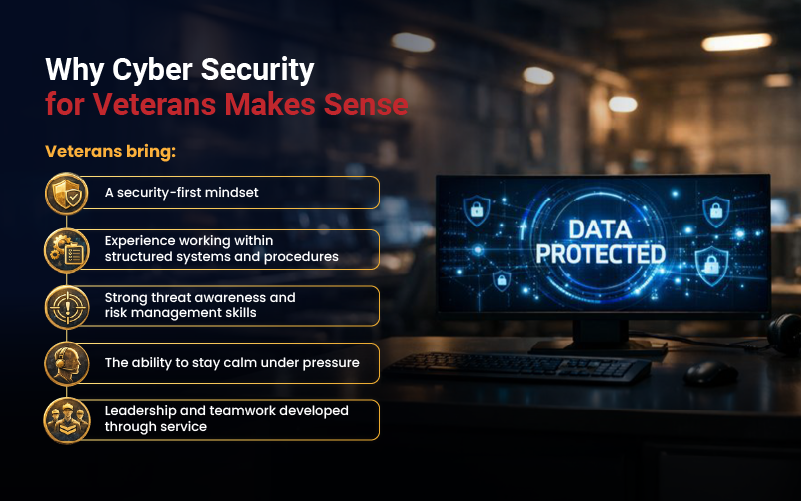
Why Cyber Security for Veterans Makes Sense
Cybersecurity isn’t just about technology—it’s about defense, awareness, and mission execution. That’s why many veterans find the transition into cybersecurity surprisingly familiar. In many ways, cybersecurity feels like defending a new domain. That’s what makes cyber security for veterans such a strong and logical career path.
Learn Why Being a Veteran Is a Benefit in the Cybersecurity Industry Here
How Veterans Are Shaping America’s Cybersecurity Workforce
Across the country, veterans are increasingly recognized as a vital part of the cybersecurity workforce. Employers value veterans for their reliability, discipline, and ability to operate in secure environments.
Veterans are also more likely to succeed in roles that require:
- Compliance with strict security standards
- Attention to detail
- High levels of trust and accountability
As cybersecurity job openings continue to grow nationwide, cybersecurity training for veterans has become one of the most effective ways to address both workforce shortages and veteran career transitions at the same time.
The Transition Challenge: Turning Military Experience into Cybersecurity Credentials
While veterans clearly have the mindset for cybersecurity, one challenge often stands in the way, and that’s having the right credentials and hands-on skills.
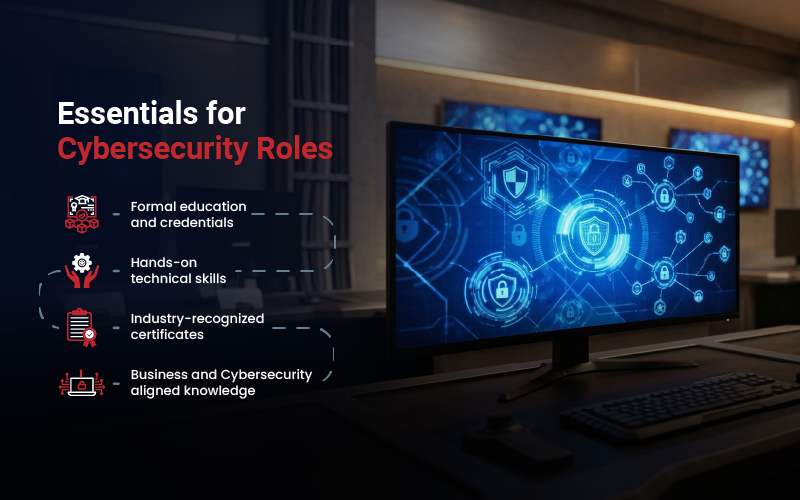
Most cybersecurity roles require:
- Formal education and credentials
- Hands-on technical skills
- Industry-recognized certificates
- Business and Cybersecurity Aligned Knowledge
This is where structured cybersecurity programs, designed specifically for cybersecurity careers, become essential. The right education helps veterans translate real-world experience into qualifications employers understand.
How You Can Bridge Your Cybersecurity Skills with ECCU
ECCU offers online cybersecurity programs that support veterans, whether they’re transitioning from service, switching careers into cybersecurity, or advancing into leadership roles.
- Clear pathways into cybersecurity: From foundational skills to advanced expertise, ECCU programs help veterans translate military experience into in-demand cybersecurity careers.
- Flexible, 100% online learning: Designed for working professionals, ECCU’s online format allows students to balance work, studies, and family life without putting their careers on hold.
- Programs aligned to career goals:
- Bachelor of Science in Cybersecurity – Ideal for entry-level roles and career switchers building a strong technical foundation.
- Master of Science in Cybersecurity – For professionals seeking advanced technical and strategic cybersecurity expertise and leadership roles.
- MBA (Cybersecurity Specialization) – Combines business leadership with cybersecurity knowledge for management and executive roles.
- Graduate Certificate Program – Fast, focused skill development for upskilling or credential enhancement.
- Veteran-focused career readiness: Programs emphasize real-world skills, industry relevance, and career advancement, helping veterans succeed in today’s cybersecurity workforce.
Cybersecurity Job Roles Veterans Can Target
With the right cybersecurity education and training, veterans can pursue a variety of in-demand cybersecurity roles, including:
SOC Analyst (Security Operations Center Analyst)
A strong fit for veterans who excel at monitoring systems, detecting threats, and responding to incidents using established procedures.
Penetration Tester
Ideal for those who enjoy problem-solving and thinking like an adversary—testing system to find weaknesses before attackers do.
Chief Information Security Officer (CISO)
A leadership-driven role well-suited for veterans with experience in risk management, strategy, and decision-making at higher levels.
These roles clearly demonstrate why cybersecurity for veterans is an ideal career path—they align directly with military training, leadership, and operational thinking.
Why EC-Council University Is a Smart Choice for Veterans
When it comes to cybersecurity programs for veterans, where you learn really matters.
EC-Council University (ECCU) focuses on real-world cybersecurity education with programs built around practical skills, current threats, and industry needs.
What truly sets ECCU apart for veterans is accessibility:
EC-Council University is approved to accept VA education benefits for all of its degree programs.
This means:
- Veterans can fully use the benefits they earned through service
- No restriction on which degree program they choose
- Greater flexibility to align education with career goals
ECCU removes common barriers, allowing veterans to focus on acquiring skills and preparing for long-term success in cybersecurity careers.
Using VA Education Benefits for Veteran’s Cybersecurity Education
VA education benefits are one of the most powerful tools veterans have when transitioning into civilian careers. When paired with a university that fully supports those benefits, they open doors to high-growth fields like cybersecurity.
By accepting VA education benefits for all degree programs, ECCU ensures veterans can pursue cybersecurity credentials and training without any limitations—making the path from service to cybersecurity clearer and more achievable.
How Can You Benefit from ECCU with Your VA Education Benefits?
- Zero Cost Application Fee: ECCU waives the standard application fee for all eligible U.S. veterans.
- Tuition and Fee Coverage: VA benefits may cover costs, depending on your program and eligibility.
- Learning Resources: Qualifying students may receive an annual stipend for materials through the Post-9/11 GI Bill®.
- Flexible Payment Plans: Start your program while VA funding is processed and with no delays in ECCU enrollment
- Family Support: Educational benefits may extend to spouses and dependents pursuing cybersecurity careers
- Enrollment Support Services: Get one-on-one guidance to navigate your benefits and program requirements at ECCU
Discover how discipline, adaptability, and mission-driven leadership carried Charles Danley from military service into a successful career at the forefront of cybersecurity. Learn the lessons, skills, and mindset that powered Charles Danley’s transition into cybersecurity leadership.
Bridge Your Skill Gaps and Advance in Your Cybersecurity Careers
The cybersecurity skills gap is one of the most pressing workforce and national security challenges facing the United States today. Veterans are uniquely prepared to help solve it.
With the right education and support, veterans in cybersecurity can continue serving—protecting data, systems, and critical infrastructure in a digital world.
If you’re ready to explore cybersecurity programs for veterans and want an institution that understands both cybersecurity and military transitions, EC-Council University offers a clear path forward—with VA benefits accepted for all degree programs.
Explore your cybersecurity career paths and ways of excelling in them!
FAQs – Commonly Asked Questions
Yes. Cybersecurity values discipline, threat awareness, and mission-focused thinking—qualities veterans already possess.
Not necessarily. Many veterans successfully enter the field through structured cybersecurity training programs designed to build skills from the ground up.
Yes. EC-Council University accepts VA education benefits for all degree programs, making education accessible for veterans and eligible dependents.
Popular roles include SOC Analyst, Pen Tester, and leadership positions such as CISO, depending on experience and career goals.