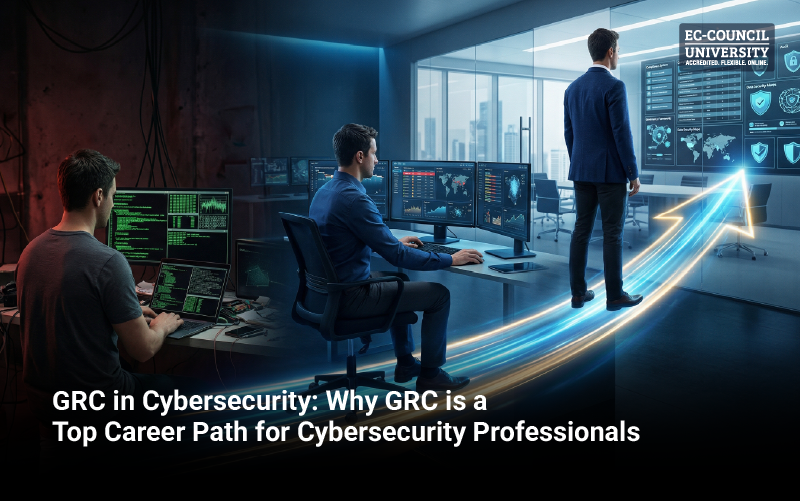
What Is GRC in Cybersecurity?
GRC stands for Governance, Risk, and Compliance, and represents the strategic backbone of modern cybersecurity. It is the discipline that ensures organizations not only protect their digital assets but do so in a way that aligns with business objectives, regulatory requirements, and enterprise risk tolerance. GRC can be broken down as follows:
| GOVERNANCE | RISK MANAGEMENT | COMPLIANCE |
|---|---|---|
| Defines policies, oversight, and accountability structures | Identifies, assesses, and mitigates threats to an organization | Ensures adherence to laws, regulations, and industry standards |
While technical cybersecurity focuses on defending systems, GRC ensures those defenses are valid, measurable, and sustainable.
The Importance of GRC in Cybersecurity
As cybersecurity is now considered a boardroom priority, the regulatory pressure is intensifying:
- The SEC’s cybersecurity disclosure rules (2023) require timely and transparent reporting of cyber incidents
- The European Union’s GDPR continues to enforce strict data protection requirements, with violations resulting in steep fines
- Industry-specific regulations like HIPAA and SOX are expanding in scope and enforcement
Organizations now require professionals who can translate cybersecurity into business risk, ensuring compliance while enabling innovation.
Shift from Technical Roles to Strategic Roles
For decades, cybersecurity careers were dominated by technical roles like penetration testers, SOC analysts, and incident responders. These roles remain essential, but they are predominantly reactive. By contrast, GRC roles are proactive and strategic:
- Instead of responding to attacks, GRC professionals prevent them through enforcing governance frameworks
- Instead of focusing on systems alone, GRC focuses on enterprise-wide risk posture
- Instead of speaking in technical jargon, GRC professionals communicate in business and regulatory language
Key Responsibilities of GRC Cybersecurity Roles
GRC professionals operate at the intersection of cybersecurity, business strategy, and regulatory oversight. Their responsibilities include:
- Developing Security Policies and Frameworks: Designing governance structures aligned with standards such as NIST and ISO 27001.
- Conducting Risk Assessments: Identifying vulnerabilities, evaluating impact, and prioritizing mitigation strategies
- Ensuring Regulatory Compliance: Maintaining adherence to global, regional, and industry-specific regulations
- Managing Audits and Reporting: Preparing for internal and external audits and documenting compliance procedures
- Cross-Functional Collaboration: Working with legal, finance, IT, and executive leadership
- Translating Technical Risks into Business Language: Enabling executives and business leaders to make informed, risk-based decisions
Skills Required for a Successful Cybersecurity GRC Career
To thrive in GRC roles, professionals must develop a hybrid skill set of:
| Technical / Analytical Skills | Business and Strategic Skills | Soft Skills |
|---|---|---|
| Risk assessment methodologies (NIST RMF, ISO 31000) | Policy development and governance design | Critical thinking |
| Knowledge of regulatory frameworks (GDPR, HIPAA, etc.) | Stakeholder communication and executive reporting | Negotiation and influence |
| Security architecture fundamentals | Decision-making under uncertainty | Ethical judgment |
| Data analysis and reporting | Understanding of business operations and financial risk | Clear, concise communication |
The Pathway for Cybersecurity GRC Careers
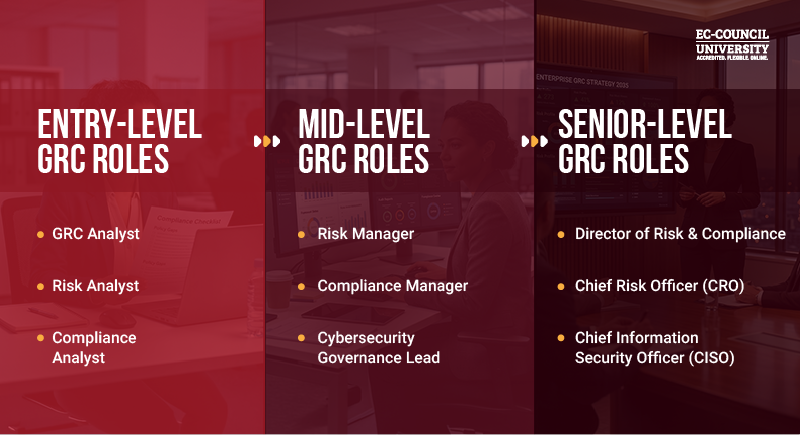
GRC offers one of the clearest pathways to executive leadership in cybersecurity. Unlike purely technical tracks, GRC roles naturally evolve into decision-making and governance positions at the highest levels.
Earning Potential and Job Demand for Cybersecurity GRC Roles
The demand for GRC professionals is unrelenting:
- Interest in specialized GRC roles like Cybersecurity GRC Analysts and CISOs in the U.S. has risen by nearly 1,000% over the past 5 years
- According to ZipRecruiter, the average salary for a Cybersecurity GRC Analyst in the U.S. is $99,400 annually (as of April 2026).
- Data from ZipRecruiter also states that senior-level GRC roles, such as the Director of Risk & Compliance, can pay an annual salary exceeding $141,000.
The data is unequivocal. The demand for cybersecurity GRC specialists is far outpacing the supply of skilled professionals.
How ECCU’s Master’s Degrees Prepare Cybersecurity Professionals for GRC Careers
EC-Council University (ECCU), a global leader in cybersecurity-focused education, meticulously crafts the curricula for its online master’s degrees to empower professionals to excel at both technical and strategic levels.
Master’s programs from ECCU tailored for cybersecurity GRC requirements:
- Master of Science in Cyber Security – Executive Leadership in Information Assurance (MSCS)
- Master of Business Administration (MBA)
These programs emphasize:
- Risk management frameworks and governance models
- Policy development and compliance strategies
- Real-world case studies on cyber risk and regulatory challenges
- Leadership and decision-making in cybersecurity environments
- Staying ahead of emerging AI-driven GRC requirements
Students graduate with the ability to:
- Align cybersecurity initiatives with organizational goals
- Design governance frameworks that scale globally
- Communicate effectively with both technical teams and executive leadership
This integrated approach ensures graduates are not just job-ready, but future-ready. To know more about the GRC career benefits of obtaining a master’s degree from ECCU:
Certifications That Complement a GRC Career
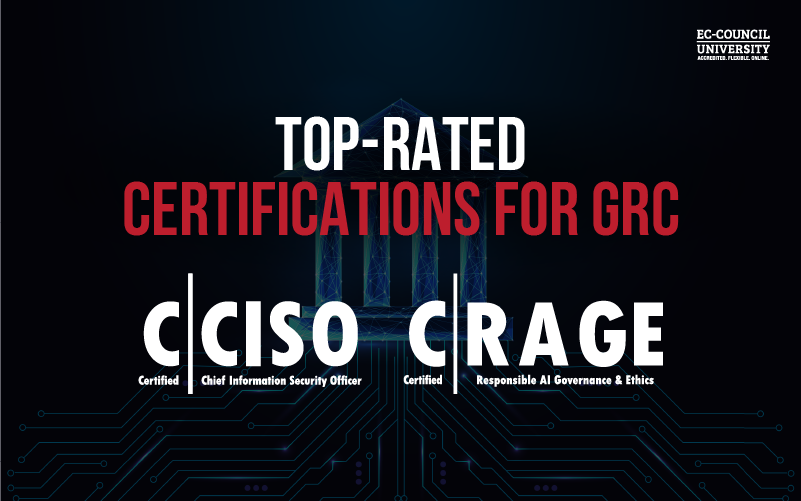
ECCU’s online master’s degrees also provide the exclusive advantage of embedding internationally recognized certifications into the coursework. These certifications enhance professional credibility, validate GRC expertise, and accelerate career progression.
- Certified Chief Information Security Officer (C|CISO)
- Certified Responsible AI Governance and Ethics (C|RAGE)
AI in Cybersecurity GRC
AI is transforming GRC from a manual, periodic function into a real-time, intelligence-driven discipline.
- AI enhances risk identification and predictive analytics. Instead of static assessments, machine learning continuously analyzes data to detect anomalies and predict threats before they materialize. This enables GRC teams to move from reactive to proactive risk management.
- AI streamlines compliance and audit processes through automation. It can map controls across frameworks, monitor compliance in real time, and generate audit-ready reports, reducing manual effort and improving accuracy.
- AI introduces the need for AI governance. Organizations must manage risks related to bias, transparency, data privacy, and accountability in AI systems. As regulations evolve, GRC professionals play a central role in ensuring AI is ethical, compliant, and auditable.
- AI helps in cyber risk quantification, a practice that translates technical vulnerabilities into financial and business impact, enabling leaders to make data-driven decisions about cybersecurity investments.
- AI also enables Continuous Control Monitoring (CCM), in which security controls are tested in real time, ensuring ongoing compliance and faster issue remediation.
The Future of GRC in Cybersecurity
The future of cybersecurity will be defined less by tools and more by governance maturity. The key trends shaping GRC in cybersecurity include:
- AI governance and risk oversight
- Increased regulatory scrutiny across industries
- Integration of cybersecurity into Enterprise Risk Management (ERM)
- Board-level accountability for cyber risk
These trends clearly indicate that GRC will become the central pillar of cybersecurity strategy.
GRC is Becoming the Most Strategic Career Path in Cybersecurity
As organizations face increasing regulatory pressure, evolving threats, and growing business complexity, they need professionals who can align cybersecurity operations with business objectives, translate risk into actionable insights, and build scalable and adaptable governance frameworks.
For cybersecurity professionals, this represents a powerful opportunity to shape organizational strategy at the highest level. EC-Council University (ECCU) is where they can gain the knowledge, skills, perspectives, and qualifications needed to capitalize on this opportunity and become experts in cybersecurity GRC.
Discover why ECCU is right for your GRC career goals:
Frequently Asked Questions About GRC in Cybersecurity
GRC stands for Governance, Risk, and Compliance. It’s a framework that aligns cybersecurity with business goals and regulatory requirements.
Yes. GRC offers strong demand, high salaries, and clear pathways to leadership roles such as CISO and CRO.
Not necessarily. While technical knowledge helps, GRC focuses more on risk management, policy development, and enterprise governance.
A cybersecurity-focused master’s degree, combined with globally recognized certifications such as C|CISO and C|RAGE, is a valuable qualification that will enhance career opportunities in cybersecurity GRC.
Finance, healthcare, government, technology, and critical infrastructure are the primary sectors that require cybersecurity GRC expertise.
Traditional cybersecurity roles tend to prioritize technical defense, while GRC focuses on strategy, risk management, and compliance.
Entry-level analyst roles can progress to manager, director, and executive leadership positions.
Yes. As regulations and cyber risks grow, GRC will become increasingly central to organizational strategy.