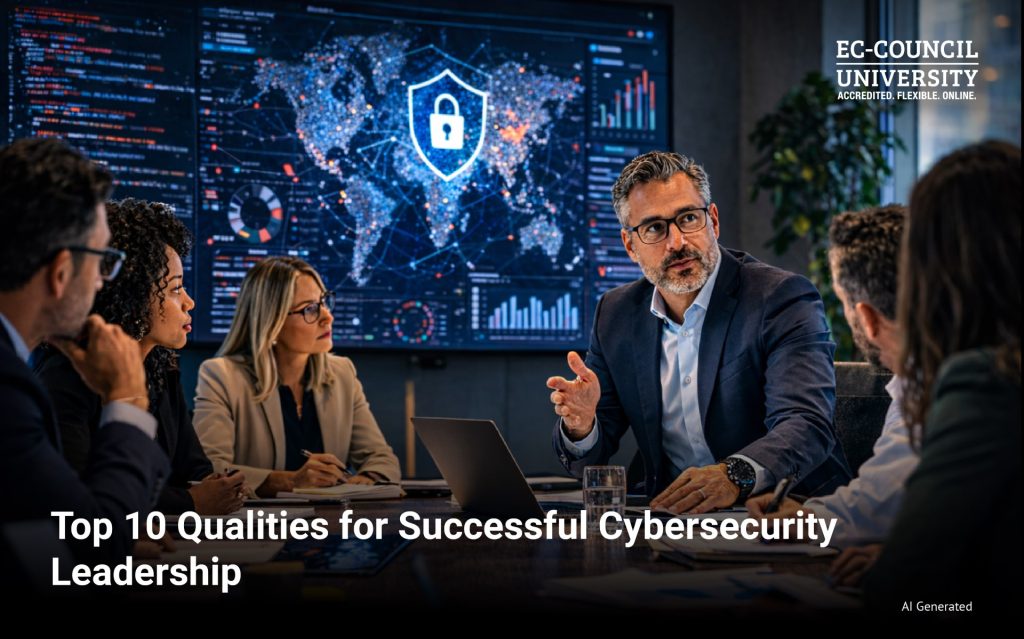
Leadership is often discussed in broad motivational terms. In cybersecurity, however, leadership has measurable consequences. Cybersecurity leaders influence organizational resilience, regulatory compliance, crisis response, and strategic technology investment. A weak cybersecurity leader can increase organizational risk exposure, whereas a strong one can protect enterprise stability and business continuity.
This responsibility has never been more critical. IBM’s Cost of a Data Breach Report 2025 found that the global average breach cost reached $4.45 million, the highest on record. As cybersecurity becomes a board-level priority, leaders in the field face increasing scrutiny and heightened expectations. Today’s cybersecurity leaders must combine deep technical proficiency with strategic decision-making, critical thinking, resource management, clear communication skills, adaptability, and organizational influence.
“As cybersecurity leaders, we have to create our message of influence because cybersecurity is a culture.”
- Britney Hommertzheim
- Business Information Security Officer, Cardinal Health
Later in the article, we’ll explore the key role of impactful education in shaping capable cybersecurity leaders. But first, let’s dive into the heart of the matter.
10 Leadership Qualities Cybersecurity Leaders Must Have
These are the most important qualities cybersecurity leaders must inculcate in order to succeed in modern-day, high-pressure work environments:
1. Strategic Self-Awareness
Great cybersecurity leaders understand their strengths, limitations, and leadership impact. During a cyber incident, self-awareness becomes critical. A leader who reacts emotionally can amplify confusion, while a composed leader stabilizes teams and accelerates response.
Cybersecurity leaders who recognize their knowledge gaps and actively pursue growth build stronger, more adaptive teams.
2. Credibility Through Competence
Trust is earned through technical credibility and consistent decision-making. Cybersecurity leaders must demonstrate technical literacy while communicating effectively with executives and board members. When leaders align their actions with their guidance, teams trust their direction during high-pressure situations.
Research from PwC’s Global Digital Trust Insights report shows that organizations with strong security leadership are significantly more likely to report resilience against major cyber incidents.
3. Risk-Based Decision Making
Cybersecurity is fundamentally about risk management, not just technology. Effective leaders evaluate financial impact, regulatory consequences, operational disruption, and reputational damage before prioritizing defensive strategies.
Successful cybersecurity leaders therefore frame security decisions in terms executives understand: business risk.
4. Executive-Level Communication
Technical language rarely resonates in boardrooms. Security leaders must translate vulnerabilities into clear business consequences, explaining how threats affect:
- Revenue
- Regulatory compliance
- Customer trust
- Operational continuity
Nearly 88% of boards now view cybersecurity as a business risk rather than purely a technical issue, so clear executive communication transforms cybersecurity leaders into trusted strategic advisors.
5. A Bias for Action During Cyber Incidents
Cyber incidents demand decisive leadership. Cybersecurity leaders must assess situations rapidly and initiate response protocols before threats escalate.
Effective leaders understand that:
- Action without analysis is reckless
- Analysis without action prolongs exposure
Organizations rely on cybersecurity leaders who can make confident decisions under pressure while maintaining situational awareness.
6. The Desire for Continuous Learning
The global cybersecurity workforce shortage exceeds 4 million professionals, highlighting the need for continuous learning and leadership development.
Forward-thinking cybersecurity leaders recognize knowledge gaps and actively pursue upskilling, certifications, and future-oriented education. This enables adaptation, which is a critical skill in cybersecurity leadership.
7. Empowering Technical Teams
Cybersecurity professionals operate in high-pressure environments. Leaders who empower analysts, engineers, and architects create more resilient security operations.
Empowerment means:
- Delegating responsibility with trust
- Encouraging independent analysis
- Supporting innovation and experimentation
Strong cybersecurity leadership creates an environment where technical professionals can perform at their best.
8. Consistency and Predictability
In cybersecurity operations, predictable leadership behavior reduces stress and confusion. During incidents, teams look to leaders for stability.
Clarity in communication and calm decision-making help cybersecurity teams maintain their focus, even during major cyberattacks. Consistency strengthens organizational confidence in the security program.
9. Ethical Integrity
Cybersecurity leaders manage sensitive data and regulatory compliance, which makes ethical integrity essential.
Cybersecurity leaders must ensure that their decisions align with:
- Policies and regulations
- Organizational values
- Responsible data governance
Ethical leadership is one of the most important characteristics of well-performing cybersecurity operations. Integrity builds long-term trust with executives, regulators, and customers.
10. Long-Term Cybersecurity Vision
Cybersecurity leaders must think beyond today’s threats and adopt a future-oriented strategic vision. This includes:
- Anticipating emerging technologies and risks
- Building future-ready cybersecurity architecture
- Developing cybersecurity talent pipelines
- Aligning cybersecurity strategy with enterprise growth
Leaders who think long-term help organizations stay ahead of evolving threats instead of constantly reacting to them.

How Cybersecurity Education Helps Develop Leadership Qualities
Leadership does not emerge automatically with job titles. It develops through intentional professional growth. Cybersecurity professionals can strengthen their leadership capabilities by:
- Seeking structured feedback from peers and mentors
- Leading cross-functional security initiatives
- Improving executive communication skills
- Studying governance and risk management frameworks
- Pursuing advanced cybersecurity education
One of the most effective ways to accelerate leadership development is through structured academic programs that combine technical depth with strategic training.
For example, the Master of Science in Cybersecurity (MSCS) program from EC-Council University (ECCU) prepares professionals to lead cybersecurity operations by offering:
- Hands-on practice in real-world simulations with cutting-edge cybersecurity tools
- Multiple cybersecurity certifications embedded into the coursework
- Curriculum that blends technical and leadership aspects, taught by established cybersecurity experts
- A flexible learning model where professionals can implement what they learn while working full-time.
The Future of Cybersecurity Leadership
In 2026 and beyond, cybersecurity leadership won’t be defined solely by technical know-how. Successful cybersecurity leaders will combine:
- Technical expertise
- Strategic decision-making
- Critical thinking
- Executive communication
- Ethical practices
- Crisis leadership
As organizations face rising cyber threats, they increasingly rely on cybersecurity leaders to protect business continuity, customer trust, and organizational reputation. The professionals who intentionally cultivate these leadership qualities will not only advance their careers but also shape the future of cybersecurity governance.
Frequently Asked Questions About Cybersecurity Leadership
Key skills include risk-based decision-making, executive communication, crisis management, ethical leadership, and the ability to manage and empower technical teams.
Cybersecurity is now a business-critical function. Leaders must manage enterprise risk, guide incident response, and align cybersecurity strategy with organizational goals.
Yes. Many security leaders begin in technical roles but develop additional skills in strategy, communication, and team management through career growth and pursuing high-quality education.
Leadership skills can be developed through hands-on experience, mentorship, leadership training, and advanced cybersecurity education.