Introduction: The Surge in AI-Powered DDoS Attacks
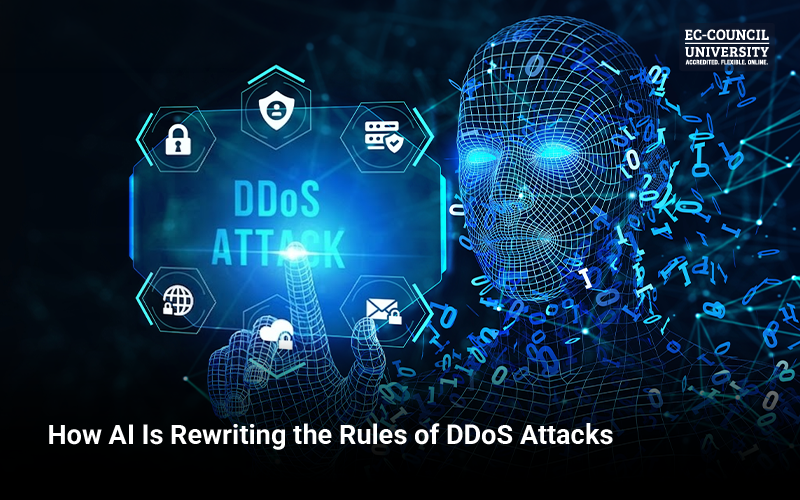
Distributed Denial-of-Service (DDoS) attacks have evolved from crude, high-volume disruptions into intelligent, adaptive cyber weapons powered by artificial intelligence. This transformation is measurable. In 2025, global DDoS attacks surged by 121%, reaching 47.1 million incidents, with an average of 5,376 attacks mitigated every hour. Even more striking, threat actors achieved a record-breaking 31.4 Terabits per second (Tbps) attack in December 2025, demonstrating that modern DDoS campaigns now operate at a scale capable of disrupting entire national infrastructures.
The Nature of DDoS Attacks Has Dramatically Shifted
Traditional DDoS attacks relied on brute-force flooding. Today’s AI-driven attacks are dynamic, adaptive, and strategic. Instead of overwhelming a target blindly, AI systems:
- Analyze defensive responses in real time
- Identify weak points in infrastructure and applications
- Continuously mutate attack patterns
Adaptive Evasion and Hyper-Volumetric Scale
AI introduces polymorphic attack behavior, enabling DDoS campaigns to evade detection by constantly changing their signature. At the same time, scale continues to escalate:
- Attack sizes grew by over 700% in 2025 compared to late 2024.
- Hyper-volumetric attacks exceeding the terabit scale increased significantly.
- Botnets like Aisuru-Kimwolf leveraged millions of infected devices worldwide, including IoT systems and Android TVs, meaning they’ve become intelligently coordinated ecosystems.
A botnet (short for "robot network") is a network of internet-connected devices, such as computers, phones, or IoT devices, infected with malware and controlled remotely by a single attacker.
AI-Powered DDoS Attack Techniques
AI enables new attack methodologies designed for stealth and persistence. The two most notable examples are:
- Pulse Attacks: Short, high-intensity bursts that evade detection thresholds while degrading service quality.
- Carpet Bombing: Distributed attacks across entire IP ranges, making mitigation extremely difficult without affecting legitimate users.
These approaches demonstrate a shift toward precision-based disruption rather than brute-force flooding.
AI-Augmented DDoS-As-A-Service Platforms Have Democratized Cybercrime
AI has dramatically lowered the threshold to entry for launching sophisticated DDoS attacks. According to recent threat intelligence, the barrier to entry for cybercrime has effectively disappeared, enabling individuals with little to no technical skills to deploy advanced attacks using automated DDoS-as-a-Service platforms.
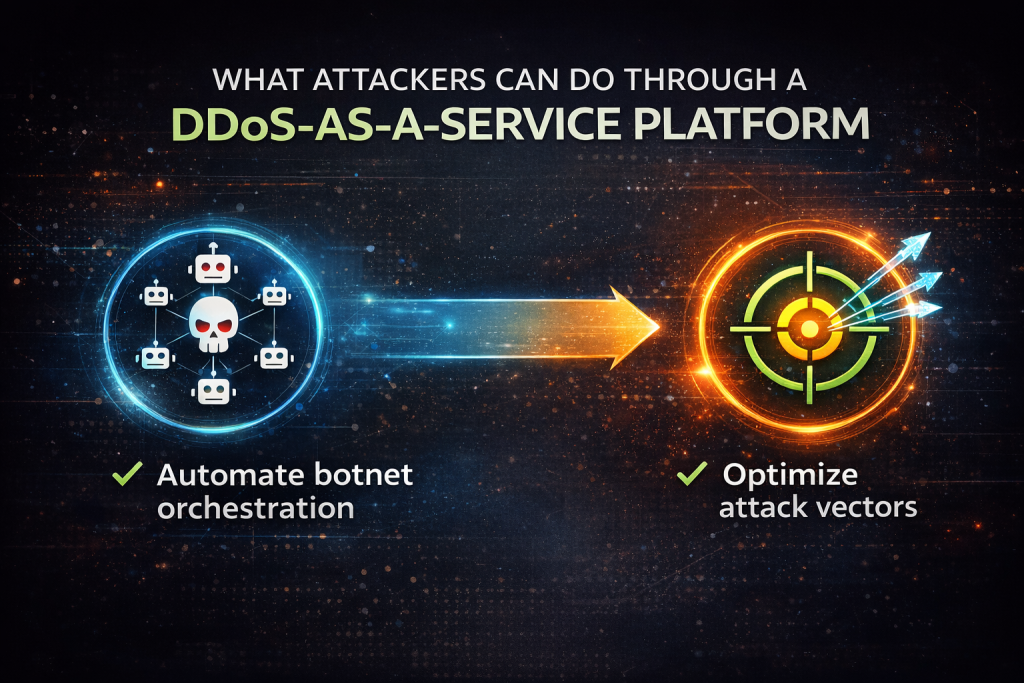
This democratization has exponentially expanded the global threat landscape.
Agentic AI: The Rise of Autonomous Attack Lifecycles
The emergence of agentic AI represents a significant escalation in the capabilities of DDoS attacks. These AI systems can independently:
- Conduct reconnaissance
- Identify vulnerabilities
- Launch targeted application-layer attacks
This has made DDoS attacks a continuous, evolving campaign propagated by autonomous systems.
AI in Layer 7 DDoS Attacks
Layer 7 DDoS attacks are cyberattacks that target the application layer, in which users and applications interact directly. AI supercharges these attacks by:
- Mimicking real user behavior
- Exploiting business logic
- Executing complex workflows (login, checkout, search)
These attacks are difficult to detect because they appear legitimate, making them one of the most dangerous forms of modern cyber disruption.
The Financial Impact of DDoS Attacks
Let’s contextualize all this in dollar amounts. Current estimates peg the cost of a successful DDoS breach at roughly $22,000 per minute. That means a twenty-minute outage bleeds nearly half a million dollars. And that’s just the immediate revenue loss. It doesn’t account for the reputation hit when an app fails during a market rally or the regulatory fines for failing to secure customer data.
This is why Ransom DDoS is back with a vengeance. Attackers know exactly what your downtime costs, and they price their ransom demands just below that threshold. It’s a cold, calculated business model optimized by AI.

Defending Against Automated DDoS Attacks
The only effective defense against an AI that moves at machine speed is an AI that moves faster. This reality has pivoted cybersecurity from detection and response to prediction and prevention. Key defensive strategies include:
- Predictive Analytics: AI models analyze baseline behavior to detect anomalies before attacks escalate.
- Autonomous Mitigation: Modern systems respond in seconds, far faster than human operators.
- Bot Management Innovation: Advanced mechanisms like cryptographic challenges force bots to expend resources, reducing attack efficiency.
Why Cybersecurity Education Is Critical in the AI-DDoS Era
The rise of AI-powered DDoS attacks creates a domino effect on the skill requirements for cybersecurity professionals, which in turn brings the following implications for cybersecurity education:
Bridging the Skills Gap: The global cybersecurity skills gap continues to widen, while threats grow more sophisticated. Professionals must now learn to leverage:
- AI/ML-driven attack models
- Behavioral analytics
- Autonomous defense systems
Developing AI-Native Defenders: Defenders must think like adversaries, which requires education in:
- Adversarial machine learning
- Threat modeling in AI systems
- Secure system design at scale
Moving Beyond Reactive Security: Modern cybersecurity education must emphasize:
- Predictive threat intelligence
- Proactive defense architectures
- Real-time decision-making
Preparing for Autonomous Warfare: As agentic AI becomes more prevalent, cybersecurity professionals must be trained to:
- Audit AI systems
- Detect autonomous attack patterns
- Build resilient, self-healing infrastructures
As AI-powered DDoS attacks continue to grow in scale, frequency, complexity, and consequence, EC-Council University (ECCU) stands at the forefront of preparing the next generation of cybersecurity leaders to tackle such challenges.
ECCU’s online cybersecurity degrees and certification courses are purpose-built to address the realities of modern cybercrime, where adversaries leverage automation, machine learning, and autonomous attack frameworks. Through industry-aligned coursework, students gain deep expertise in AI-driven threat detection, behavioral analytics, secure system architecture, and real-time incident response.
What sets ECCU apart is our emphasis on practical, hands-on learning that equips professionals to understand, anticipate, and neutralize emerging threats. ECCU also offers immersive practice sessions in virtual lab environments that mirror real-world scenarios, ensuring graduates can defend against Layer 7 attacks, large-scale botnet campaigns, and adaptive evasion techniques.
As organizations worldwide struggle to keep pace with AI-enabled threats, ECCU is uniquely positioned to bridge the cybersecurity skills gap. Our graduates emerge as AI-native defenders who can design resilient systems, deploy autonomous defenses, and lead security strategies in an increasingly automated threat environment.
To know more about cybersecurity education at ECCU:
Frequently Asked Questions About AI-Powered DDoS Attacks
An AI-powered DDoS attack uses machine learning to adapt, evade detection, and optimize attack strategies in real time.
The Aisuru-Kimwolf botnet attack in December 2025 reached 31.4 Terabit-per-second (Tbps), the largest publicly recorded to date.
Automation, AI integration, and DDoS-as-a-Service platforms have made it far easier to instigate and multiply DDoS attacks.
Telecommunications, financial services, and cloud providers are among the most targeted sectors.
In many cases, yes. Especially when defenses rely on static rules rather than adaptive intelligence.
Organizations defend against AI-driven DDoS attacks by adopting AI-powered defenses, predictive analytics, and autonomous mitigation systems.
Defending against AI threats requires specialized skills in machine learning, automation, and advanced threat detection, which can be gained through future-focused cybersecurity education.
Yes. As regulations and cyber risks grow, GRC will become increasingly central to organizational strategy.