An Overview of the Online vs. On-Campus Debate
The transformation of cybersecurity careers over the last decade has inevitably altered the way we learn cybersecurity and acquire advanced qualifications. Once dominated by traditional, on-campus programs, cybersecurity education is increasingly pivoting to flexible, online delivery models that meet the needs of working professionals. EC-Council University (ECCU) is at the forefront of this learning revolution, offering industry-aligned online cybersecurity degrees that are flexible and convenient without compromising quality, engagement, and real-world skill development.
As the demand for cybersecurity talent remains exceptionally strong, the online vs. on-campus debate deserves fresh scrutiny in the context of a modern career. Let’s dive into it.
Understanding the Two Learning Models
• What an On-Campus Cybersecurity Degree Looks Like
Traditionally, on-campus programs offer face-to-face instruction, access to physical computer labs, and real-time interactions with classmates and faculty. These programs often provide structured schedules, a cohort-based learning environment, and a sense of academic community.
Despite common perceptions that on-campus programs automatically deliver superior experiential learning, many are integrating cutting-edge technology and flexible scheduling as digital tools evolve.
• What an Online Cybersecurity Degree Entails
Online cybersecurity programs deliver coursework through digital platforms, using virtual labs, recorded lectures, and interactive discussion boards. Many also integrate robust hands-on experiences and industry certification prep directly into the curriculum.
Online programs are sometimes unfairly considered “less rigorous.” However, today’s accredited online cybersecurity degrees often mirror the learning outcomes and technical depth of traditional programs, often with added flexibility and real-time project work.
Time Commitment and Flexibility: A Critical Factor for Professionals
For professionals balancing work, family, and life, flexibility isn’t optional. It’s essential. Most online programs allow learners to access lectures and complete assignments on their own schedules, enabling them to keep earning while learning. In contrast, on-campus programs require physical attendance at set times, which can complicate full-time employment and other responsibilities.
A 2026 report shows that over 60% of online learners cite flexibility and convenience as the primary reasons for choosing remote education, especially among working professionals. This flexibility enhances retention and allows immediate application of new skills in professional settings, creating a powerful feedback loop between study and practice.
Here’s ECCU’s ultimate guide to balancing a cybersecurity degree with a full-time career.
Hands-On Learning: Virtual Labs vs Physical Classrooms
Hands-on experience is indispensable in cybersecurity, and both online and on-campus learning models address it in different ways.
- Online cybersecurity degrees use virtual labs and cloud-based environments that simulate real-world cyberattacks and defenses. These virtual setups often mirror what professionals encounter on the job, making them highly relevant and practical.
- On-campus programs offer physical labs and face-to-face mentoring, which some learners find beneficial for immediate troubleshooting and teamwork. However, when online programs are well designed, virtual labs can deliver the same depth of engagement without geographic constraints.
Learning While Working: Applying Skills in Real Time
One of the most compelling advantages of online learning is the ability to learn while you work. Professionals in security roles can immediately apply concepts from coursework into their current jobs, strengthening both learning retention and workplace performance.
On-campus students often must wait until weekends or breaks to integrate new knowledge, especially if they are enrolled full-time and away from their jobs.
Discover all the benefits of online learning at EC-Council University.
Accessibility and Global Reach
- Geographic Limitations of On-Campus Programs: On-campus education requires physical presence in a specific location. This constraint poses challenges for professionals living far from major universities or balancing relocation costs and family obligations.
- Online Delivery Supports Global Learners: Online cybersecurity programs remove physical and geographic barriers, allowing learners anywhere in the world to participate without relocation. This accessibility expands opportunities for professionals in underrepresented regions or those balancing work and family commitments.
- Creating Diverse Learning Environments with Global Perspectives: Online programs often bring together learners from diverse backgrounds, fostering cross-cultural collaboration, global cybersecurity insights, and diverse problem-solving approaches. These perspectives increasingly mirror the realities of global cyber defense work.
Cost, ROI, and Career Impact
- Hidden Costs of On-Campus Education: Traditional on-campus degrees often include indirect expenses, such as commuting, relocation, housing, and time away from paid work, which add to the total cost of education. These hidden costs can extend the time to degree completion and increase financial strain.
- ROI Considerations for Professionals: Professionals must weigh not only tuition but also the time and financial investment required to earn a degree. Online programs can significantly reduce total costs and allow learners to remain employed while studying.
- How Online Programs Support Career Continuity and Growth: Online degrees support continuous career progression. Working professionals don’t need to pause income or step away from existing roles, allowing them to build experience while earning credentials (a combination many employers value).
Employer Perception: Does Online vs On-Campus Still Matter?
Not as much as it used to. Increasingly, employers emphasize skills, certifications, and real-world project experience over the format in which a degree is delivered. Recent data shows that a substantial majority of recruiters view accredited online degrees as equal to traditional ones, provided the institution and program reputation are solid.
This shift reflects a broader trend in hiring practices, where demonstrated competence (whether from virtual labs, capstone projects, or industry certification preparation) matters more than physical attendance.
Find out about the types of jobs you can get with an online cybersecurity degree.
Who Benefits from Online vs. On-Campus Learning?
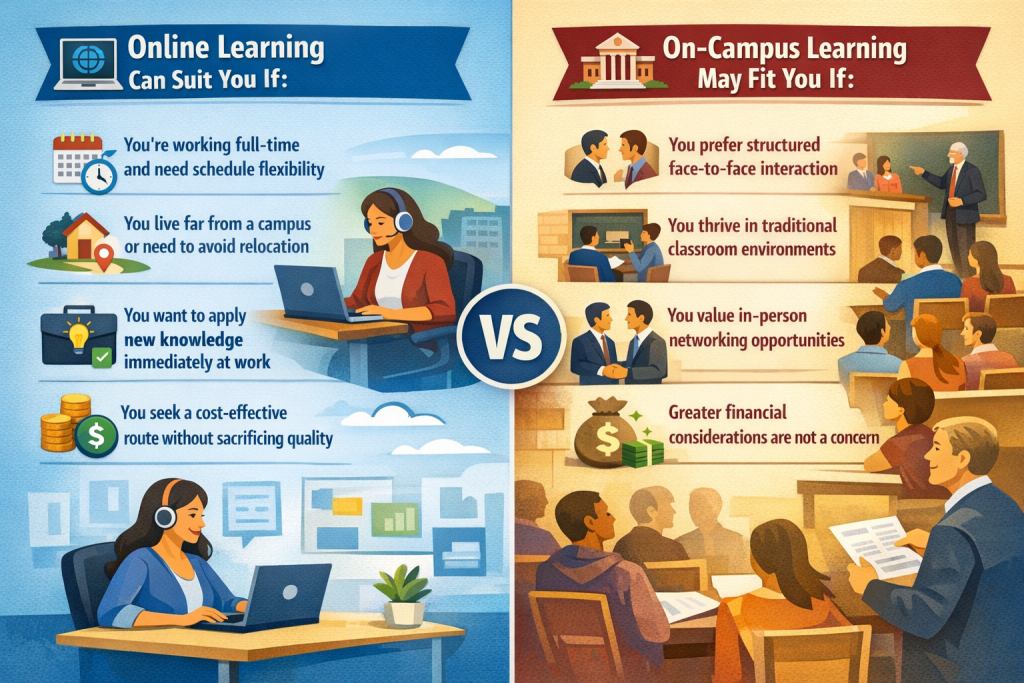
Online Learning Can Suit You If:
- You’re working full-time and need schedule flexibility
- You live far from a campus or need to avoid relocation
- You want to apply new knowledge immediately at work
- You seek a cost-effective route without sacrificing quality
On-Campus Learning May Fit You If:
- You prefer structured face-to-face interaction
- You thrive in traditional classroom environments
- You value in-person networking opportunities
- Greater financial considerations are not a concern
Both paths can lead to successful careers. What matters most is alignment with personal goals and lifestyle.
Making the Right Choice for Your Cybersecurity Career
Before choosing a program, ask yourself:
- What are my career goals, and which format supports them?
- Do I need flexibility due to work, family, or schedule constraints?
- How will the program’s format affect my ability to apply learning immediately?
- Is the program accredited and respected by employers?
EC-Council University believes in fit over format. It’s not about whether learning happens online or on campus. It’s about ensuring the education you receive supports your career growth, real-world skills, and lifelong adaptability. The right degree aligns with your life, goals, and career aspirations.
Today’s professionals need flexibility, global access, and practical experience, without compromising educational quality. ECCU is committed to delivering accessible, industry-aligned cybersecurity education that supports learners wherever they are in life, preparing them not just for jobs but for impactful careers in a dynamic and vital field.
To know more about ECCU’s online cybersecurity degree:
Frequently Asked Questions (FAQs)
Yes, as long as the program is accredited and industry-aligned, employers widely recognize online cybersecurity degrees. Today’s hiring managers prioritize demonstrated skills, hands-on experience, and relevant certifications over whether a degree was earned online or on campus.
Absolutely. Modern online cybersecurity programs use virtual labs, cloud-based simulations, and real-world attack-and-defense scenarios that closely mirror professional environments. These tools often reflect the same technologies used in enterprise security operations.
Online programs are especially well-suited for working professionals. They offer flexible schedules, asynchronous learning, and the ability to apply new skills immediately at work, enabling you to advance your education without pausing your career.
In most cases, no. Employers increasingly focus on skills, certifications, project experience, and problem-solving ability. As cybersecurity becomes more performance-driven, the format of education matters far less than the outcomes it delivers.
Start by evaluating your career goals, your schedule flexibility, your learning preferences, and your lifestyle needs. If you need to balance work and education or want global access without relocation, online learning may be the better fit. If you thrive in structured, in-person environments, on-campus learning may suit you better. The right choice is the one that aligns with your life and professional trajectory.