
Cyber threats are growing at a fast pace, and so is the demand for specialized and skilled cybersecurity professionals. So, for those of you looking to make a career in cybersecurity, now is the perfect time to step into the industry. Whether you have completed an online Bachelor’s Degree, a Master’s Degree, or pursued a Graduate Certificate Program, the cybersecurity field offers exciting entry points with strong growth potential.
If you are wondering where to start, here’s a complete guide that breaks down why cybersecurity graduates are in high demand, the skills employers expect, the top entry-level cybersecurity jobs you can pursue, and how to choose the right path for you.
Why Cybersecurity Graduates Are in High Demand
Cybersecurity isn’t just an IT specialty, but a critical discipline for every business and industry. Companies across sectors face increasing data breaches, ransomware attacks, and network exploits. This surge in threats means organizations desperately need trained professionals to protect their digital assets. From startups to government agencies, organizations need professionals who can protect systems, networks, and sensitive data.
According to industry research, the shortage of cybersecurity professionals remains significant worldwide, with demand far outpacing supply, especially for roles like cybersecurity analyst and information security analyst. This makes cybersecurity careers both lucrative and resilient. Cybersecurity careers offer a rare combination of job security, competitive salaries, and global demand.
Bottom line: With a degree, whether a Bachelor’s Degree, Master’s Degree, or any other online Cybersecurity Degrees, you are stepping into a field that is highly promising, impactful, and future-proof.
What Skills Employers Expect from Entry-Level Cybersecurity Talent
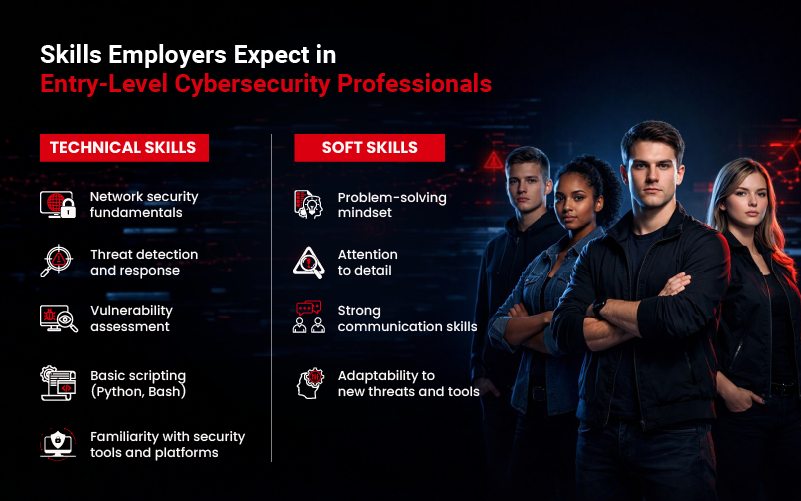
Whether you are applying for a cybersecurity analyst position or exploring entry-level cybersecurity jobs, employers are looking for professionals with the technical expertise and soft skills:
Technical Skills
- Network security fundamentals
- Threat detection and response
- Vulnerability assessment
- Basic scripting (Python, Bash)
- Familiarity with security tools and platforms
Soft Skills
- Problem-solving mindset
- Attention to detail
- Strong communication skills
- Adaptability to new threats and tools
Research shows that while technical prowess is critical, communication and problem-solving skills are equally crucial for success in cybersecurity roles.
Top Entry-Level Cybersecurity Roles You Can Begin After Your Degree
Your cybersecurity degree is your gateway to entry-level and specialized cybersecurity roles in the industry. Whether your degree is technical or strategic, it opens doors to a wide range of domains in the IT and cybersecurity industry. Below is a list of career paths highlighted that can serve as your entry point to launch your career in the industry.
1. Cybersecurity Analyst – The Frontline Defender
A cybersecurity analyst is often the first line of defense against cyber threats. This role focuses on monitoring networks, detecting vulnerabilities, and responding to security incidents.
Key Responsibilities:
- Monitor systems for suspicious activity
- Investigate security breaches
- Implement security tools and controls
- Assist with risk assessments
Why It’s Great for Beginners:
This role provides hands-on exposure to real-world threats, making it one of the most popular entry-level cybersecurity jobs for graduates.


2. Information Security Analyst – Protecting Critical Data
An information security analyst ensures that an organization’s data remains confidential, intact, and available. This role blends technical expertise with policy enforcement.
Key Responsibilities:
- Develop and enforce security policies
- Conduct vulnerability assessments
- Ensure regulatory compliance
- Educate employees on security best practices
Ideal For:
Graduates with strong analytical skills and those completing a Master’s Degree focused on information assurance or risk management.
3. Junior Penetration Tester – Learning to Think Like a Hacker
If you’re curious about ethical hacking, this role allows you to test systems by simulating real-world attacks.
Key Responsibilities:
- Perform controlled penetration tests
- Identify system vulnerabilities
- Assist senior testers in security assessments
- Document findings and recommendations
Best Suited For:
Graduates with strong technical skills from online Cyber Security Degrees or lab-focused Bachelor’s Degree programs.


4. Security Engineer – Building Strong Cyber Defenses
A security engineer designs, implements, and maintains systems to protect an organization’s digital assets. This role focuses on hands-on technical solutions to prevent, detect, and respond to security threats.
Key Responsibilities:
- Design and implement secure network and system architectures
- Monitor and respond to security incidents
- Conduct penetration testing and vulnerability assessments
- Collaborate with IT teams to integrate security best practices
Ideal For:
Graduates with strong technical skills in networks, systems, or software development, and those pursuing a Bachelor’s or Master’s degree in cybersecurity, computer science, or information technology.
5. IT Security Specialist – Bridging IT and Cybersecurity
This role combines traditional IT tasks with security responsibilities, making it perfect for those transitioning into cybersecurity careers.
Key Responsibilities:
- Secure networks and endpoints
- Manage firewalls and access controls
- Support system updates and patching
- Assist in incident response
Career Advantage:
IT Security Specialists often grow into senior cybersecurity jobs with broader responsibilities.

How Your Degree Shapes Your Cybersecurity Career Path
Your skills, interests, and, most importantly, your educational background play a critical role in determining which cybersecurity careers you can pursue early on and how fast you can grow.
Bachelor’s Degree in Cybersecurity
A Bachelor’s Degree prepares you for hands-on, technical entry-level cybersecurity jobs such as:
- Cybersecurity analyst
- SOC analyst
- IT security specialist
It builds a strong foundation in networking, systems, and security principles.
Master’s Degree in Cybersecurity
A Master’s Degree opens doors to more analytical, strategic, and leadership-oriented roles, including:
- Information security analyst
- Risk and compliance analyst
- Security consultant
It’s ideal for professionals looking to accelerate career growth or move into specialized domains.
Graduate Certificate Program
A Graduate Certificate Program offers focused, short-term training for professionals who want to upskill quickly or pivot into cybersecurity. The GCP program covers core topics such as network security, risk management, and threat detection. The program can be completed in a few months.
Roles You Can Pursue:
- Cybersecurity technician
- SOC analyst
- Junior security consultant
- Risk and compliance associate
Ideal For:
Professionals with prior IT or technical experience looking to specialize in cybersecurity, career changers seeking a fast-track into the field, or those aiming to complement an existing degree with targeted skills.
How to Choose the Right Cybersecurity Role for You
With so many options, choosing the right role starts with self-assessment.
Ask yourself:
- Do I enjoy hands-on technical problem-solving?
- Am I more interested in policy, risk, and strategy?
- Do I want a role that offers flexibility?
Your strengths, interests, and degree focus should guide your path. Hands-on exposure during your studies makes this decision much clearer.
How EC-Council University Gives You an Advantage
If you are considering further education, EC-Council University (ECCU) offers 100% online cybersecurity programs tailored for today’s industry needs and working professional schedules.
What Makes ECCU Stand Out:
- Hands-on Labs & Virtual Practice: Gain real-world skills through immersive learning environments.
- Industry-Aligned Curriculum: Courses align with the learning and skills employers look for in cybersecurity roles.
- Embedded Certifications: Prepare for respected certifications such as CEH, CND, CPENT, and other EC-Council credentials, alongside your degree.
- Expert Faculty: Gain knowledge and guidance from seasoned professionals who bring real case studies and insights into your coursework.
Whether you pursue the Bachelor of Science in Cybersecurity or a Master of Science in Cybersecurity, ECCU equips you with both academic grounding and practical skills.
Why Graduates from EC-Council University Have an Early Advantage

- Hands-On Labs: ECCU’s virtual labs let you practice defensive techniques, attack simulations, and forensic analysis—essential for many entry-level cybersecurity jobs.
- Career-Focused Curriculum: The coursework isn’t just theory; it is designed around real job requirements and the latest industry standards.
- Certification Prep Built In: Students graduate not just with a degree, but with exposure to certifications that employers value, giving you a leg up in the job market.
Start Strong in Cybersecurity
Breaking into cybersecurity doesn’t require decades of experience—just the right education, curiosity, and hands-on practice. With growing global demand, entry-level cybersecurity jobs provide excellent opportunities to build long-term, rewarding careers.
Whether you’re pursuing your Bachelor’s Degree, advancing with a Master’s Degree, or learning through online Cyber Security Degrees, now is the perfect time to step into the world of cybersecurity and make a real impact.
Ready to take the next step?
Explore EC-Council University’s cybersecurity programs today and start building the future you’ve imagined.