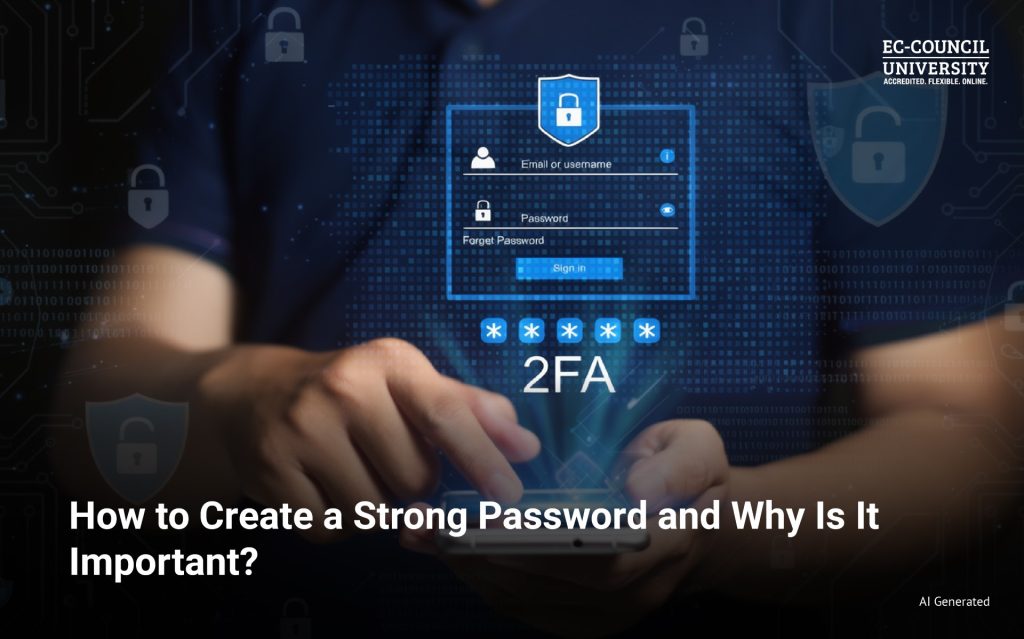
In the world of the Internet and digitization, passwords are the first line of defense between your digital assets and cybercriminals. Yet weak or reused passwords remain among the most significant reasons behind data breaches, account takeovers, and financial fraud. With cyberattacks becoming more automated and sophisticated, creating strong passwords and understanding why they matter has never been more essential.
In the digital age, creating strong passwords and following best password security practices are essential to protect and prevent unauthorized access to online accounts and critical data. So, if you’re looking to enhance your cybersecurity hygiene in 2026, here’s a guide that breaks down the “how” and the “why” in a simple, actionable way.
Why Are Strong and Secure Passwords Important?
Passwords are essential for almost everything on the Internet, from online shopping to checking your email, online banking, browsing social media platforms, and more. While using a short, easy-to-remember password may be more accessible, it might pose significant threats to your online security.
1. Cyberattacks Are More Automated Than Ever
Hackers no longer manually guess passwords. They use AI-driven bots and brute-force tools that can attempt billions of combinations per second. Weak passwords like “123456”, “abcd”, or “qwerty” can be cracked instantly.
2. Password Reuse Fuels Credential Stuffing
If you reuse the same password across platforms and one website is breached, attackers can use that password to break into your email, social media, banking, or workplace accounts.
3. Personal & Financial Data Is a Top Target
From identity theft to unauthorized transactions, weak passwords are easy for hackers to access sensitive data and exploit it for profit.
4. Increased Remote Work = Increased Risk
More devices, more cloud applications, and more logins mean a larger threat surface. Strong passwords help reduce the risk of compromising across hybrid and remote work environments
How to Create a Strong Password The Right Way
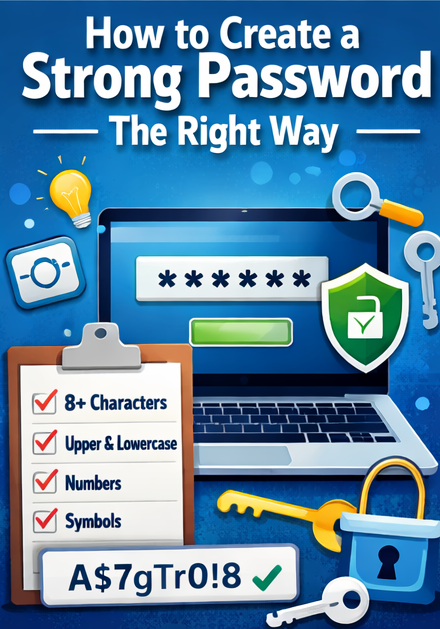
A strong password is not just about being long, but ensuring it is unpredictable, unique, and difficult for humans and machines to decode or crack. Here’s how to build one that stands firm against modern cyber threats.
1. Make It Long, At Least 12–16 Characters
Length is more important than complexity. Short passwords can be cracked quickly, even if they use symbols.
Stronger Example: MangoRiver!Jump2026
2. Use a Mix of Characters
Combine:
- Uppercase letters (A–Z)
- Lowercase letters (a–z)
- Numbers (0–9)
- Symbols (! @ # $ % & *)
This increases entropy, making brute-force attacks significantly harder.
3. Avoid Predictable Patterns
Never use:
- Personal information (name, birthday, phone number)
- Common words or keyboard patterns (“abcde”, “qwerty”, “111111”)
- Passwords used in the past
Attackers use dictionary lists and leaked password dumps, making predictable passwords highly vulnerable.
4. Use Passphrases Instead of Passwords
A passphrase is a combination of random words that is easy for you to remember but hard for attackers to guess.
Strong Passphrase Examples:
- BlueTrain$ForestHero92
- Coffee!RunsFastAtDawn
Passphrases increase length and complexity without sacrificing memorability.
5. Do Not Reuse Passwords Ever
Each account needs its own unique password. This ensures that if one platform suffers a breach, the rest of your accounts remain safe.
6. Use a Password Manager
Password managers generate, store, and autofill strong passwords securely.
Benefits:
- No need to memorize multiple logins
- Keeps track of compromised passwords
- Encourages good password hygiene
- Supports multi-device use
Reliable options include Bitwarden, LastPass, 1Password, and Dashlane.
7. Enable Multi-Factor Authentication (MFA)
A strong password alone is not enough. Enable MFA wherever possible:
- OTPs
- Authenticator apps
- Hardware security keys
This adds an extra layer of protection even if your password gets leaked.
The Importance of Strong Passwords in 2026 and Beyond
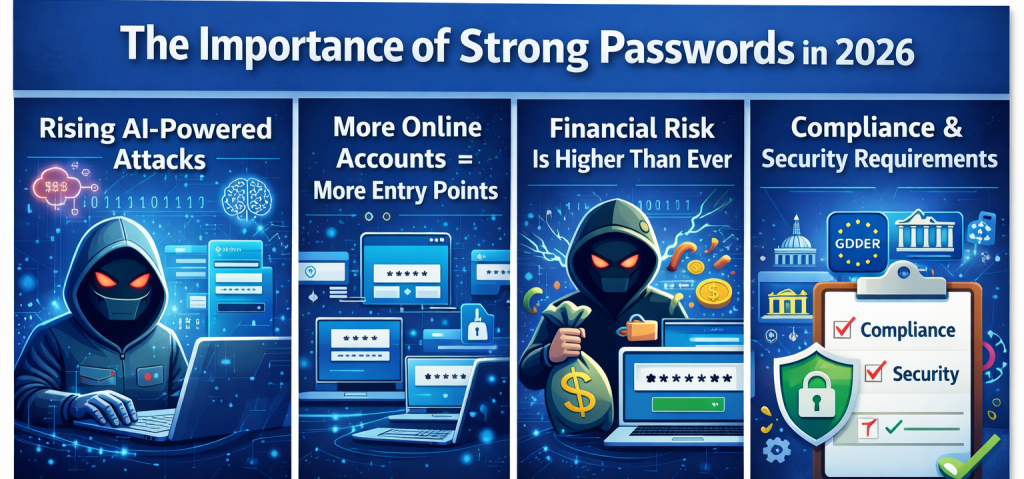
1. Rising AI-Powered Attacks
Cybercriminals now use AI tools to automate:
- Password cracking
- Social engineering
- Credential harvesting
This makes traditional weak passwords obsolete.
2. More Online Accounts = More Entry Points
The average person has over 100+ online accounts. Even a single weak password can become the gateway to your entire digital identity.
3. Financial Risk Is Higher Than Ever
Business email compromise (BEC), account takeover fraud, and ransomware often start with compromised credentials.
Strong passwords help prevent:
- Unauthorized purchases
- Fund transfers
- Identity theft
- Compromised work accounts
4. Compliance and Security Requirements
Industries like finance, healthcare, and SaaS (especially SIEM and security operations) require strong password practices to mitigate risk and comply with frameworks such as PCI DSS, HIPAA, SOC 2, and ISO 27001.
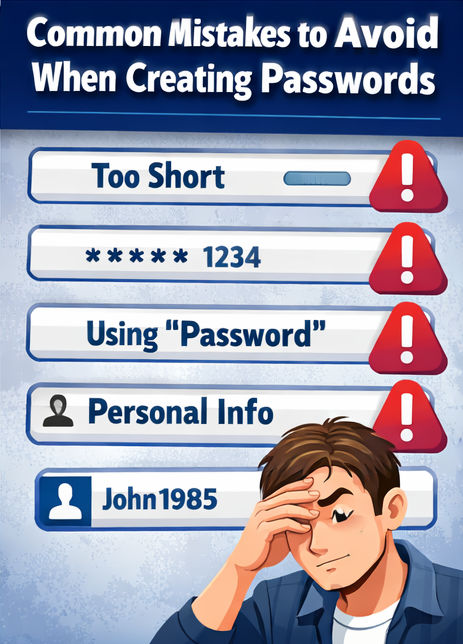
Common Mistakes to Avoid When Creating Passwords
- Using the same password everywhere
- Choosing something easy to remember and that is easy to hack
- Saving passwords in notes or browsers without encryption
- Ignoring alerts about password breaches
- Sharing your password with others
How Often Should You Change Your Password?
Contrary to old advice, frequent unnecessary changes can lead to weaker passwords.
Experts now recommend changing passwords when:
- There is a security breach
- You shared your login accidentally
- You reused old passwords
- You detect suspicious activity
Otherwise, focus on strong, unique, long passphrases.
When Cyber Threats Evolve, So Should Your Passwords
Cybersecurity doesn’t always start with complex tools or advanced software; it begins with you. Cybersecurity starts with simple but powerful habits, and strong passwords are your first line of defense.
As cyber threats become more advanced and AI-driven, relying on weak or reused passwords puts your personal and financial data at risk. Creating strong, long, complex, and unique passwords for every account, combined with multi-factor authentication (MFA), significantly reduces the risk of account hacking, identity theft, and data breaches. These best practices form the foundation of adequate password security and online safety.
Take control of your digital security today. Spend a few extra seconds strengthening your passwords now, and protect your online accounts, sensitive information, and digital identity for years to come.