Looking to level up your tech career, but confused between the two popular options:
- Master in Cybersecurity or
- Master’s in Computer Science?
Both are powerful degrees—but they serve different career goals.
- Both degrees open doors to growth opportunities.
- Both lead to exciting, high-impact careers.
So, how do you decide which one fits you best?
Before exploring career paths, it’s essential to understand what each field entails.
Let’s break down to understand the difference between cybersecurity and the computer science field, the market trends and demand in the tech world for both IT and cybersecurity specialists, and which path aligns best with your future.
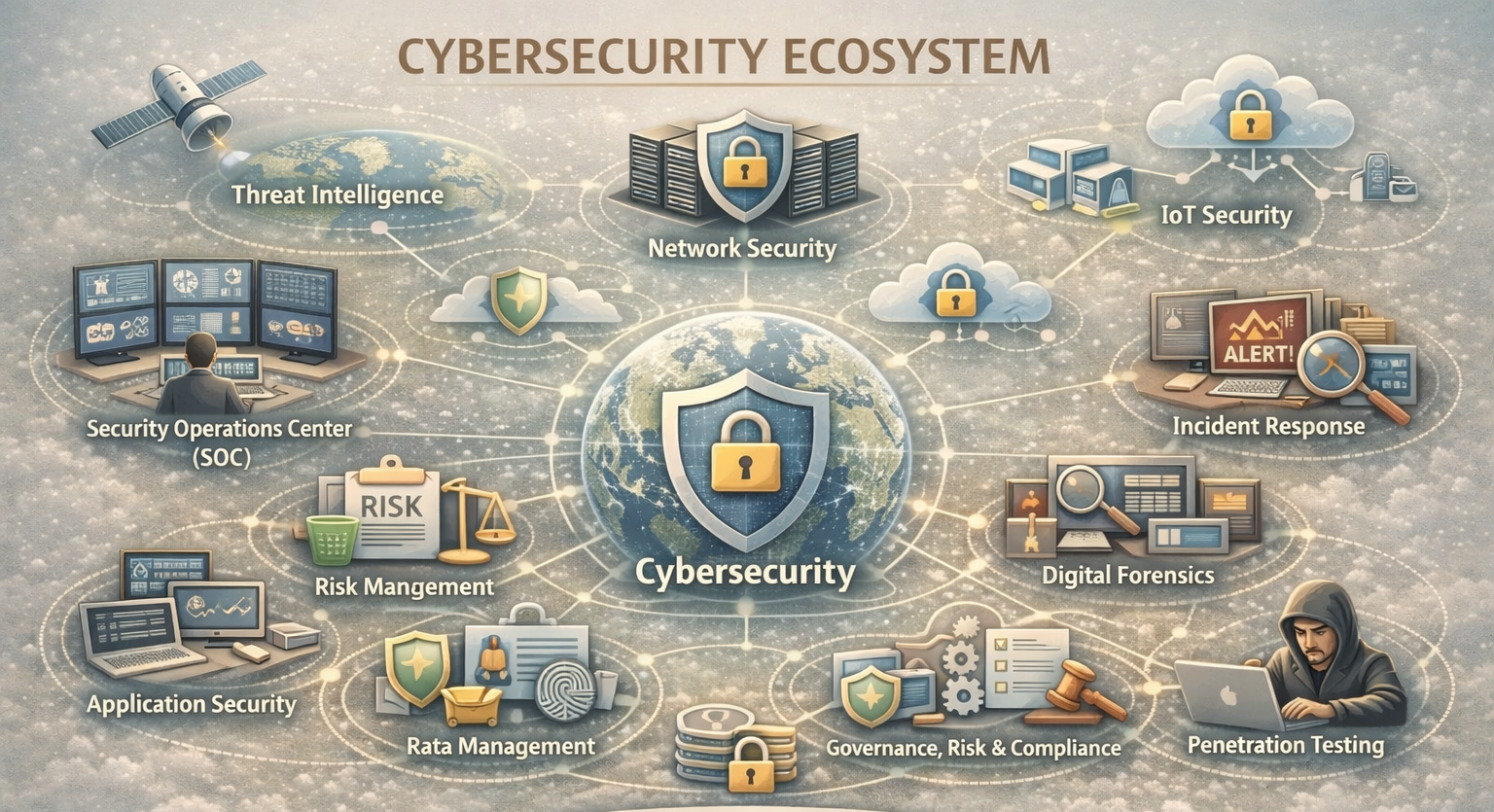
What is Cybersecurity?
Cybersecurity is a specialized discipline that focuses on protecting an organization’s digital ecosystem from various threats. Cybersecurity professionals are trained to anticipate, prevent, and respond to cyberattacks, ensuring that the organization’s infrastructure, technology, and sensitive information remain secure. Think of cybersecurity as the defense force for the digital world.
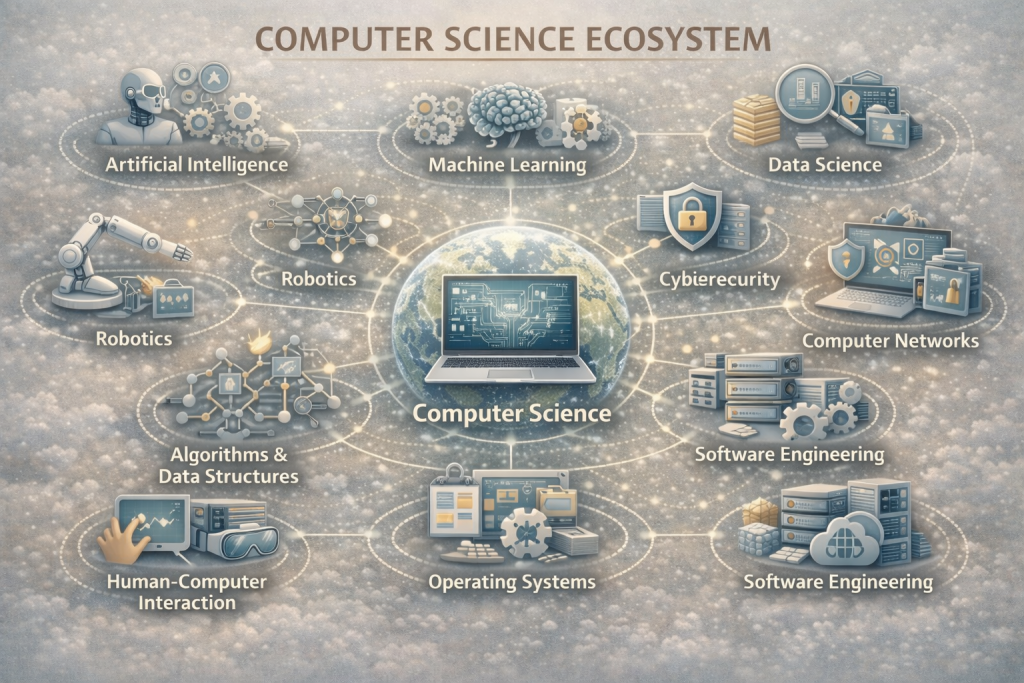
What is Computer Science?
Computer Science is the broad study of computing, software development, algorithms, and system design. It gives you the foundational knowledge to create software, design systems, and innovate in areas like artificial intelligence, data science, and cloud computing. Essentially, computer science teaches you how the digital world works—and how to build it.
Understanding Market Trends and Demand in the Tech World
- ✔ Shapes your career trajectory
- ✔ Determines your specialization
- ✔ Influences your salary potential
- ✔ Positions you for leadership roles down the road
What Can Computer Science Professionals Expect?
Software developers, AI engineers, and data scientists are in high demand, with a projected 22% growth in software development roles through 2030, according to the Bureau of Labor Statistics report. This is much faster than the average for all occupations across industries. Companies across finance, healthcare, e-commerce, and tech are seeking top talent, offering six-figure salaries for specialized skills.
What Can Cybersecurity Professionals Expect?
Cyber threats are escalating globally, making cybersecurity one of the fastest-growing tech fields. The U.S. Bureau of Labor Statistics reports a projected 35% growth in information security analyst roles by 2030. Organizations across industries, from healthcare to government, prioritize cybersecurity, ensuring job security and strong career prospects.
In short, both fields offer significant growth opportunities, high salaries, and essential roles, making cybersecurity and computer science a very lucrative field.
Now let’s explore what each degree really offers.
Master’s in Cybersecurity VS Master’s in Computer Science: Understanding the Core Difference
At a high level, the difference comes down to focus.
- A Computer Science degree is broad and foundational. It teaches you how computers work, how software is built, and how systems are designed.
- A Cyber Security degree is specialized. It focuses on protecting systems, networks, and data from threats in an increasingly digital world.
Think of it like this: Computer Science teaches you how to build the digital world. Cybersecurity teaches you how to defend it.
What You’ll Learn in a Master’s in Cybersecurity

- Network security and strategies
- Cloud security
- Ethical hacking and penetration testing
- Digital forensics and incident response
- Risk management, compliance, and cyber law
- Threat detection and incident response
- Network, cloud, and application security
- Ethical hacking and penetration testing
- Risk assessment and security governance
- Digital forensics and cybercrime investigation
- Compliance, privacy, and cyber law fundamentals
- Cybersecurity Analyst
- Security Engineer
- Penetration Tester
- Cloud Security Architect
- Incident Response Manager
- Chief Information Security Officer (CISO) and more.
- ✔ Investigating and solving security problems
- ✔ Thinking like both a defender and an attacker
- ✔ Hands-on labs and real-world scenarios
- ✔ A career with immediate, visible impact
Read About the Top Skills Required for a Career in Cybersecurity Here
What You’ll Learn in a Master’s in Computer Science
A Master of Science in Computer Science degree emphasizes computing theory, software development, algorithms, artificial intelligence, and system design. If you enjoy coding, problem-solving, and building innovative technologies, this path may be right for you.
Computer science graduates often work on the creation side of technology, building systems that power modern life.
A computer science curriculum covers:
- Advanced programming and software engineering
- Data structures and algorithms
- Artificial intelligence and machine learning
- Operating systems and databases
- Computer architecture and distributed systems
Skills You Gain from a Master’s in Computer Science
A Computer Science degree builds strong technical depth and versatility. The skills you gain through the master’s degree can be applied to different roles in various industries.
The key skills you gain include:
- Advanced programming and software development
- Algorithm design and computational thinking
- Data structures and system architecture
- Artificial intelligence and machine learning concepts
- Database design and data management
- Operating systems and distributed computing
The skills give you flexibility and a strong foundation for multiple tech roles.
Graduates often move into roles such as:
- Software Engineer
- Systems Architect
- Data Scientist
- AI or Machine Learning Engineer
- Technical Product Manager
A Computer Science degree is highly valued across many industries—and that’s why the salary potential of a Master’s in Computer Science graduate is often competitive, especially in specialized roles.
The degree may earn you a salary of $110,000–$ 140,000 or more annually, depending on your specialization and experience.
Choose this path if you enjoy:
- ✔ Writing code
- ✔ Designing systems
- ✔ Working on software projects
Read About the Top Skills Employers Look For in Computer Science Graduates Here

Your Career Outcomes: Which Degree Is Right for You?
Here’s the truth—both degrees lead to strong career opportunities.
- A Master’s in Computer Science degree allows you to move between roles and industries as technology evolves.
- A Master’s in Cybersecurity helps you specialize and train for in-demand cybersecurity roles.
If your goal is to enter or advance quickly in security-focused roles, a cybersecurity degree may be the faster route.
If you want broader technical freedom, Computer Science offers long-term flexibility.
Your Degree Matters, But the Institution You Choose Can Shape Your Career
Choosing the right degree isn’t just about the subject—it’s also about how practically you’re trained.
At EC-Council University, both programs are designed with real-world relevance in mind:
- The Master of Science in Cybersecurity emphasizes applied security skills, hands-on learning, and industry-aligned knowledge to address today’s evolving threat landscape.
- The Master of Science in Computer Science combines strong theoretical foundations with practical applications, enabling you to remain adaptable as technology evolves.
Both programs are built to help you graduate with skills employers are actively seeking—not just textbook knowledge.
Why EC-Council University Stands Out?
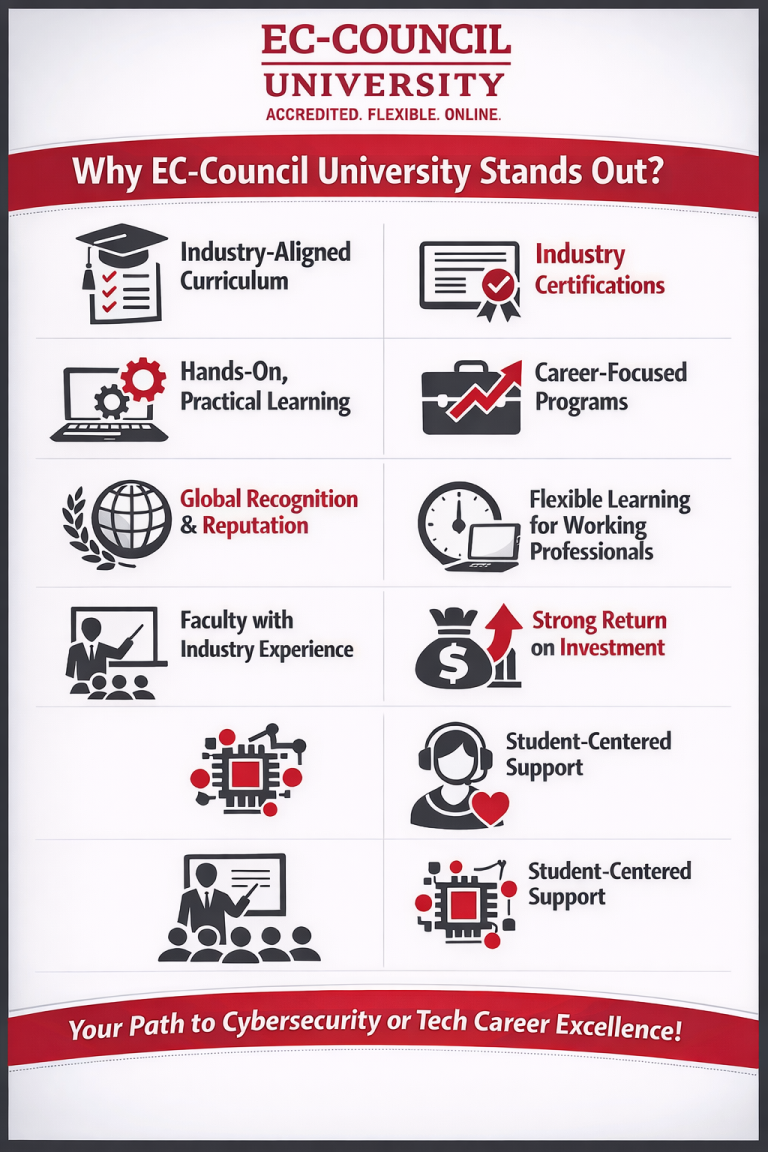
- Industry-Aligned Curriculum – ECCU programs are designed around real-world challenges, ensuring you gain skills employers actively seek.
- Industry Certifications– ECCU brings unmatched credibility to your degree with embedded EC-Council Certifications.
- Hands-On, Practical Learning – You don’t just learn theory; you develop applied skills through labs, case studies, and practical assignments that mirror real workplace scenarios.
- Career-Focused Programs – Whether you choose a Master’s in Cybersecurity degree or a Computer Science degree, ECCU prepares you for in-demand roles and long-term career growth.
- Global Recognition and Reputation – ECCU degrees are recognized worldwide, helping you stand out in competitive cybersecurity and computer science career paths.
- Flexible Learning for Working Professionals – Online and flexible learning formats allow you to advance your education without putting your career on hold.
- Faculty with Industry Experience –Get guidance from instructors who bring real-world insights from cybersecurity and technology leadership roles.
- Strong Return on Investment – ECCU programs are designed to support strong career outcomes, contributing to competitive tech and cybersecurity roles with attractive salary potential.
- Focus on Emerging Technologies – Stay ahead with coursework that covers the latest technologies and evolving threat landscapes.
- Student-Centered Support – From enrollment to graduation, ECCU offers guidance and resources designed to help students succeed academically and professionally.
Both programs at EC-Council University are developed in collaboration with industry experts and align with globally recognized cybersecurity and technology standards, giving you a competitive edge in today’s job market.
Real-World Inspiration: ECCU’s Alumni-Liton Harris
Liton Harris, a cybersecurity professional and an EC-Council University graduate, shares how advanced cybersecurity education helped him sharpen his technical skills, gain industry credibility, and confidently pursue leadership opportunities in cybersecurity.
His journey highlights how the right academic foundation can directly translate into real-world success and career growth.
Final Thoughts: Choose the Degree That Suits Your Career Goals
Choosing between a Master’s in Cybersecurity degree and a Computer Science degree isn’t about which is “better”—it’s about which one is right for you. There’s no wrong choice here—only the program that matches and suits your interests and career goals is what matters.
Whether you pursue a Master’s in Cybersecurity or a Master’s in Computer Science, you’re stepping into a future where skilled tech professionals are always in demand.
If you’re ready to invest in your future, expand your expertise, and position yourself for high-impact roles in technology or security, now is the time to take the next step.
Start building the career you’ve been aiming for.